Community Rejects Infill Housing Proposal in Prized Bedford Historic District
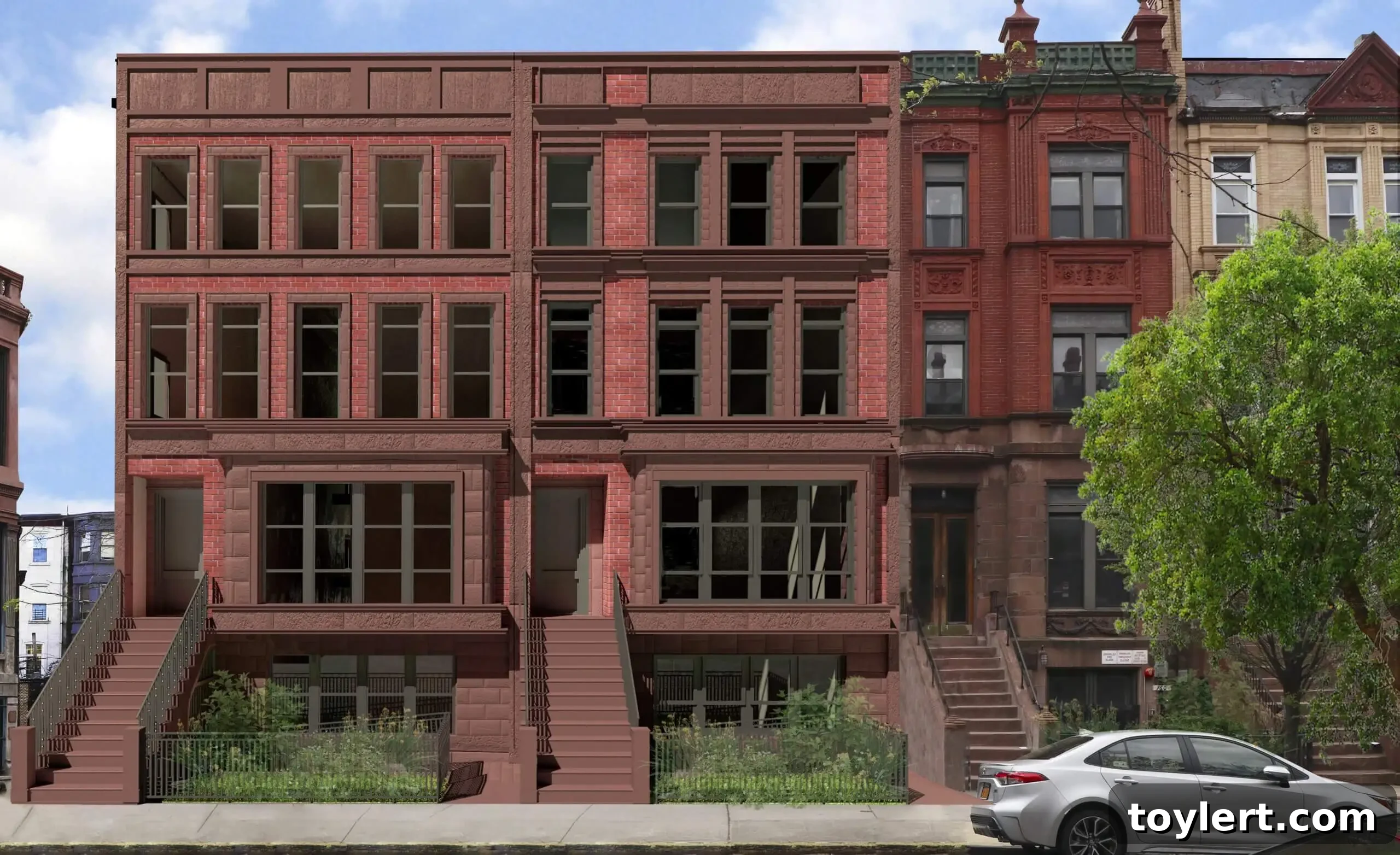
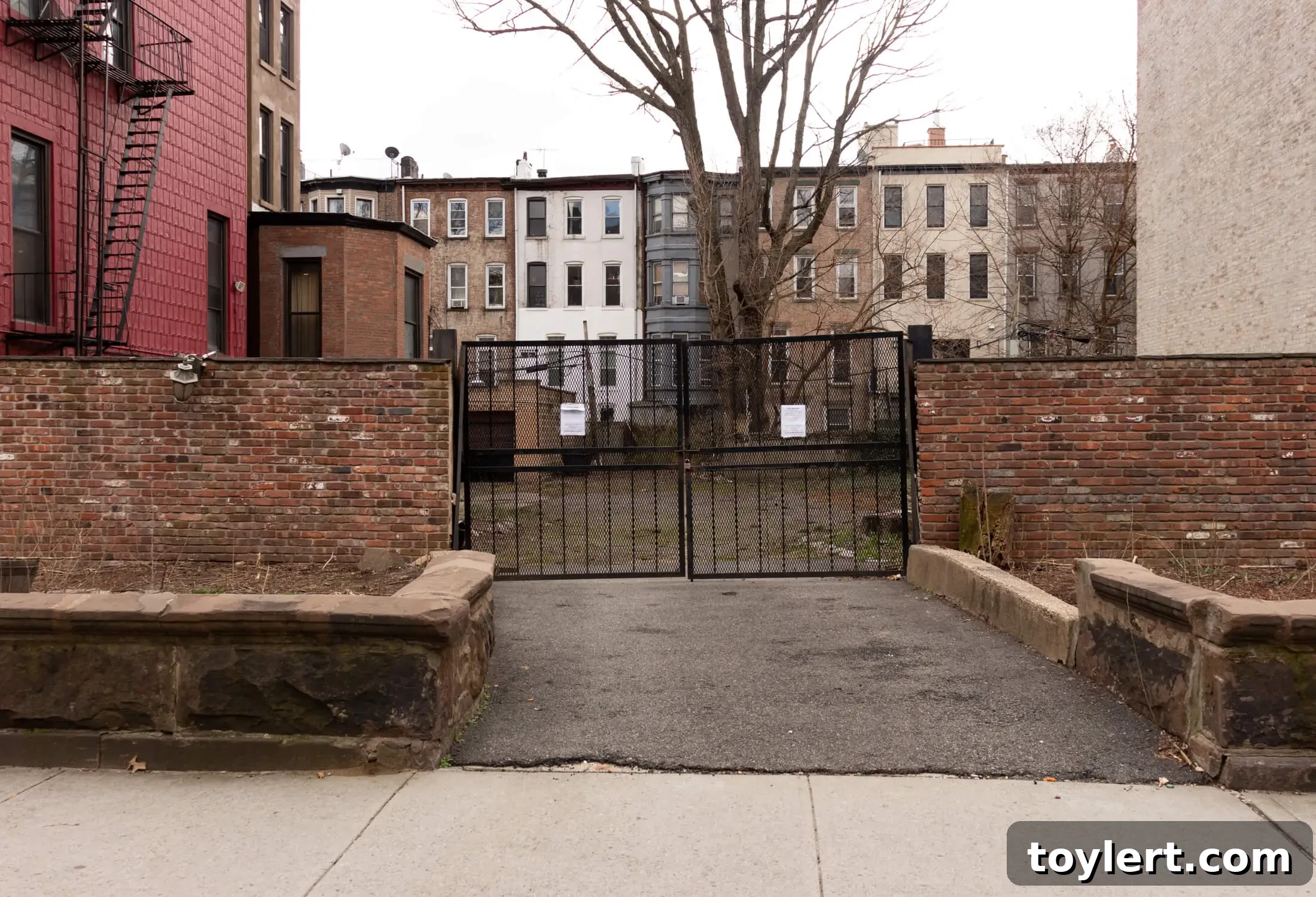
A significant proposal for new infill housing at 162 Hancock Street, nestled within one of the most celebrated landmarked blocks of Bedford Stuyvesant’s renowned Bedford Historic District, has been decisively rejected by local community groups. The design, intended to fill a vacant lot, presented a four-story brick building adorned with brown trim. While the architects aimed to mirror the existing streetscape by matching the height, window dimensions, and the characteristic high stoop of the surrounding 19th-century architecture, the community found the proposal fell short of the district’s exacting standards.
The rendering, meticulously crafted by architect Ana Maria Torres, also included a similar conceptual design for the adjacent lot at No. 164. These two empty parcels, along with the landmarked house at 168 Hancock Street, were acquired by the developer, 164 Hancock Development LLC, in 2021 for a substantial $4.55 million from a longstanding owner, as detailed in public records. The acquisition underscored the prime nature of the location, setting high expectations for any future development.
Historic Integrity vs. Modern Development: The Heart of the Conflict
The Landmarks Preservation Committee of Community Board 3, a crucial oversight body in matters of historic preservation, voted definitively against the design during its meeting on Monday, March 13. The sentiment among residents and preservationists was succinctly captured by Rona Morrissette, president of Hancock Street Block Association #2, who stated in a press release, “We need a building that is worthy of one of the most celebrated blocks in the historic district.” This powerful statement encapsulates the core of the debate: whether a new structure can truly uphold the architectural grandeur and historical significance of an area like the Bedford Historic District, or if it merely mimics superficial elements.
The Bedford Historic District is renowned for its exceptional collection of 19th-century brownstones, a testament to Brooklyn’s rich architectural heritage. These blocks are characterized by their intricate details, quality craftsmanship, and a cohesive streetscape that tells a story of a bygone era. For community groups, any new construction, particularly infill housing on empty lots, must not only blend in but also contribute positively to this cherished legacy. Merely matching height or window size is often deemed insufficient; the materials, the texture, the depth of design, and the overall aesthetic impact are scrutinized with immense care.
Understanding the Bedford Historic District’s Significance
Established to protect the unique character and architectural beauty of Bedford Stuyvesant, the Bedford Historic District is not merely a collection of old buildings; it’s a living museum of architectural styles, primarily featuring exquisite examples of Neo-Grec, Romanesque Revival, and Queen Anne residences. These structures, many built in the late 19th and early 20th centuries, boast ornate cornices, decorative stoops, intricate ironwork, and a distinctive sense of place that defines the neighborhood’s charm and appeal. Property values in such districts are often bolstered by their landmarked status, which assures buyers that the neighborhood’s aesthetic integrity will be maintained. Consequently, any proposed changes, especially new constructions, are met with rigorous review and often passionate community input.
The role of organizations like the Hancock Street Block Association #2 and Community Board 3’s Landmarks Preservation Committee is paramount. They serve as guardians of the district’s heritage, meticulously evaluating proposals against stringent criteria that extend far beyond simple dimensional compliance. Their focus is on contextual architecture that truly respects and enhances the existing environment, rather than designs that merely avoid jarring contrasts. This often involves a deep dive into material choices, construction methods, and the overall “feel” of a proposed building – elements that can be difficult to convey on a two-dimensional rendering.
The Developer’s Challenge and the Architect’s Vision
For 164 Hancock Development LLC, the acquisition of these prime lots represented a significant investment and an opportunity to contribute to one of Brooklyn’s most desirable neighborhoods. Developing in a landmarked district, however, presents unique challenges. The stringent regulations, lengthy approval processes, and the imperative to satisfy community expectations often mean higher development costs and a more complex design brief. Developers must navigate a delicate balance between profitability and preservation, seeking designs that are both economically viable and aesthetically acceptable to a highly discerning public.
Architect Ana Maria Torres, in presenting her design, undoubtedly aimed for a contextual approach. The description of a “four-story brick building with brown trim” whose “height… window size, and high stoop match that of the 19th century buildings on the block” suggests a conscious effort to integrate the new structures into the existing fabric. However, as the community’s rejection indicates, “matching” in a superficial sense is often not enough. True contextual design, especially in an area as sensitive as the Bedford Historic District, demands a deeper understanding of architectural nuances, material authenticity, and the subtle rhythms of the streetscape that contribute to its celebrated status. It’s about capturing the spirit, not just the statistics, of the surrounding architecture.
The Broader Implications of Infill Development in Historic Areas
The situation at 162-164 Hancock Street is a microcosm of a larger urban planning dilemma facing many historic cities: how to accommodate growing populations and demand for new housing while simultaneously safeguarding cherished architectural heritage. Empty lots in established historic districts are rare and thus incredibly valuable. Their development offers a chance to increase urban density and provide much-needed housing, but it also carries the immense responsibility of ensuring that new constructions do not dilute the historical and aesthetic value of the surroundings.
Successful infill projects in historic districts often involve innovative designs that, while contemporary, draw deeply from the vernacular architecture of the area. They might use traditional materials in new ways, reinterpret historic motifs, or employ building techniques that reflect modern sustainability while respecting historic craftsmanship. Conversely, projects that fail often do so because they are perceived as generic, lacking in the specific character that defines the district, or simply not meeting the high bar set by the existing structures. The community’s strong stance here sends a clear message about their expectations for architectural excellence and historical sensitivity.
The Path Forward: Revision, Dialogue, and Preservation’s Enduring Value
Following the rejection, the developer and architect face a crucial decision: revise the proposal to address the community’s concerns, or explore alternative options. The comments from the Hancock Street Block Association #2 highlight that the community is not against development per se, but rather insists on a development that is “worthy” of its distinguished location. This implies a willingness to engage in dialogue and find a mutually agreeable solution that respects both modern housing needs and the irreplaceable value of historic preservation.
This episode in the Bedford Historic District serves as a powerful reminder of the active role communities play in shaping their urban environment. It underscores the enduring importance of landmarks preservation committees, local block associations, and the collective voice of residents in safeguarding the unique identity of historic neighborhoods. The battle between new construction and historic integrity is an ongoing one, but in places like Hancock Street, the commitment to preserving the past while thoughtfully building for the future remains unwavering, ensuring that these celebrated blocks continue to tell their story for generations to come.