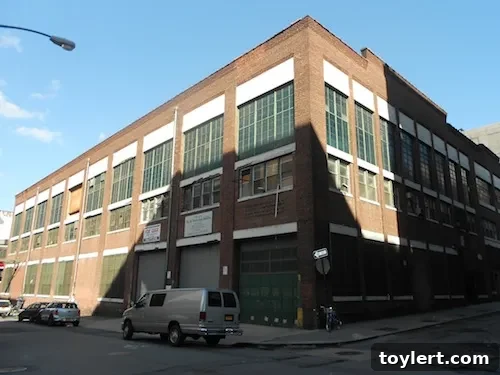
The Unfolding Story of the Jay Street Arts Building: Preservation Meets Potential in Dumbo
The Dumbo neighborhood in Brooklyn, renowned for its cobblestone streets, vibrant arts scene, and stunning waterfront views, has long been a hotbed for real estate development and adaptive reuse projects. Among its many historic industrial structures, the Jay Street Arts Building stands out, not only for its architectural character but also for the compelling narrative surrounding its recent sale and the subsequent attempts at residential conversion. Located strategically at the nexus of 29-53 Jay Street and 201 Water Street, this iconic property garnered significant attention when its sale hit public records for a substantial sum of $25 million. This transaction marked the beginning of a complex journey through the intricate world of New York City’s urban planning and historic preservation regulations, casting a spotlight on the delicate balance between progress and heritage in one of Brooklyn’s most coveted areas.
A Glimpse into Dumbo’s Evolving Landscape and Real Estate Dynamics
Dumbo, an acronym for “Down Under the Manhattan Bridge Overpass,” has undergone a dramatic transformation over the past few decades. Once a bustling manufacturing and warehouse district characterized by its raw industrial aesthetic, it has evolved into one of Brooklyn’s most desirable residential enclaves and a thriving commercial hub. This metamorphosis is largely attributed to the successful conversion of its historic industrial buildings into luxury lofts, modern offices, and creative spaces. Developers are constantly seeking opportunities to capitalize on the neighborhood’s unique charm, strategic proximity to Manhattan, and panoramic views of the East River and city skyline. The Jay Street Arts Building, with its robust structure, substantial footprint, and prime location, represented a quintessential candidate for such an ambitious undertaking, promising to integrate new residential units into a high-demand market.
The $25 million sale price underscores the premium placed on Dumbo properties, particularly those offering significant square footage and the potential for redevelopment. For new owners venturing into such a vibrant yet heavily regulated market, the acquisition of a building like the Jay Street Arts Building presents both immense potential for profit and unique challenges, especially when located within a designated historic district. The inherent value lies not just in the brick and mortar, but in the vision for its future, often involving a delicate balance between modern residential demands and the imperative of historical integrity. This dynamic is central to understanding the complexities faced by developers in Dumbo, where every architectural detail contributes to the neighborhood’s unique narrative.
The Ambitious Plan: A 126-Unit Residential Conversion Proposal
Following the significant acquisition, it became clear that the new owners had ambitious plans for the Jay Street Arts Building. Indications suggested they were the entities behind a comprehensive proposal submitted to both the Landmarks Preservation Commission (LPC) and the Department of Buildings (DOB) in October of that year. The core of their vision was to transform the industrial edifice into a sprawling residential complex, featuring an impressive 126 units. This scale of development is typical for large former industrial sites in Dumbo, aiming to maximize housing supply in a high-demand area while capitalizing on the allure of loft-style living in a historic setting.
The proposed residential conversion wasn’t merely an internal redesign; it encompassed a series of significant exterior alterations designed to adapt the building for modern residential living while addressing contemporary aesthetic and functional standards. These plans included proposals to modify existing masonry openings, replace numerous windows to improve energy efficiency and aesthetics, install a new storefront infill at the ground level to activate the streetscape, and add a canopy to enhance the pedestrian experience. Perhaps the most prominent and ultimately contentious aspect of the entire plan was the proposal to construct a substantial rooftop addition. This element, while potentially offering valuable additional units and stunning views of the surrounding area, would ultimately become a major point of contention with preservation authorities, highlighting the tension between development aspirations and historical preservation mandates.
Navigating New York City’s Preservation Landscape: The Critical Roles of the LPC and DOB
Any significant alteration or new construction within a historic district in New York City necessitates careful review and approval from key regulatory bodies, ensuring that development aligns with the city’s broader planning and preservation goals. The Landmarks Preservation Commission (LPC) is paramount in this process, serving as the primary guardian of the city’s architectural, historical, and cultural heritage. Established to protect New York City’s irreplaceable assets, the LPC meticulously reviews proposals for changes to designated individual landmarks and properties situated within the city’s numerous historic districts. Their mandate is to ensure that new interventions are appropriate in scale, materials, and design, and do not detract from the character of the historic structure or its surroundings. This scrutiny ensures that the unique identity of neighborhoods like Dumbo is maintained for future generations.
Concurrently, the Department of Buildings (DOB) plays a critical, albeit different, role in ensuring the safety, structural integrity, and legal compliance of all construction projects in New York City. The DOB rigorously reviews architectural and engineering plans for compliance with the city’s stringent building codes, zoning resolutions, and other applicable regulations. While the LPC focuses on aesthetic and historic appropriateness, often from a subjective and qualitative perspective, the DOB is concerned with the technical feasibility, safety, and legality of the proposed construction from an objective standpoint. Both approvals are indispensable for a project of this magnitude to move forward. Developers, therefore, face a dual layer of rigorous scrutiny, navigating both the historical sensitivity required by the LPC and the technical precision demanded by the DOB in a city as complex and dynamic as New York.
LPC’s Stance: “Barely Recognizable” and the Irreplaceable Historic Skylights
The Jay Street Arts Building’s ambitious conversion proposal faced a significant hurdle when the Landmarks Preservation Commission rendered its decision. The Commission ultimately denied the comprehensive plan, issuing a stern critique that underscored their unwavering commitment to preserving the building’s historic character and architectural integrity. The LPC famously described the proposal as “barely recognizable,” a powerful condemnation suggesting that the extent of the proposed alterations would fundamentally strip the building of its original identity and historical narrative. This assessment highlighted the LPC’s concern that the modifications—including changes to masonry, wholesale window replacements, and the addition of a contemporary storefront and canopy—were not in harmony with the existing historic fabric, effectively erasing layers of the building’s past.
A particularly critical point of contention, and one that resonates deeply with the philosophy of historic preservation, was the proposed rooftop addition. The LPC emphatically stated that this addition was “inappropriate as it… would call for the removal of the historic skylights.” These skylights, often characteristic features of turn-of-the-century industrial buildings, served not only a functional purpose by providing natural light to the expansive interior spaces but also contributed significantly to the building’s aesthetic and historical narrative. They are invaluable architectural elements that tell a story of the building’s past use, design principles, and the evolution of industrial architecture. The LPC’s insistence on their preservation, even at the cost of potential new units and increased profitability for the developer, demonstrated their unwavering commitment to protecting the tangible evidence of Dumbo’s rich industrial heritage. Photos of these significant skylights can be viewed here, offering a visual testament to their historical value and the reasons behind the Commission’s steadfast decision.
The Architect’s Role and Subsequent Developments for the Jay Street Arts Building
The architectural plans for the ambitious residential conversion of the Jay Street Arts Building were attributed to Karl Fischer, a prominent architect widely recognized for his extensive work on residential projects across New York City, particularly throughout Brooklyn’s rapidly developing neighborhoods. Fischer’s portfolio includes numerous high-rise and adaptive reuse developments, often characterized by a contemporary aesthetic and an ability to maximize density. His involvement in the Jay Street Arts Building project indicates the scale and ambition of the owners’ vision, aiming for a significant transformation that aligns with modern luxury residential standards while meeting the demands of the Dumbo market. However, even with an experienced architect at the helm, navigating the stringent requirements of the LPC in a landmarked district proved to be a formidable challenge, showcasing the unique complexities of building in New York’s historic areas.
Adding to the project’s complexities, the Department of Buildings (DOB) also disapproved the submitted plans for residential conversion. While the specific reasons for the DOB’s disapproval might differ from the LPC’s—often pertaining to issues such as zoning compliance, structural concerns, fire safety, or egress requirements—the combined disapproval from both key regulatory bodies effectively brought the initial conversion plans to a definitive halt. As of the latest public records available, the owners have not filed any new plans since these initial rejections. This situation leaves the future of the Jay Street Arts Building in a state of prolonged uncertainty, highlighting the intricate dance between developers’ aspirations and the city’s robust commitment to preserving its heritage and ensuring building safety. The lack of new filings suggests a period of re-evaluation for the owners, potentially exploring alternative, less invasive approaches or awaiting shifts in regulatory interpretations.
The Broader Implications for Dumbo Real Estate and Urban Preservation
The case of the Jay Street Arts Building serves as a poignant illustration of the delicate balance that must be struck between urban development and historic preservation in rapidly gentrifying neighborhoods like Dumbo. While there is an undeniable demand for more residential units and a strong desire to adapt obsolete industrial spaces for contemporary use, the city’s regulatory frameworks, especially those enforced by the LPC, ensure that such transformations do not come at the expense of irreplaceable historical and architectural assets. This dynamic creates a challenging but essential tension that defines development in New York City’s protected areas.
For developers operating in landmarked districts, this situation means that projects require a heightened level of sensitivity, creativity, and often, a willingness to compromise on certain aspects of their initial vision. It also underscores the importance of early and continuous engagement with preservation agencies to understand their expectations and integrate historical considerations from the outset. Proactive consultation and design adaptation are key to navigating these complex waters successfully. The Jay Street Arts Building’s journey is not an isolated incident; it mirrors similar challenges faced by other developers seeking to reimagine Dumbo’s industrial past for its residential future. The outcomes of such cases ultimately shape the character and identity of the neighborhood, defining how its rich history is carried forward into new urban chapters while accommodating modern growth.
The Jay Street Arts Building, despite its current limbo, remains a powerful symbol of Dumbo’s ongoing evolution and the inherent challenges in balancing economic development with cultural preservation. Its future will undoubtedly be watched closely by real estate enthusiasts, preservationists, and residents alike, as it represents a significant piece of the puzzle in Brooklyn’s dynamic urban landscape. The detailed account of its proposed conversion and subsequent denials by key regulatory bodies, initially reported by Brownstoner, highlights the complexities inherent in transforming cherished historic properties for new purposes. The full article that first detailed these developments and sparked public discussion can be found at The Jay Street Arts Building Is Going Residential [Brownstoner].