Brooklyn Bridge Park: A Masterpiece of Urban Waterfront Design and Community Engagement
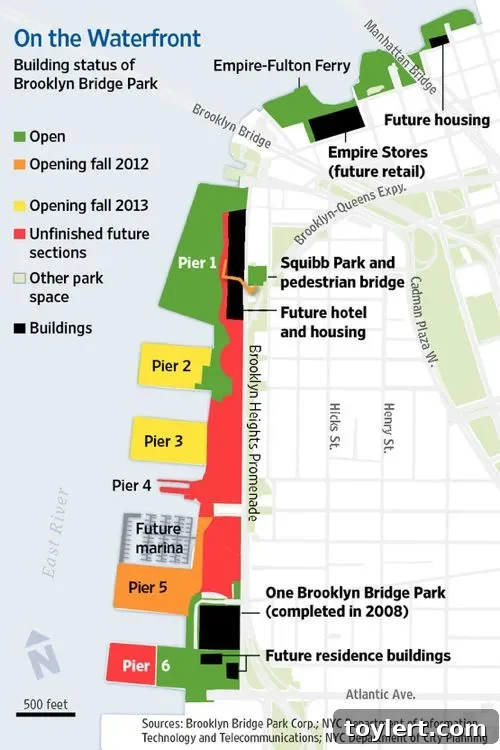
Brooklyn Bridge Park stands as a monumental achievement in urban planning, a testament to resilience and visionary design that has transformed a once-neglected industrial waterfront into a vibrant, world-class public greenspace. From its initial conceptualization to its ongoing expansion, this iconic park has navigated decades of spirited debate, financial complexities, and differing philosophies on public space utilization. Yet, despite being arguably one of the most controversial park projects in modern history, its undeniable success in drawing millions of visitors annually speaks volumes about its ability to resonate with the very communities it serves.
Opened incrementally since 2010, Brooklyn Bridge Park quickly garnered widespread acclaim, celebrated for its innovative design and the breathtaking vistas it offers of the Manhattan skyline, the Statue of Liberty, and the majestic Brooklyn Bridge itself. However, its journey has been anything but smooth. It has been a constant subject of discussion among neighborhood associations, urban development experts, political figures, and environmental advocates, particularly concerning its funding model and the integration of real estate development within the park’s boundaries. Even as new sections, including a crucial pedestrian bridge connecting to Brooklyn Heights, continue to take shape, the park remains a focal point for both admiration and occasional critique.
The Heart of the Debate: Design Philosophy Under Scrutiny
At the center of some of the most recent critical discussions is the park’s overarching design, orchestrated by the renowned landscape architecture firm Michael Van Valkenburgh Associates, Inc. (MVVA). While largely lauded for their innovative approach, their design has not escaped intense scrutiny from certain segments of the planning community. A notable critique came from Fred Kent, head of Project for Public Spaces, who famously dismissed the park in a Wall Street Journal article as “one of the deadest waterfronts ever designed.” Kent’s scathing assessment highlighted what he perceived as a “massive disconnect between what people want to look at and do in a place and what designers impose on them,” suggesting a failure to prioritize active public engagement over aesthetic contemplation.
This provocative criticism sparked a renewed conversation about the fundamental purpose of urban parks and the role of designers in shaping public experience. Kent’s argument often emphasizes the need for flexible, programmable spaces that organically evolve through community use, advocating for designs that maximize human interaction and diverse activities. From this perspective, a park should be a living, breathing extension of the city, constantly adapting to the needs and desires of its users rather than presenting a predetermined, static vision.
Michael Van Valkenburgh Associates’ Vision: A ‘Calm Foreground’
In response to such critiques, Matthew Urbanski, the architect behind the park’s design at MVVA, offers a distinct and articulate counterpoint. Urbanski’s vision for Brooklyn Bridge Park transcends mere functionality, aiming to create a unique sensory experience. He contends, “We’ve created a calm foreground that allows you to appreciate the sublime beauty of the industrial urban setting.” This statement encapsulates MVVA’s philosophy: to design spaces that not only serve recreational needs but also foster a deeper connection with the surrounding environment, particularly the dramatic interplay of natural elements and the monumental industrial architecture of New York Harbor.
MVVA’s design intentionally utilizes sweeping landscapes, gentle slopes, and strategic plantings to frame panoramic views, inviting contemplation and providing a serene escape from the urban hustle. The “calm foreground” isn’t about inertness; it’s about providing a stage, a tranquil counterpoint that enhances the appreciation of the dynamic cityscape beyond. This approach emphasizes aesthetic coherence and a nuanced relationship with the site’s historical context, transforming the remnants of industrial infrastructure into integral parts of a new ecological and recreational landscape. The intention is to offer varied experiences, from active sports to quiet reflection, all within a cohesive and visually stunning framework.
Public Acclaim vs. Expert Dissent: The People’s Verdict
While expert opinions like Kent’s contribute valuable perspectives to the discourse on urban planning, the ultimate test of a public space often lies in the public’s embrace. And by this measure, Brooklyn Bridge Park is an unequivocal triumph. The Wall Street Journal itself, despite featuring Kent’s initial criticism, highlighted the park’s resounding popularity, stating, “Brooklyn Bridge Park succeeds magnificently at being a space people want to make their own.” This sentiment is echoed daily by the throngs of visitors who flock to its various sections, transforming the park into a bustling hub of activity and relaxation.
Consider Pier 1, one of the earliest completed sections located closest to the foot of the Brooklyn Bridge. This area perfectly exemplifies MVVA’s design principles in action. Far from being a “dead waterfront,” Pier 1 is a vibrant assemblage of placid meadows and gracefully sloping grassy grades. These carefully sculpted landscapes provide ideal settings for diverse activities, from spontaneous picnics with friends and family to solitary moments of reading or simply taking in the spectacular harbor views. The design encourages both active play and passive enjoyment, demonstrating a sophisticated understanding of how people interact with green spaces in an urban context.
The park’s immense popularity underlines a crucial point: success in urban park design isn’t always about adhering to a single, prescriptive model. It often involves a nuanced balancing act between providing structured activities and offering unstructured, flexible spaces that allow visitors to define their own experiences. The continuous flow of families, joggers, sightseers, and those simply seeking solace confirms that Brooklyn Bridge Park has achieved this delicate equilibrium, creating a destination that resonates deeply with a diverse public.
A Multifaceted Oasis: Amenities for Every Park-Goer
Critics like Fred Kent often underscore the importance of programmed spaces and diverse amenities to foster lively public engagement. However, the Wall Street Journal’s original article, in its balanced reporting, pointed out that Kent’s criticism seemed to overlook the extensive array of programmed spaces slated for completion across the park’s remaining piers. Indeed, Brooklyn Bridge Park is far from a purely contemplative landscape; it is a dynamic urban oasis designed to cater to a vast spectrum of recreational needs and interests.
The park’s comprehensive master plan integrates a rich tapestry of facilities. Imagine the laughter echoing from vibrant soccer fields, the competitive energy on multiple volleyball and basketball courts, or the serene bobbing of boats in a well-equipped marina. Beyond these active zones, the park features meticulously designed playgrounds for children of all ages, tranquil seating areas offering respite, and dedicated dog runs for furry companions. The green infrastructure goes further, incorporating ecologically sustainable practices that manage stormwater and support local wildlife, turning the park into an an educational landscape as well.
The intentional inclusion of these diverse amenities directly addresses the call for places where people can “look at and do.” These spaces are not merely additions; they are integral to the park’s identity, providing crucial outlets for exercise, community gathering, and cultural events. From fitness classes held on the lawns to outdoor movie nights and art installations, Brooklyn Bridge Park consistently reinvents itself as a dynamic venue, fostering a strong sense of community and belonging among its visitors. This blend of active recreation, passive enjoyment, and ecological stewardship demonstrates a holistic approach to urban park development that successfully meets the multifaceted demands of a bustling metropolis.
Beyond the Controversy: A Legacy of Urban Transformation
The ongoing dialogue surrounding Brooklyn Bridge Park, while sometimes contentious, is a healthy reflection of the complexities inherent in large-scale urban development. It highlights the constant tension between aesthetic vision, ecological responsibility, financial viability, and the imperative to create genuinely public, accessible, and beloved spaces. Yet, through all the debates and discussions, Brooklyn Bridge Park has undeniably emerged as a landmark project, setting new standards for waterfront revitalization globally.
Its success transcends mere visitor numbers; it is measured in the palpable sense of community it fosters, the economic vitality it brings to the surrounding neighborhoods, and its role in re-establishing a crucial connection between Brooklynites and their spectacular waterfront. The park is more than just a collection of paths and plantings; it is a catalyst for urban transformation, demonstrating how thoughtful design, even when challenged, can create enduring civic assets. It serves as a powerful example of how former industrial sites can be reclaimed and reimagined as vital green infrastructure, contributing significantly to the quality of life in dense urban environments.
Ultimately, Brooklyn Bridge Park stands as a testament to the power of ambitious urban planning. It showcases how a strategic blend of natural beauty, recreational opportunities, and historical reverence can coalesce into a public space that is both visually stunning and profoundly functional. Its journey from contested vision to cherished reality underscores that while expert critique is valuable, the ultimate measure of a park’s success lies in its ability to captivate, connect, and serve the diverse needs of the people it was designed for. In doing so, it has not just created a park, but a vibrant new heart for Brooklyn.