Transforming a Brooklyn Italianate Row House: A Model for Sustainable Urban Living
In the vibrant heart of Brooklyn, a remarkable architectural transformation has breathed new life into a derelict mid-19th century Italianate row house. Spearheaded by the visionary team at vonDALWIG Architecture, the project culminates in what the architects aptly describe as “a smarter home for a simpler life.” This dwelling stands as a testament to profound sustainability and energy efficiency, offering a peaceful sanctuary for a family of three, complete with a charming backyard inhabited by chickens—a unique blend of urban living and pastoral simplicity.
The journey began with a building in dire condition. Philipp von Dalwig, who leads the Brooklyn-based firm vonDALWIG Architecture alongside his wife and fellow architect, Kit von Dalwig, recalled, “It was a very humble building to begin with, with nothing to salvage.” This initial state presented not a limitation, but a blank canvas for an ambitious reimagining. The project’s success was significantly shaped by the client’s informed perspective; one of the homeowners, herself an architect and urban planner, possessed a clear vision. “She had a vision and an interest in sustainability, and saw how it could be formalized,” von Dalwig explained, highlighting the invaluable collaboration between client and architect in shaping a truly eco-conscious residence.
A Deep Dive into Sustainable Design: Beyond Passive House Principles
While not officially certified as a Passive House, this Brooklyn row house embraces an extensive array of passive design principles and advanced energy-efficient strategies that place it firmly in the vanguard of sustainable urban architecture. The commitment to minimizing environmental impact and maximizing energy performance was paramount from conception to completion. The design incorporates superior insulation levels, meticulously sealed building envelopes, and high-performance windows to drastically reduce heat loss in winter and heat gain in summer. This holistic approach ensures stable indoor temperatures, significantly lowering the demand for active heating and cooling systems and translating directly into reduced energy consumption and lower utility bills for the homeowners.
Ventilation is another cornerstone of its sustainable design. The incorporation of a high-efficiency Energy Recovery Ventilator (ERV) system continuously supplies fresh, filtered air while recovering energy from the exhaust air. This not only maintains exceptional indoor air quality, free from pollutants and allergens, but also prevents energy waste, distinguishing the home as a remarkably healthy and comfortable living environment. The strategic placement of openings also encourages natural cross-ventilation, further reducing reliance on mechanical systems during milder months. By integrating these sophisticated, yet often invisible, elements, vonDALWIG Architecture has crafted a home that performs with the efficiency of a Passive House, even without the formal certification, demonstrating a practical and thoughtful approach to green building in a historic urban context.
The Radical Structural Transformation: Rebuilding from the Core
The extent of the renovation required was nothing short of monumental. Structural integrity issues permeated the original structure, making anything less than a complete gut renovation an unfeasible option. “There are tons of properties that need to be renovated, but not to this degree. We moved 80 percent of the joists, replacing or reusing them,” von Dalwig detailed. This staggering statistic underscores the depth of the structural overhaul. The architectural team meticulously dismantled the interior, carefully assessing and reinforcing the foundational elements. This involved a complex process of either salvaging and reinforcing existing joists or strategically replacing them with new, structurally sound components. This painstaking work was crucial for ensuring the long-term stability and safety of the building, transforming a dilapidated shell into a robust framework capable of supporting the modern design vision.
Once the house was stripped down to its bare bones—a process that required immense precision and engineering acumen—vonDALWIG Architecture embarked on rebuilding the 2,700-square-foot interior from scratch. This radical approach allowed for a complete rethinking of the internal layout and flow, unconstrained by the limitations of the original, compromised structure. The decision to essentially reconstruct the interior provided an unparalleled opportunity to integrate contemporary design principles, advanced building technologies, and sustainable materials from the ground up. This comprehensive structural intervention was not merely about repair; it was about laying a new, resilient foundation for a home designed to last for generations, embodying both architectural innovation and ecological responsibility within the historic fabric of Brooklyn.
Materiality and Aesthetics: The Warmth of White Oak and Openness
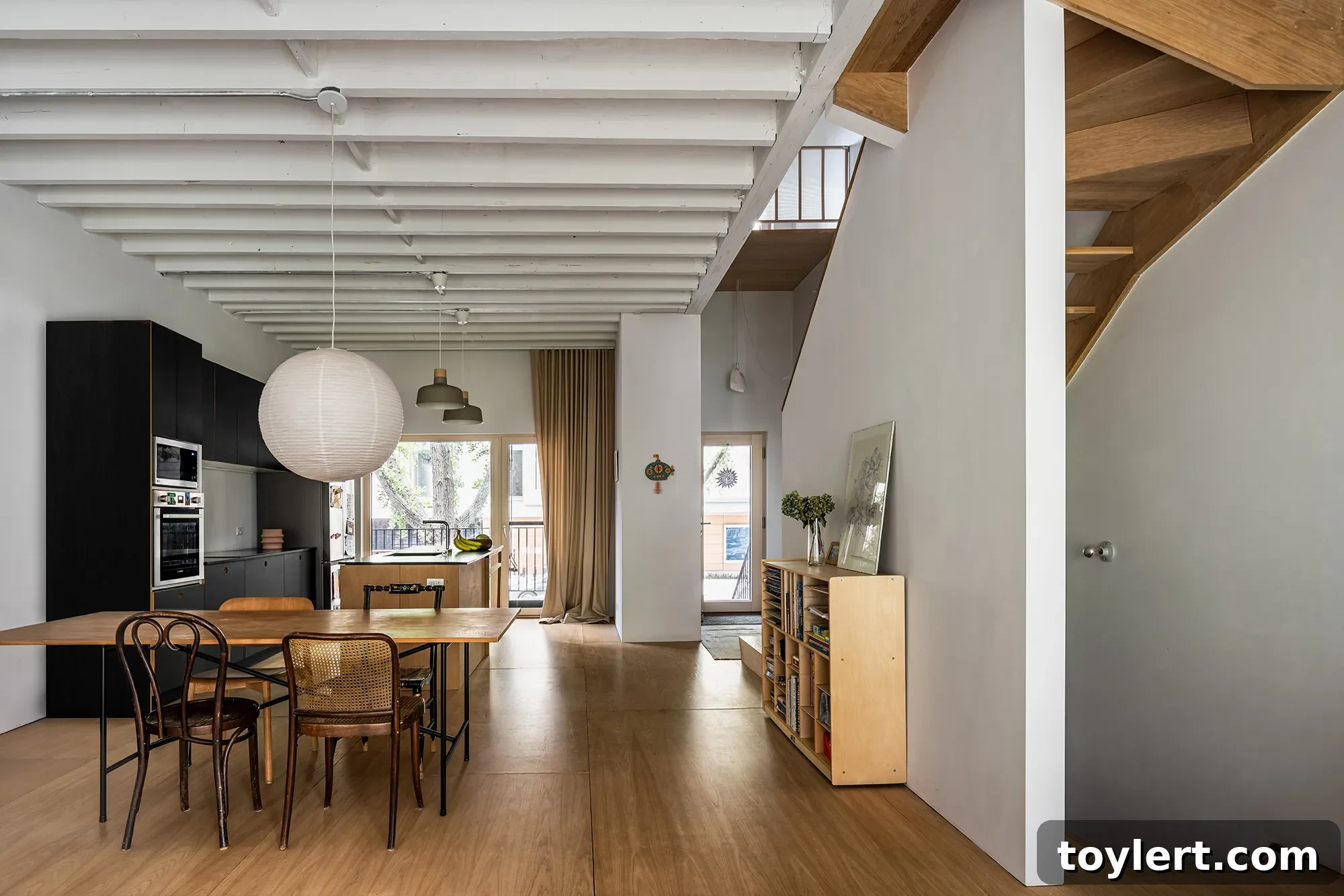
With the structural challenges overcome, the focus shifted to creating a living environment that was both aesthetically pleasing and profoundly functional. The principal material chosen for the interior was white oak plywood, which lends a distinctive warmth and contemporary minimalism to the 2,700-square-foot space. This choice reflects the overarching philosophy of creating a “simpler life”—one characterized by natural materials, clean lines, and an uncluttered aesthetic. White oak, known for its durability, subtle grain, and light-reflecting properties, contributes significantly to the home’s bright and airy ambiance. Its consistent application throughout the interior creates a harmonious visual flow, enhancing the sense of spaciousness and tranquility. The material palette underscores a commitment to natural beauty and understated elegance, steering away from ostentation in favor of genuine comfort and authenticity.
Central to the home’s design ethos is an exceptionally open floor plan, meticulously crafted to foster profound connection and interaction within the family unit. This expansive layout dissolves traditional boundaries between living, dining, and kitchen areas, creating a fluid and continuous space that encourages shared experiences. Natural light floods the interior from multiple orientations, further amplifying the sense of openness and vitality. This architectural decision directly addresses the clients’ desire for a home that facilitates togetherness, allowing family members to engage with one another whether they are cooking, relaxing, or working. The result is a dynamic and adaptable environment where the distinction between formal and informal spaces blurs, promoting a more relaxed and integrated way of living.
The Interactive Staircase: A Hub for Family Connection
A striking feature that truly embodies the spirit of connection in this innovative home is the custom-designed staircase. Far from being a mere functional element for vertical transit, the staircase is conceived as a multi-functional sculptural centerpiece, strategically integrating mezzanines at various levels. “The clients wanted connection within their family unit. The staircase is not only a staircase, but has mezzanines from which you can hear what’s happening on different floors,” von Dalwig elaborated. This ingenious design allows family members on different floors to remain audibly connected, creating an immersive, shared auditory landscape throughout the home. A conversation in the kitchen might drift upwards to someone studying on a mezzanine, or the sounds of play could resonate through the open volumes, fostering a constant, subtle awareness of each other’s presence.
These mezzanines serve as intimate interstitial spaces—perhaps a cozy reading nook, a quiet workspace, or a playful perch—each offering unique vantage points and fostering visual and auditory links across the vertical expanse of the house. This vertical integration is a powerful architectural tool, transcending the conventional compartmentalization of multi-story homes. It transforms the journey between floors into an experience of continuous engagement, reinforcing the emotional bonds of the family. The staircase becomes more than just a pathway; it’s a living artery, a social nexus that actively promotes interaction and a sense of shared community within the home, making every level feel intimately connected to the whole. This thoughtful design showcases vonDALWIG Architecture’s ability to imbue functional elements with rich experiential qualities, elevating everyday movements into moments of connection.
Embracing a Simpler, Sustainable Urban Lifestyle
The concept of “a smarter home for a simpler life” extends beyond the structural and aesthetic choices to encompass the very lifestyle it supports. The presence of chickens in the backyard is a delightful, tangible symbol of this philosophy—a nod to self-sufficiency and a deeper connection to nature, even within a bustling urban environment. This small farm element brings a unique charm and educational opportunity for the family, emphasizing sustainable practices like composting and fresh food production. It’s a deliberate choice that reflects a desire for a more grounded, conscious way of living, demonstrating that an eco-friendly existence is entirely possible, and indeed enriching, in the heart of a city.
This home stands as a compelling example of how historic structures can be respectfully yet radically updated for the demands of the 21st century. By marrying advanced sustainable technologies with thoughtful design and a clear vision, vonDALWIG Architecture has created not just a house, but a blueprint for future urban renovations. It proves that energy efficiency, modern comfort, and a commitment to ecological stewardship can coexist beautifully with the preservation of architectural heritage. The Brooklyn Italianate row house is more than just an architectural marvel; it is a vibrant, living testament to the possibility of building smarter, living simpler, and inspiring a more sustainable future, one renovated home at a time.