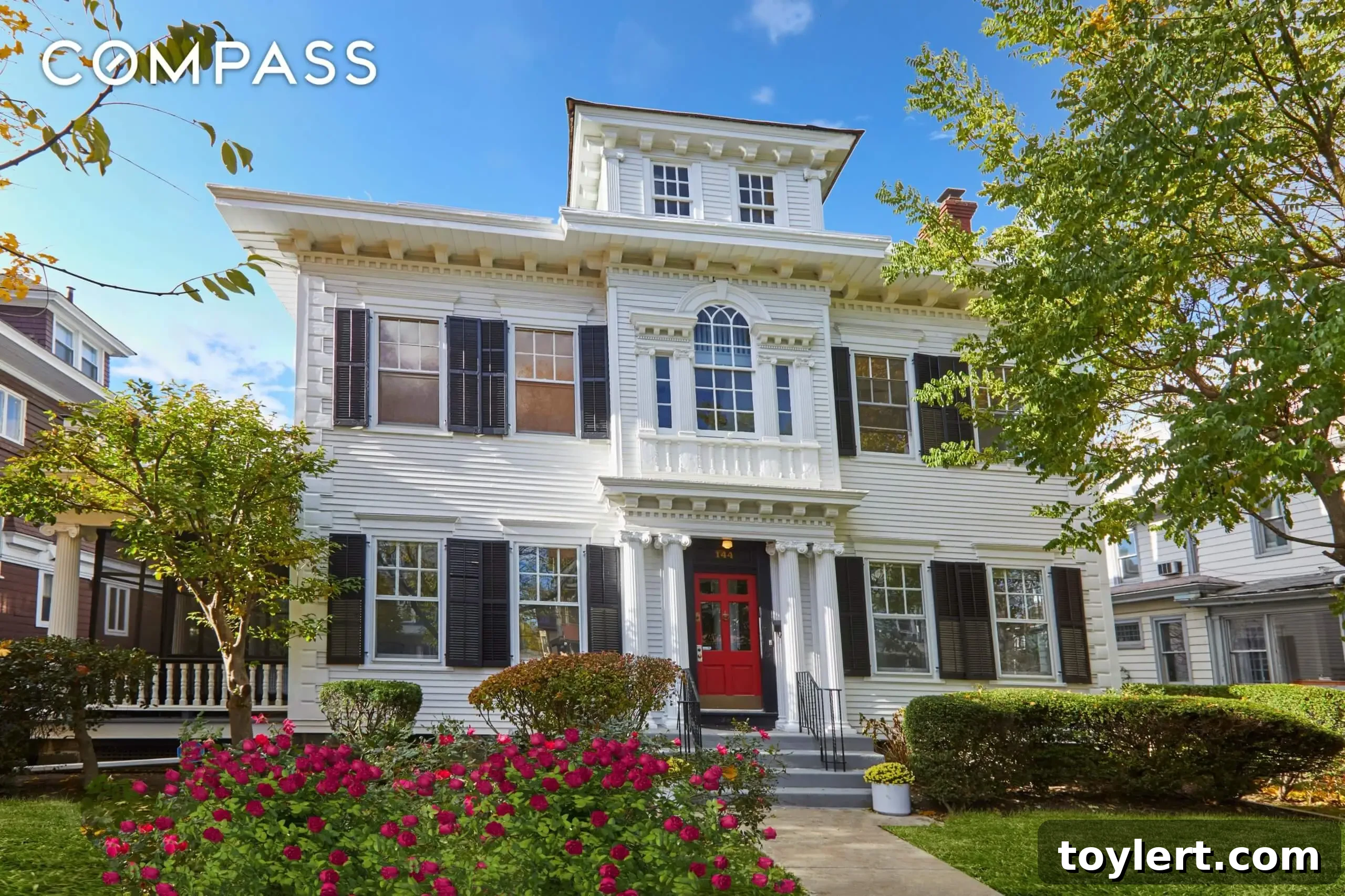
Discover the Grandeur of 144 Westminster Road: A Colonial Revival Masterpiece in Prospect Park South
Nestled within the enchanting and highly sought-after Prospect Park South historic district, a neighborhood renowned for its breathtaking architectural gems, stands a distinctive standalone residence that effortlessly captures the eye: 144 Westminster Road. This exceptional property is a prime example of the elegance and enduring charm of Colonial Revival architecture, distinguished by its meticulously crafted details and perfectly balanced proportions. Having remained within the stewardship of the same family since the 1960s, this stately home offers a rare glimpse into a bygone era while presenting an unparalleled opportunity for modern living.
Over the decades, 144 Westminster Road has gracefully adapted to the changing needs of its inhabitants, undergoing thoughtful interior modifications. Yet, it proudly retains a remarkable array of its original period details, elements that whisper tales of its rich past and imbue every corner with character and historical depth. Beyond its impressive facade and generously proportioned interiors, the property boasts desirable exterior features, including both front and rear yards that provide serene green spaces for relaxation and entertainment. A private driveway ensures convenience and exclusivity, leading to a coveted one-car detached garage – a true luxury in the bustling urban landscape of Brooklyn.
A Testament to Colonial Revival Splendor: The Architecture of 144 Westminster Road
The history of this magnificent clapboard house, with its distinctive hipped roof and perfectly symmetrical facade, traces back to its completion in 1910. Its creation is attributed to the esteemed architect Benjamin F. Hudson, a name synonymous with the refined residential architecture prevalent in early 20th-century Brooklyn, as meticulously documented in the official designation report for the historic district. Hudson’s vision for 144 Westminster Road was to create a home that not only stood out for its beauty but also served as a paradigm of the Colonial Revival style.
Esteemed Brownstoner columnist Suzanne Spellen, a respected authority on Brooklyn’s architectural heritage, aptly lauded 144 Westminster Road as “one of the best” examples of Colonial Revival in the entire neighborhood. Her praise underscores the house’s exceptional design, which masterfully renders the intricate and elegant details characteristic of both the Georgian and Federal styles, key influences on the Colonial Revival movement. A prime illustration of this sophisticated integration is the home’s striking Palladian window, an architectural hallmark known for its tripartite composition and classic proportions, gracing the facade with an air of dignified grandeur. This feature not only enhances the curb appeal but also floods the interior with natural light, showcasing the quality of craftsmanship that defines this significant Brooklyn architectural landmark.
Understanding Colonial Revival Architecture in Prospect Park South
Colonial Revival architecture, which flourished in the United States from the late 19th century into the mid-20th century, represented a renewed appreciation for the country’s early architectural styles, particularly those of the American Colonial period. In neighborhoods like Prospect Park South, this meant grander homes with modern amenities but an aesthetic rooted in historical precedent. Builders and architects like Benjamin F. Hudson meticulously studied original Georgian and Federal patterns, incorporating elements such as symmetrical facades, classical columns, elaborate doorways, multi-pane windows, and, of course, the distinctive Palladian window. These homes were designed to evoke a sense of tradition, stability, and American heritage, appealing to the burgeoning middle and upper classes of the era. 144 Westminster Road stands as a beautifully preserved encapsulation of these ideals, reflecting the refined taste and prosperity that defined Prospect Park South at its inception.
The clapboard siding, a characteristic feature, not only provides historical authenticity but also offers durability and a timeless aesthetic. The hipped roof, gently sloping on all four sides, contributes to the house’s stately and balanced appearance, further enhancing its Colonial Revival bona fides. Every element, from the window trim to the foundational brickwork, was chosen to harmonize with the overall design, creating a cohesive and visually appealing structure that has gracefully stood the test of time and continues to be admired today. The careful planning and execution by Benjamin F. Hudson are evident in every detail, ensuring the home’s prominent place among the area’s most distinguished residences.
A Glimpse into History: The Early Residents of 144 Westminster Road
The federal census of 1910 provides a fascinating snapshot of 144 Westminster Road’s earliest days, indicating that the house was fully completed by at least April of that year. Its very first occupants were Reverend Frederick A. Wright and his wife, Margaret Wright, who settled into their elegant new home with their three young children. Their household was further enriched by the presence of Margaret’s mother and two female servants, painting a vivid picture of a bustling, prosperous family life typical of the era’s upper-middle class. The historic district’s designation report credits Reverend Wright with the original commission for this grand residence, a testament to his vision and standing within the community.
However, the Reverend’s tenure at 144 Westminster Road proved to be relatively short-lived. By 1912, just two years after its completion, newspaper accounts and the contemporaneous city directory reveal a change of ownership. The distinguished Judge Van Vechten Veeder and his wife, Margaret Veeder, had taken up residence in the impressive Colonial Revival abode. This swift transition highlights the dynamic real estate market of early 20th-century Brooklyn, where prominent families frequently moved into newly constructed, architecturally significant homes. The Veeder family’s long-term occupancy would further cement the house’s legacy as a cherished residence for notable figures in the community, reflecting the neighborhood’s allure to the city’s influential citizens.
Life in a Grand Brooklyn Home: A Look Inside
Both the Wright and Veeder families would have enjoyed the extensive comforts and refined living offered by this exceptionally spacious house. The main level, designed for both formal entertaining and daily family life, featured a classic layout centered around the main entrance. Grand parlors, strategically positioned on either side of the central foyer, would have served as elegant reception areas or comfortable sitting rooms. These rooms, likely adorned with ornate fireplaces, elaborate moldings, and rich wood flooring, provided a sophisticated backdrop for social gatherings and quiet family evenings. The high ceilings and ample windows in these spaces would have contributed to an airy, inviting atmosphere, perfect for both intimate family moments and larger social engagements.
Beyond the parlors, the main floor thoughtfully included a formal dining room, ideal for hosting elaborate dinners and holiday feasts, connecting seamlessly to a well-appointed kitchen. While the exact original details of the kitchen might have evolved over the years, one can imagine it as a functional space, perhaps with a large pantry, a butler’s pantry, and a back staircase for servants, reflecting the domestic arrangements of the early 20th century. The efficient flow between these spaces would have facilitated graceful entertaining and seamless household management, a hallmark of well-designed homes from this period that prioritized both aesthetics and utility.
Ascending to the upper floors, residents would find two additional levels dedicated to private quarters. These floors housed numerous bedrooms, offering ample space for the original families’ large households, including children, extended family, and domestic staff. Each bedroom would have likely featured generous proportions, high ceilings, and large windows, bathing the rooms in natural light and offering serene views of the tree-lined street or the private rear yard. The original intact period details throughout these upper levels might include original hardwood floors, charming built-in cabinetry, and perhaps even period-specific bathroom fixtures, each contributing to the home’s unique historical ambiance and comfort. The grand staircase itself would have been a central feature, likely boasting intricate banisters and newel posts, serving as a focal point of interior design.
The Enduring Appeal of Prospect Park South
Beyond the walls of 144 Westminster Road, the neighborhood of Prospect Park South itself adds immeasurable value and appeal. Established in the early 1900s as one of Brooklyn’s first planned suburban communities, it was meticulously designed to attract affluent residents seeking spacious homes and a tranquil, park-like environment away from the city’s denser areas. Its wide, tree-lined streets, meticulously maintained gardens, and an unparalleled collection of diverse architectural styles – from Queen Anne and Tudor to Colonial Revival and Neo-Classical – make it a living museum of early 20th-century American residential architecture.
The designation of Prospect Park South as a historic district ensures the preservation of its unique character and protects its architectural integrity for future generations. Living here means being part of a community that values history, beauty, and a strong sense of place. Residents enjoy close proximity to the sprawling urban oasis of Prospect Park, offering endless opportunities for recreation, cultural events, and connection with nature, from scenic walks and jogging paths to the Prospect Park Zoo and the Brooklyn Botanic Garden. The neighborhood also benefits from excellent transportation links, charming local shops, and a vibrant community spirit, making it one of Brooklyn’s most desirable and idyllic places to live for those who appreciate both urban convenience and suburban tranquility.
A Timeless Investment in Brooklyn’s Heritage
144 Westminster Road is more than just a house; it is a meticulously preserved piece of Brooklyn’s rich architectural and social history. Its status as a Colonial Revival masterpiece, coupled with its generous living spaces and desirable outdoor amenities like the private driveway and detached garage, makes it an exceptionally compelling property in the current real estate market. For those seeking a home that combines historical grandeur with the comfort and convenience of modern life, this residence in Prospect Park South offers an unparalleled opportunity to own a piece of a truly special and protected enclave.
The continuity of family ownership for over half a century speaks volumes about the home’s cherished status and livability, demonstrating its ability to adapt and provide comfort across generations. While some interiors have evolved to meet contemporary standards, the soul of the house remains deeply rooted in its original design and the elegant era it represents. Prospective buyers have the unique chance to become part of this home’s ongoing story, to embrace its legacy, and to further enhance its beauty while preserving its essential character and architectural significance. In a market where historical integrity and unique properties often come at a premium, 144 Westminster Road stands as a shining example of timeless elegance, promising a life of distinction in one of Brooklyn’s most picturesque and historically rich enclaves, truly a gem among Brooklyn real estate offerings.