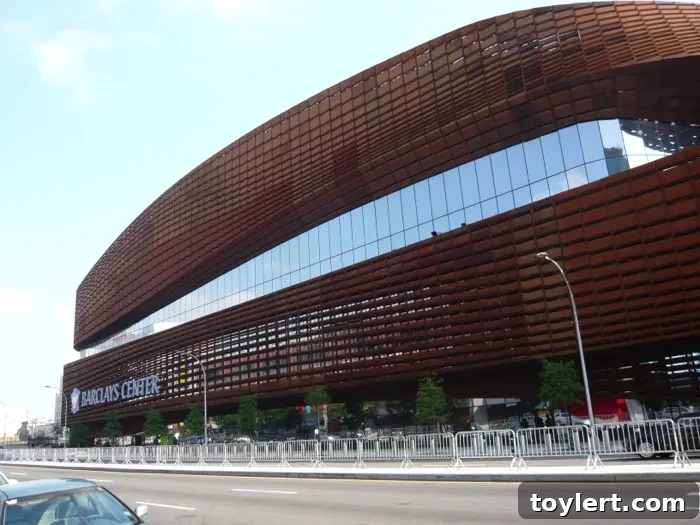
Barclays Center Ousts Real Estate Conference Amid Protests Against Bruce Ratner: A Deep Dive into Tenant Rights and Urban Development Controversies
A significant event unfolded at the Barclays Center, highlighting the ongoing tensions between ambitious urban development projects and the rights of existing communities. The iconic Brooklyn venue made headlines when it effectively canceled a prominent real estate conference, LandlordsNY, which was scheduled for a Tuesday event. The decisive action stemmed from planned protests targeting the conference’s keynote speaker, Bruce Ratner, then Chairman of Forest City Ratner Companies. Tenant advocacy groups had vowed to demonstrate against Ratner, citing his controversial role in the Atlantic Yards project, particularly concerns regarding tenant displacement and the unfulfilled promises of affordable housing.
The news, initially reported by The Real Deal, sent ripples through New York City’s real estate sector. LandlordsNY organizers quickly found themselves searching for an alternative location for their event. More critically, Ratner, a figure synonymous with massive Brooklyn development, ultimately withdrew from his keynote speaking slot, a move that underscored the potency of community activism in shaping even the most high-profile public events. This incident serves as a powerful reminder of the deep-seated grievances that often accompany large-scale urban transformations and the persistent efforts of tenant advocates to hold developers accountable.
The Genesis of Conflict: Bruce Ratner, Forest City, and the Atlantic Yards Project
To fully grasp the magnitude of the protests against Bruce Ratner, one must delve into the history of the Atlantic Yards project, now known as Pacific Park Brooklyn. Conceived in the early 2000s, this colossal mixed-use development aimed to transform a significant tract of land over and around the Atlantic Avenue transit hub in Prospect Heights and Pacific Park, Brooklyn. Spearheaded by Forest City Ratner Companies, the project promised a new sports arena (the Barclays Center itself), residential towers, commercial spaces, and, crucially for many, a substantial amount of affordable housing units, along with new jobs and open space.
However, the project was embroiled in controversy from its inception. Critics raised alarms about the extensive use of eminent domain to acquire existing properties, leading to the displacement of residents and businesses in the proposed footprint. Many long-time residents and small business owners fought lengthy legal battles to save their homes and livelihoods, arguing that the public good invoked by eminent domain was disproportionately skewed towards private corporate interests rather than genuine community benefit. The forced displacement created deep wounds within the community, fostering a sense of betrayal and injustice that lingered for years.
Furthermore, the sheer scale and design of the project, including the towering residential buildings and the anticipated influx of new residents, sparked fears of rapid gentrification and an irreversible alteration of Brooklyn’s unique character. Promises of a swift construction timeline and the timely delivery of affordable housing often faced significant delays and revisions, fueling public skepticism and providing continuous ammunition for advocacy groups. Bruce Ratner, as the public face of Forest City Ratner, became the direct target of much of this community frustration and opposition, embodying for many the complex, often contentious, nature of modern urban redevelopment.
Tenant Advocacy Groups Take a Stand: Why Ratner Was Not a “Good Role Model”
The decision by LandlordsNY to feature Bruce Ratner as a keynote speaker ignited immediate condemnation from a coalition of tenant advocacy groups. Prominent organizations such as the Fifth Avenue Committee, Met Council on Housing, and Make the Road NYC swiftly announced their intentions to organize protests outside the Barclays Center. Their collective message was unequivocal: Ratner was not a suitable “role model for landlords” – a damning indictment that struck at the heart of his professional reputation within the real estate industry and resonated with many struggling tenants.
These groups based their strong objections on several key pillars of their long-standing critique of the Atlantic Yards project. Firstly, the issue of tenant displacement remained a raw and painful memory for many. Hundreds of residents and dozens of small businesses were forced from their homes and properties through the aggressive use of eminent domain, a process that many felt was abused to clear land for private development. The advocates argued that a developer who had overseen such a controversial process of displacement could hardly be seen as an ethical guide for other landlords, whose primary responsibility should be the fair, respectful, and stable treatment of tenants.
Secondly, and perhaps most significantly, was the alleged failure to deliver on promised affordable housing. A cornerstone of the original Atlantic Yards proposal was the commitment to create a substantial number of affordable units, aimed at addressing Brooklyn’s dire housing crisis and garnering crucial public support. However, over the years, the pace of affordable housing construction lagged significantly behind initial projections, and the definitions of “affordable” often drew sharp criticism for not truly catering to the needs of the lowest-income residents. For the protesting groups, this unfulfilled promise represented a profound breach of trust, illustrating a perceived pattern of prioritizing immense profit over genuine community welfare. Their planned demonstration was not merely against an individual but against a development model they viewed as detrimental to vulnerable populations and the fabric of the city.
The Barclays Center’s Decision: A Venue Navigates Public Pressure
The decision by Barclays Center to effectively cancel the LandlordsNY conference due to planned protests against Bruce Ratner was a highly unusual and impactful move. As a major sports and entertainment arena, the Barclays Center is accustomed to hosting a wide array of events, from concerts to basketball games, but seldom does it intervene in such a direct manner regarding the content or speakers of a scheduled conference. This action highlights the significant public pressure exerted by the tenant advocacy groups and the potential for reputational damage that the venue might have faced if the protests had gone ahead as planned.
For the Barclays Center management, the calculus likely involved weighing the financial benefits of hosting the conference against the potential for negative publicity, significant disruption, and even heightened security concerns associated with a high-profile demonstration. Allowing the event to proceed amidst passionate protests could have cast a shadow over the venue itself, potentially alienating local community members, future event-goers, and even sponsors. By asking the conference to relocate, or effectively withdrawing permission, the Barclays Center made a clear statement: while it operates as a commercial enterprise, it is also deeply embedded within the Brooklyn community, and public sentiment, particularly on issues as sensitive as housing and displacement, cannot be ignored.
The immediate consequence for LandlordsNY conference organizers was the urgent need to find a new venue on extremely short notice. This last-minute scramble undoubtedly caused significant logistical headaches, financial strain, and reputational challenges for the event. However, the more symbolic and far-reaching outcome was Bruce Ratner’s subsequent withdrawal as the keynote speaker. This was not merely a schedule change but a powerful public acknowledgment of the validity and influence of the community’s objections. It demonstrated that even powerful real estate developers can be compelled to alter their plans in the face of organized and determined activism, serving as a significant victory for those who have long challenged the Atlantic Yards narrative.
Wider Implications: Development, Displacement, and the Struggle for Affordable Housing
The incident at Barclays Center transcended a simple event cancellation; it became a microcosm of the larger, often fierce, struggle over urban development in major cities like New York. This struggle frequently pits the ambitious visions of developers and city planners, who envision grand revitalization projects, against the legitimate concerns of existing communities who fear displacement, rapid gentrification, and the irreversible loss of local character. The case of Bruce Ratner and Atlantic Yards perfectly encapsulates this tension, reflecting a city constantly grappling with its evolving identity.
The fundamental issue at play is the complex balance between the pursuit of economic growth and the preservation of social equity. Large-scale developments are often touted as indispensable engines of economic prosperity, bringing vital jobs, increased tax revenue, and modern infrastructure. However, the benefits are not always equitably distributed. The influx of new, often wealthier residents and businesses can rapidly drive up property values and rents, making it increasingly difficult, if not impossible, for long-time residents, especially those with lower and middle incomes, to remain in their beloved neighborhoods. This process, commonly known as gentrification, leads to the erosion of community fabric and the exacerbation of the already severe affordable housing crisis.
New York City, in particular, faces an acute shortage of truly affordable housing units, a crisis that affects countless families and individuals. Developers are frequently incentivized to include affordable units in their projects, often through zoning concessions or public subsidies, but the execution and efficacy of these agreements are often subjects of intense public debate and scrutiny. The protests against Ratner highlighted the public’s unwavering demand for accountability: promises of affordable housing must be concrete, timely, genuinely accessible, and truly serve the needs of the community, not merely act as political window dressing or marketing ploys. This incident underscored the critical role that robust community oversight and sustained advocacy play in holding both developers and city authorities to their commitments, striving to ensure that urban development serves all residents, not just a privileged few.
The Enduring Power of Activism: Shaping Urban Landscapes from the Ground Up
The events leading to the cancellation of the LandlordsNY conference at Barclays Center stand as a profound testament to the enduring power and tangible impact of community activism. In a city where real estate development often seems like an unstoppable force, the collective voice of tenant groups and local advocates proved capable of altering significant plans and compelling powerful figures to step back from public platforms. This was not an isolated victory but rather a culmination of years of sustained organizing, public protesting, and even legal challenges waged by dedicated groups like the Fifth Avenue Committee, Met Council on Housing, and Make the Road NYC against the Atlantic Yards project.
These organizations have consistently worked tirelessly to amplify the voices of those most affected by urban development: low-income tenants, struggling small business owners, and marginalized communities. Their diverse strategies involve everything from meticulous grassroots organizing and widespread public education campaigns to direct action, peaceful demonstrations, and strategic lobbying efforts. By planning to protest Bruce Ratner, they masterfully leveraged the immense public visibility of the Barclays Center and the high profile of the conference to draw renewed, critical attention to their long-standing grievances, forcing a wider, much-needed conversation about corporate responsibility and social justice in the realm of real estate.
The incident serves as an inspiring and empowering example for other communities facing similar development pressures and challenges across the nation. It powerfully demonstrates that strategic, organized, and persistent activism can indeed challenge the status quo, even when confronting well-funded developers and established political interests. It reinforces the fundamental idea that urban landscapes are not solely shaped by top-down planning and powerful market forces, but also, and critically, by bottom-up movements advocating for equitable development and community preservation. The ability of these groups to influence a major venue’s decision and a prominent developer’s participation illustrates that active citizenship remains a vital and indispensable force in democratic urban planning, ensuring that community welfare is not overshadowed by unchecked commercial ambition.
Conclusion: A Landmark Moment for Accountability in Urban Development
The controversy surrounding the LandlordsNY conference at Barclays Center in 2014, and Bruce Ratner’s subsequent withdrawal, marked a highly significant moment in New York City’s ongoing discourse about urban development, community rights, and corporate accountability. It was a vivid and compelling illustration of how unresolved grievances from large-scale projects can continue to resonate for years after ground is broken, and how sustained community activism can effectively challenge powerful real estate interests and alter their public trajectory.
The tenant advocate groups succeeded in their objective: they powerfully highlighted the complex and often controversial legacy of the Atlantic Yards project, particularly addressing the critical issues of displacement and the slow, inadequate delivery of promised affordable housing. Their actions compelled both the venue and the developer to publicly acknowledge the intensity and legitimacy of public sentiment. This event underscored that public perception, community trust, and a developer’s social license to operate are invaluable assets, even for seemingly impervious entities in the real estate world. For future urban projects, the incident serves as a crucial reminder that genuine community engagement, transparent fulfillment of commitments, and a respectful, empathetic approach to existing residents are not merely desirable but absolutely essential for achieving long-term success and fostering true social harmony within the urban fabric.