Timeless Elegance in Park Slope: Discovering a Neo-Grec Brownstone Gem
Nestled on one of Park Slope’s most coveted streets, a truly remarkable two-family brownstone at 393 2nd Street offers a rare opportunity to own a piece of Brooklyn’s rich architectural heritage. Dating back to the 1880s, this meticulously preserved residence showcases an abundance of original Neo-Grec details, reflecting a bygone era of sophisticated craftsmanship and enduring style. Having remained within the same family since at least the 1980s, this home now awaits a new steward to appreciate its unique charm and prime location.
The Enduring Allure of Park Slope: A Neighborhood Beyond Compare
Park Slope is more than just a neighborhood; it’s a lifestyle. Renowned for its picturesque tree-lined streets, historic brownstones, and vibrant community, it consistently ranks among New York City’s most desirable places to live. Its proximity to Prospect Park, a magnificent urban oasis designed by Frederick Law Olmsted and Calvert Vaux, provides residents with unparalleled access to nature, recreational activities, and cultural events. From leisurely strolls through botanical gardens to energetic jogs and family picnics, the park serves as the backyard for this dynamic community.
Beyond its natural beauty, Park Slope boasts an impressive array of amenities. Seventh and Fifth Avenues are bustling thoroughfares, home to an eclectic mix of independent boutiques, gourmet restaurants, charming cafes, and essential services. The neighborhood is also celebrated for its excellent schools, making it a top choice for families. Cultural institutions, including the Brooklyn Academy of Music (BAM) and numerous art galleries, ensure a rich intellectual and artistic environment. With convenient access to multiple subway lines, commuting to Manhattan and other parts of Brooklyn is effortless, further enhancing its appeal as a premier residential destination.
Architectural Grandeur: Unpacking the Neo-Grec Brownstone
This 17.5-foot wide, three-story brownstone is a prime example of Neo-Grec architecture, a style that gained prominence in the late 19th century. Characterized by its classical influences, clean lines, and often subtle yet sophisticated ornamentation, Neo-Grec design emerged as a more restrained and intellectual counterpoint to the more flamboyant Victorian styles of the period. While the exterior typically features robust brownstone facades with intricate carving around windows and doorways, the interiors often boast a wealth of finely crafted woodwork, plaster details, and a sense of refined elegance.
Built in the 1880s, a period of significant expansion and prosperity for Brooklyn, this home would have been constructed with an emphasis on quality and durability, designed to last for generations. The choice of Neo-Grec elements speaks to a taste for enduring classicism, ensuring that the property retains its distinguished appearance and historical integrity. The narrow footprint belies a surprisingly spacious and thoughtfully laid-out interior, a common characteristic of urban brownstones that masterfully utilize vertical space.
A Flexible Configuration: Owner’s Duplex with Rental Income Potential
Currently configured as a legal two-family home, this brownstone offers immense flexibility and practical advantages. The upper level features a one-bedroom rental unit, providing an immediate income stream that can significantly offset mortgage costs or serve as a valuable investment. This separate dwelling allows for privacy and independence for both residents, making it an attractive option for those looking to maximize their property’s potential.
The lower two floors form a spacious owner’s duplex, offering generous living quarters that combine historic charm with modern comfort. This arrangement is ideal for families seeking ample space, or individuals who desire the convenience of having a rental unit to help manage expenses while enjoying the benefits of brownstone living. The dual functionality of the property also presents an appealing prospect for investors looking for a turn-key asset in a high-demand market.
The fact that the house appears to be in “move-in condition” is a testament to its careful stewardship over the decades. For a historic home, this often implies that essential systems have been updated while the original architectural integrity has been lovingly preserved. This balance allows new owners to enjoy the immediate comforts of a well-maintained residence without the immediate burden of major renovations, while still offering scope for personalization over time.
Treasured Details: A Nod to the Past, Preserved for the Future
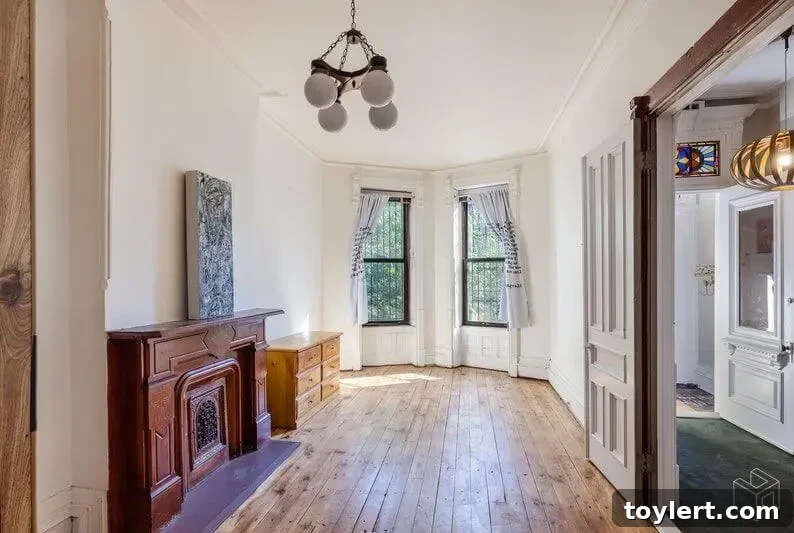
Stepping inside this Park Slope brownstone is like stepping back in time, where the artistry of 19th-century craftsmen is beautifully on display. The home abounds with period details that imbue each space with character and warmth, creating an atmosphere that is both grand and inviting.
Grand Entryway and Stained Glass Transom
The journey begins at the original interior door, a remarkable piece featuring exquisite dentil molding. This decorative molding, characterized by a series of small, tooth-like blocks, adds a classical touch of refinement. Above this impressive door, a lovely stained glass transom casts vibrant hues into the entryway, particularly when sunlight streams through. Stained glass transoms were popular in Victorian-era homes, serving not only as decorative elements but also to allow light into interior spaces while maintaining privacy. Its presence here is a clear indicator of the home’s original elegance and attention to detail.
Exquisite Millwork and Finishes
Throughout the home, the integrity of its original construction shines through in the rich hardwood floors that extend across multiple levels. These floors, likely original or period-appropriate replacements, have been meticulously cared for, offering durability and timeless aesthetic appeal. Accompanying these are the intricate plaster wall moldings, crown moldings, and sturdy baseboards. These elements are not merely decorative; they speak to a level of craftsmanship rarely seen in modern construction, highlighting the high standards of design and material quality from the era. They define the rooms, add architectural depth, and provide a harmonious framework for any interior design scheme.
Functional Elegance: Shutters and Pocket Doors
Practical elements also contribute to the home’s historic charm. Original shutters, likely interior ones, are still present, offering both light control and an added layer of insulation, while also enhancing the visual appeal of the windows. Their presence reinforces the commitment to preserving the home’s authentic character. Furthermore, though not visible in all listing photos, the mention of pocket doors is a significant detail. Pocket doors, which slide into a compartment within the wall, were a popular feature in grand homes of the period. They offer an elegant solution for dividing large rooms or creating intimate spaces without encroaching on floor area, providing both flexibility in layout and a touch of discreet sophistication.
Focal Points: Five Decorative Mantels
Perhaps one of the most striking features of this brownstone is the presence of a total of five decorative mantels. In 19th-century homes, fireplaces served as central gathering points and their surrounds were often elaborate statements of wealth and style. Even if these are now decorative rather than functional for burning wood, they remain powerful architectural focal points in each room where they reside. Each mantel could potentially feature unique carvings, different materials such as marble or intricately carved wood, and serve as a showcase for art or family heirlooms. Their sheer number speaks to the generous scale and thoughtful design of the home, indicating multiple formal and informal living spaces where warmth and beauty were prioritized.
A Seamless Transition: Move-in Ready and Awaiting Personalization
The designation of “move-in condition” for a historic property like this brownstone is a significant advantage. It suggests that the current owners have diligently maintained the property, likely addressing critical infrastructure updates (plumbing, electrical, heating) while preserving its invaluable original character. This means a new owner can settle in immediately and begin to personalize the space without the immediate pressure of extensive and costly renovations often associated with older homes.
While the home offers a solid foundation of historic charm and modern functionality, it also provides a canvas for future enhancements. Whether it’s updating kitchen or bathroom fixtures to contemporary tastes, or simply curating furniture that complements the Neo-Grec aesthetic, the possibilities for customization are endless. The inherent beauty of the original details ensures that any updates will blend seamlessly with the home’s foundational elegance, rather than clashing with it.
Investing in a Legacy: The Park Slope Advantage
Owning a brownstone in Park Slope is more than just purchasing real estate; it’s an investment in a legacy and a lifestyle. Properties like 393 2nd Street, with their rare combination of architectural significance, prime location, and income-generating potential, tend to appreciate steadily in value. The enduring appeal of Park Slope, coupled with the limited supply of such historically rich homes, makes this a sound and desirable asset for discerning buyers.
This brownstone offers the unique opportunity to live amidst history while enjoying all the conveniences of modern Brooklyn life. It represents a connection to the city’s past, a comfortable present, and a promising future. For those seeking a home that tells a story, provides flexibility, and stands as a testament to timeless design, this Park Slope Neo-Grec gem truly delivers.