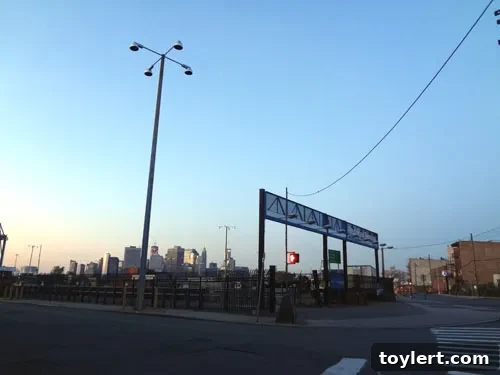
Red Hook Waterfront: Unraveling the Future of Brooklyn’s Industrial Edge
The vibrant waterfront of Red Hook, a historic and enduring industrial hub in Brooklyn, is once again at the center of a significant urban transformation narrative. Beneath its active port operations, a subtle yet profound shift is underway, stirring fervent speculation about the area’s future. Recent developments have brought to light a pivotal change in operational control at the Red Hook container port, which many insiders believe signals the resurgence of ambitious redevelopment plans that have long been on the city’s drawing board.
Following up on earlier reports, The Post delves deeper into the crucial news regarding American Stevedoring’s departure from managing operations at the Red Hook terminal. This significant change, first reported by sources like Brownstoner, suggests more than just a routine change of contractors. It indicates a strategic move by the City of New York and the Port Authority to potentially revive comprehensive plans to redevelop these valuable waterfront piers. This potential redevelopment could redefine Red Hook’s character, blending its industrial roots with modern urban living and commerce.
The Curious Case of Phoenix Beverage Co.: A Short-Term Solution?
Central to this escalating speculation is the unexpected entrance of Phoenix Beverage Co., the new operator tasked with managing the Red Hook port. This appointment immediately raised questions among maritime industry professionals and urban planners alike. Phoenix Beverage Co., primarily recognized as a beer distributor, possesses no prior experience in the complex and specialized field of running a container port. This lack of relevant expertise, coupled with the remarkably short one-year lease granted to the company, has become the primary evidence fueling the belief that a larger, hidden agenda is at play.
As quoted in The Post, Sandy Pope, head of Teamsters Local 805, voiced strong skepticism regarding the arrangement: “Ships need to book years in advance. This has to do with real-estate interests.” Pope’s assertion highlights the inherent mismatch between Phoenix’s temporary tenure and the long-term planning demands of global shipping. Industry sources widely interpret Phoenix’s brief, interim role as a calculated “holding pattern” – a strategic pause allowing the city and the Port Authority to meticulously reignite and finalize more intensive, large-scale development plans for the waterfront. This approach permits flexibility and avoids long-term commitments that might obstruct future real estate ventures, effectively keeping the door open for significant future changes.
Echoes of the Past: The 2003 Redevelopment Vision
The current buzz surrounding Red Hook’s future is not entirely unprecedented. It strongly resonates with a robust redevelopment vision first unveiled in 2003. Over two decades ago, ambitious proposals were put forth to transform the Red Hook waterfront into a dynamic, mixed-use district, moving beyond its traditional industrial identity. These comprehensive plans envisioned significant new constructions, including upscale hotels designed to attract tourists and business travelers, and residential condominiums, aiming to capitalize on the increasing demand for waterfront properties offering stunning views of the Manhattan skyline. Such developments promised to significantly reshape Red Hook’s economic landscape, transitioning it from a working port to a vibrant destination for living, leisure, and commerce.
Although these grand plans were eventually put on hold, the recent changes at the port strongly suggest they may now be reactivated. The departure of a long-standing operator like American Stevedoring, combined with the temporary nature of Phoenix’s lease, creates an opportune moment for urban planners and developers to revisit these previously drafted blueprints. With Brooklyn’s real estate market having surged significantly since 2003, high-value residential and commercial projects in waterfront locations are more appealing and financially viable than ever before. Reinitiating these plans could unlock substantial economic benefits, including increased property values, significant tax revenues for the city, and the creation of thousands of new jobs across construction, hospitality, and retail sectors.
Official Denials Amidst Persistent Industry Speculation
Despite the growing chorus of industry speculation and community concerns, officials from the Port Authority have consistently maintained a stance of denial regarding any imminent large-scale redevelopment. A Port Authority spokesman, in comments reported by The Post, stated that the change in port operators does not indicate a shift towards prioritizing real estate development. Such official denials are a common feature in major urban planning initiatives, particularly when they involve complex issues such as potential job displacement, environmental impacts, and substantial financial commitments. Public agencies often strategically manage public expectations to avoid premature announcements that could trigger opposition or cause unnecessary market fluctuations.
However, these official statements have done little to dampen the persistent skepticism among seasoned industry observers and local community leaders. The highly unusual circumstances surrounding Phoenix Beverage Co.’s involvement — a non-maritime company on a very short lease — are simply too conspicuous to be dismissed as standard port operations. Insiders contend that this strategic interplay between official reassurances and behind-the-scenes maneuvers is typical for projects of this magnitude, where political and economic interests are deeply intertwined. The logic remains compelling: why would a major, experienced port operator be replaced by a company with no relevant background on such an unstable lease unless a more fundamental, transformative change was being orchestrated for Red Hook’s prime waterfront real estate?
The Multi-faceted Stakes for Red Hook: Community, Economy, and Identity
The potential redevelopment of the Red Hook waterfront carries profound and far-reaching implications for a diverse array of stakeholders. For the City of New York and the Port Authority, the promise of economic revitalization is a powerful driver. A successful redevelopment could generate substantial tax revenues, create a multitude of jobs in construction and service industries, and further enhance Brooklyn’s global appeal as a thriving urban center. Real estate developers, naturally, envision lucrative opportunities in transforming former industrial land into high-value residential complexes and modern commercial spaces, capitalizing on Red Hook’s unparalleled waterfront access and panoramic views of the Manhattan skyline.
Yet, for the long-standing residents and established businesses of Red Hook, the news is met with a complex blend of hope and considerable apprehension. While some residents welcome the prospect of new amenities, improved infrastructure, and a more vibrant local economy, many others fear the potential adverse effects of rapid gentrification. The conversion of industrial sites into luxury accommodations and condominiums often leads to significantly increased living costs, the displacement of existing communities, and an erosion of the neighborhood’s unique, historical character. Critical questions arise concerning whether new developments will be genuinely inclusive, offering adequate affordable housing options, and actively preserving the distinct, independent spirit that defines Red Hook.
Labor unions, particularly those representing port workers such as Teamsters Local 805, are intensely focused on job security and the preservation of crucial industrial employment. A decisive shift away from traditional port operations could result in the loss of well-paying union jobs, a significant concern for the local workforce. Ensuring that any redevelopment plans include robust provisions for local hiring, job training programs, and the creation of diverse employment opportunities will be absolutely vital for fostering community acceptance and minimizing social disruption.
Envisioning a Balanced Future for Brooklyn’s Pivotal Waterfront
As the discourse surrounding Red Hook’s future intensifies, the overarching challenge lies in achieving a delicate and sustainable balance between urban progress and invaluable heritage preservation. A truly successful redevelopment of this iconic Brooklyn waterfront must go beyond mere functional replacement; it requires seamlessly integrating new developments into the existing urban fabric. This necessitates the creation of genuinely mixed-income housing, the development of expansive and accessible public green spaces, vibrant waterfront promenades, and the fostering of a diverse economic ecosystem that actively supports both innovative new businesses and the area’s established local enterprises.
The infrastructural demands associated with a comprehensively redeveloped Red Hook are also monumental. Increased residential density and amplified commercial activity will inevitably necessitate substantial improvements in public transportation, including enhanced transit options and upgraded road networks, to prevent overwhelming the area’s existing and often strained infrastructure. Furthermore, any waterfront development must be meticulously planned with environmental sustainability at its core, ensuring the protection of vital marine ecosystems and implementing robust strategies to mitigate the escalating impacts of climate change, such as rising sea levels and increased storm surges.
Ultimately, the unfolding situation at the Red Hook container port serves as a compelling and intricate case study in urban evolution and the perpetual tension between industrial legacy and modern aspirations. The departure of American Stevedoring and the arrival of Phoenix Beverage Co., underscored by its short-term lease, act as powerful harbingers of profound change. Whether these signals will culminate in the resurrection of previous grand redevelopment visions or inspire a new, more nuanced and community-centric approach remains to be fully seen. What is undeniably clear, however, is that the future of the Red Hook waterfront is on the cusp of a significant transformation, inviting close scrutiny and active engagement from all who care about the future trajectory of Brooklyn’s vital and iconic coastline.
Sources:
Upgrade Due on the Waterfront [NY Post]
American Stevedoring Out at Red Hook Terminal [Brownstoner]