End of an Era: Red Hook Trolleys Depart, What’s Next for Brooklyn’s Transit Dreams?
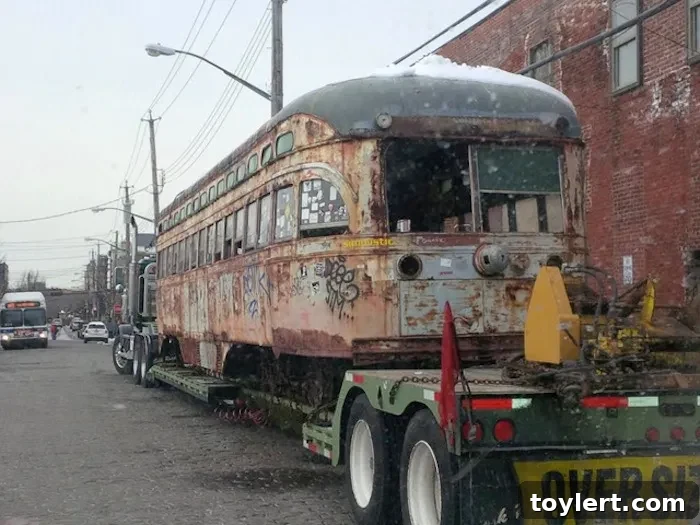
A poignant chapter in Brooklyn’s transit history concluded abruptly last night as the iconic, aging trolley cars that had long graced the landscape behind Fairway on Van Brunt Street in Red Hook were unceremoniously hauled away. These distinctive vehicles, once vibrant symbols of an ambitious plan to rekindle Red Hook’s historic trolley service, have now vanished, leaving behind questions and a palpable sense of loss for many who cherished the vision of their revival. The removal marks a significant turning point, extinguishing hopes that these vintage streetcars might once again transport residents and visitors through the cobblestone streets of one of Brooklyn’s most unique neighborhoods.
The operation, reportedly orchestrated by prominent neighborhood developer Greg O’Connell, saw the trolleys, which had been a static fixture for years, finally moved from their long-term parking spot. Bob Diamond, a local historian renowned for his profound connection to Brooklyn’s underground heritage and the very individual who meticulously collected these trolleys and brought them to Red Hook, shared photographs of the removal with Gothamist. Diamond’s involvement underscores the deep historical roots and passionate advocacy behind the dream of a Red Hook trolley resurgence, a dream now seemingly derailed by the developer’s actions.
The Unfulfilled Promise of Red Hook Trolley Service
For years, the mere presence of these classic trolleys fueled the imagination of a community yearning for enhanced local transportation and a unique connection to its past. The vision was grand: to establish a modern trolley line starting in Red Hook, connecting residents and visitors to broader Brooklyn and potentially Manhattan. Proponents argued that a streetcar system would not only ease transit challenges in a somewhat isolated neighborhood but also serve as a significant tourist attraction, drawing visitors eager for a nostalgic ride and boosting local businesses. The Red Hook trolley project was more than just a transportation initiative; it was a cultural preservation effort, aiming to weave the fabric of Brooklyn’s rich industrial and public transit history into its contemporary urban landscape.
The plan envisioned a future where the gentle clang of a trolley bell would echo through Red Hook, replacing the distant rumble of diesel buses. It was a promise of slower, more scenic travel, a way to experience the waterfront district with an old-world charm. Such a system would have undoubtedly injected new life into Red Hook’s unique blend of industrial grit and artistic flair, creating a distinct identity that celebrated its heritage while embracing forward-thinking urban solutions. The stationary trolleys served as a constant, tangible reminder of this potential, a silent sentinel awaiting activation, making their sudden removal all the more impactful.
Bob Diamond: A Guardian of Brooklyn’s Hidden History
At the heart of the Red Hook trolley initiative was Bob Diamond, a figure synonymous with Brooklyn’s forgotten infrastructure. Diamond’s dedication to preserving and uncovering the borough’s historical secrets is legendary. He is most famously credited with the rediscovery of the Atlantic Avenue tunnel, an astonishing 19th-century railway tunnel beneath one of Brooklyn’s busiest thoroughfares. His relentless efforts to bring this subterranean marvel to public attention showcased his unwavering commitment to heritage. It was this same passion that led him to meticulously acquire and bring the Red Hook trolleys to their temporary home on Van Brunt Street, nurturing the hope that they would one day glide across the neighborhood’s streets once more.
Diamond saw the trolleys not merely as defunct vehicles but as living artifacts, bridges to an era when Brooklyn’s streets teemed with such transport. His vision extended beyond simple preservation; he believed in the practical revitalization of these systems for modern use. The trolleys were positioned as tangible proof of a viable transit alternative, a demonstration project that could spark a wider reevaluation of streetcar potential in New York City. For years, he championed the cause, engaging with community leaders, urban planners, and transit enthusiasts, all while the physical presence of the trolleys stood as a testament to his persistent advocacy and the community’s lingering hope.
The Developer’s Hand: Greg O’Connell and Urban Evolution
The decision to remove the trolleys was reportedly made by Greg O’Connell, a developer with extensive holdings and a significant influence in Red Hook. O’Connell’s involvement in the transformation of Red Hook from a largely industrial zone into a vibrant mixed-use neighborhood is well-documented. While his contributions to the area’s revitalization are undeniable, including the restoration of numerous historic buildings and the attraction of new businesses, his actions often represent the pragmatic realities of urban development. The presence of the dormant trolleys, while symbolic, occupied valuable space and may have posed logistical challenges or simply not aligned with the developer’s immediate plans for the area.
The removal highlights the constant tension between preserving historical relics and the inexorable march of urban progress. Developers like O’Connell operate within an economic framework, where every square foot of land has potential value for new commercial ventures, residential projects, or infrastructural improvements. While the trolleys held immense sentimental and historical value for many, from a developer’s standpoint, they might have represented an unutilized asset or an impediment to future development. This dynamic often pits community aspirations and historical preservation against economic viability and modern utility, leading to difficult decisions that reshape the urban fabric.
An Uncertain Destination: Scrap Yard or Museum?
Following their removal, speculation immediately arose regarding the ultimate fate of these historic Red Hook trolleys. Gothamist reported conflicting rumors, presenting two starkly different possibilities for their future. One grim prospect suggests the trolleys might be destined for a scrap yard upstate, a fate that would undoubtedly be met with dismay by historians, transit enthusiasts, and local residents who harbored hopes for their future. Such an outcome would signify a definitive end to the Red Hook trolley dream, turning a symbol of potential revival into mere discarded metal.
However, a more optimistic rumor points to the Trolley Museum of New York in Kingston as their potential new home. This would be a fitting and honorable end for vehicles that carry such historical weight. The Trolley Museum of New York is dedicated to the preservation and operation of historic streetcars and trolleys, offering a chance for these artifacts to be professionally conserved, interpreted, and perhaps even operated for educational purposes. Moving to a museum would ensure their survival, allowing them to educate future generations about urban transit history, even if they never again grace the streets of Brooklyn. The contrast between these two potential destinies encapsulates the ongoing struggle for historical artifacts in rapidly evolving urban environments.
The Broader Context: Brooklyn’s Rich Transit Legacy
Brooklyn, once known as the “Borough of Churches,” could just as aptly be called the “Borough of Trolleys” given its extensive network of streetcar lines that crisscrossed the landscape for decades. From the late 19th century through the mid-20th century, trolleys were the lifeblood of Brooklyn’s public transportation, connecting disparate neighborhoods, facilitating commerce, and enabling the borough’s rapid growth. The eventual decline and dismantling of these systems were part of a nationwide trend, as automobiles gained dominance and bus networks replaced rail lines, leading to the gradual erasure of an entire era of urban mobility.
The Red Hook trolley initiative was, in many ways, an attempt to reconnect with this rich legacy, a nostalgic yearning for a more sustainable and community-oriented mode of transport. In an age where cities grapple with traffic congestion, environmental concerns, and the need for efficient public transit, the concept of modern streetcars has seen a resurgence in various cities globally. While the dream for Red Hook’s specific trolley revival may now be dashed, the broader conversations about light rail, modern streetcars, and sustainable urban mobility continue to be vital for New York City’s future. The removal of these specific trolleys serves as a stark reminder of the challenges inherent in weaving historical preservation into the fabric of ongoing urban development and transit planning.
A Reflection on Urban Heritage and Change
The departure of the Red Hook trolleys is more than just the physical removal of old vehicles; it symbolizes the constant push and pull between a city’s past and its future. For many Red Hook residents and Brooklynites, these trolleys were a quirky, beloved landmark, a tangible link to a bygone era, and a beacon of hope for a unique transit solution. Their absence leaves a void, a silent testament to dreams deferred and the transient nature of urban landscapes.
While the economic imperatives of development are undeniable, the value of preserving such heritage cannot be overstated. These trolleys carried stories, representing not just a mode of transport but also the collective memory and aspirations of a community. As Brooklyn continues its dynamic evolution, the saga of the Red Hook trolleys serves as a powerful reminder of the delicate balance required to honor history while building for tomorrow. Whether they end up in a museum or a scrap yard, their story will remain a significant footnote in Red Hook’s ongoing narrative of transformation.