Transforming Trash: An Artistic Journey Unveiled at Sweet Lorraine Gallery in Red Hook
In the vibrant, historically rich neighborhood of Red Hook, Brooklyn, the Sweet Lorraine Gallery recently unveiled an exhibition that challenges our perceptions of waste, history, and beauty. Titled “Taking in the Trash,” this captivating show, which opened on a recent Friday, features the thought-provoking works of two distinct yet complementary artists, Katarina Jerinic and Karen Mainenti. Their collaborative exhibit invites viewers to embark on a journey through discarded objects, from the historical refuse of Dead Horse Bay to the ubiquitous packaging of modern consumerism, transforming what was once waste into compelling narratives that resonate deeply with contemporary environmental concerns.
While both artists had a mutual appreciation for each other’s individual artistic endeavors, “Taking in the Trash” marks the inaugural occasion of their joint exhibition. This shared platform has allowed their individual approaches to coalesce, revealing powerful dialogues between their respective practices. At the heart of their work lies a profound engagement with themes of the environment, waste reduction, and the principles of recycling. Both Jerinic and Mainenti share a unique methodology: their primary source material is derived directly from the urban landscape itself, gathered through diligent foraging for trash across the city. Yet, their interpretations and artistic transformations of these found objects diverge beautifully, creating a rich tapestry of perspectives within the gallery space.
The Artists: Unearthing Stories from Refuse
Karen Mainenti: Giving New Life to Historical Artifacts from Dead Horse Bay
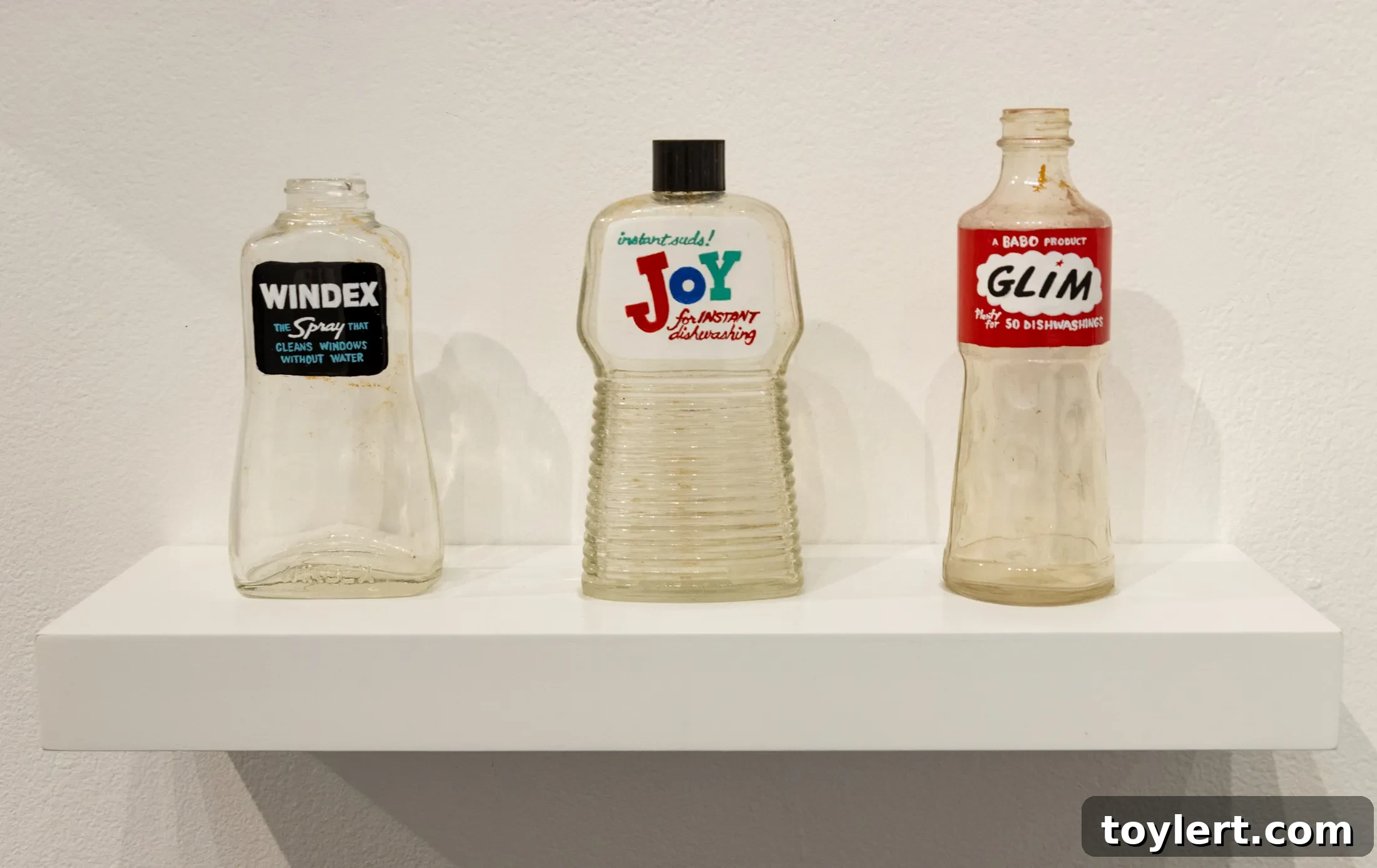
Karen Mainenti’s contribution to the exhibit, titled “Empty Vessels,” is a mesmerizing collection born from the shores of the enigmatic Dead Horse Bay. This particular stretch of Brooklyn coastline is famed, or perhaps infamous, for its ceaseless tide of historical refuse – a testament to generations of discarded materials that have washed ashore, particularly glass bottles dating back to the late 19th and early 20th centuries. Mainenti meticulously salvages these weathered remnants of a bygone era, each bottle a silent witness to forgotten lives and industries.
Her artistic process is one of historical resurrection. Rather than simply presenting the found objects, Mainenti undertakes extensive research to identify the original contents and branding of these bottles. She then painstakingly crafts immaculate, historically accurate new labels, which she affixes to the trashed glass. The result is astonishing: what were once decaying symbols of waste are transformed into pristine, almost museum-quality artifacts, brimming with stories and a renewed sense of dignity. “Empty Vessels” not only highlights the material history embedded in our waste but also prompts viewers to consider the cycles of consumption, the impermanence of objects, and the surprising resilience of discarded materials. It’s an artistic form of urban archaeology, bringing the past into vivid dialogue with the present and questioning our understanding of value and obsolescence.
Katarina Jerinic: Contemporary Waste as a Canvas for Nature’s Persistence
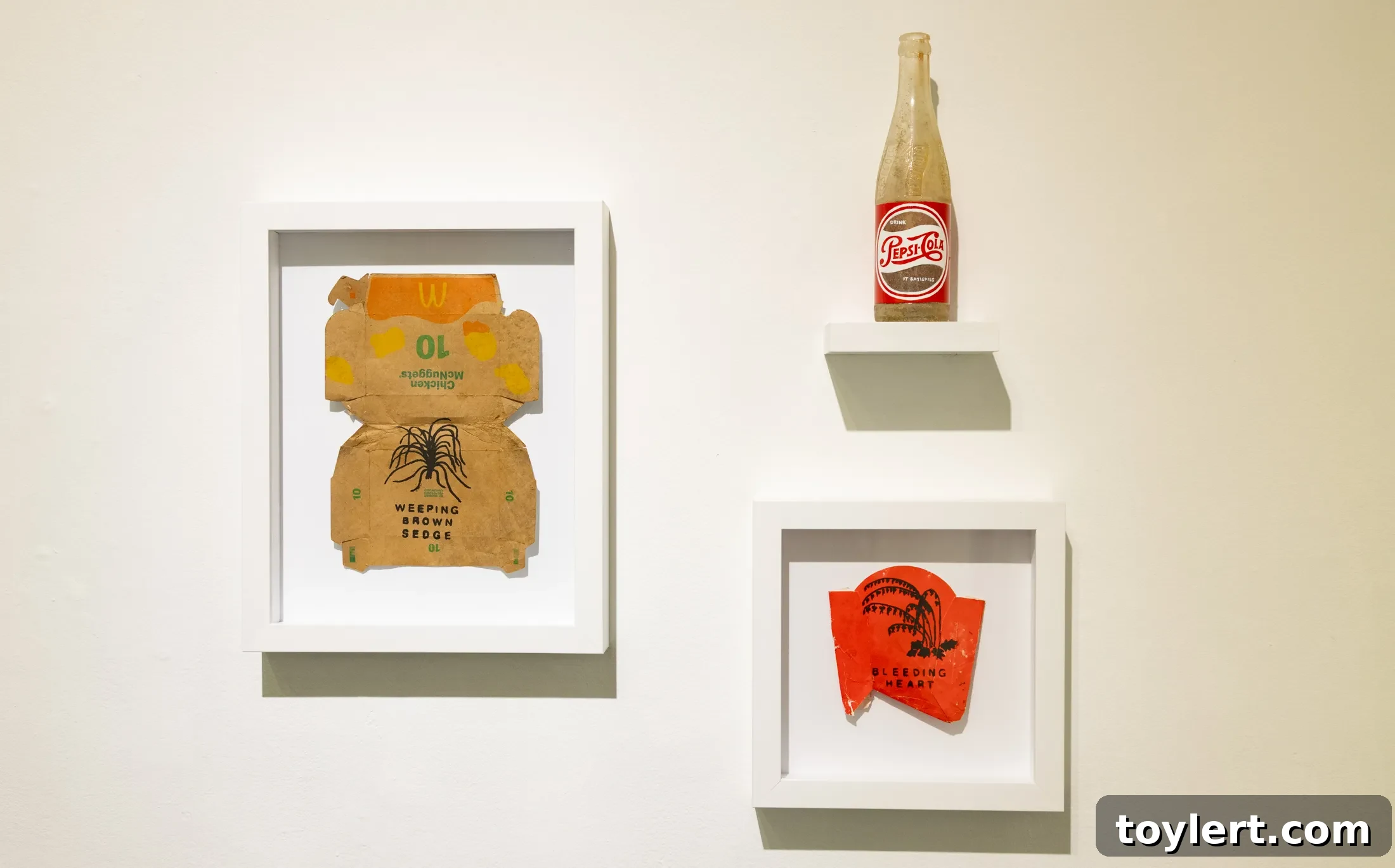
Complementing Mainenti’s historical focus, Katarina Jerinic’s series, “Litter Landscapes,” offers a poignant commentary on contemporary waste. Jerinic employs a screen-printing technique, but her canvases are far from conventional. She selects pieces of everyday, modern refuse – plastic bags, fast-food wrappers, discarded packaging – transforming them from environmental blight into the very substrate for her art. Upon these contemporary waste materials, she screen prints delicate botanical imagery.
This juxtaposition is intentional and deeply moving. The fragile beauty of flora, often associated with natural growth and regeneration, is rendered upon materials that are inherently unnatural and persistent in their environmental harm. The “forlorn bent” mentioned in the description refers to the melancholic undertone of these pieces; the botanical prints appear to be either struggling to reclaim or ironically adorning the very objects that threaten their existence. “Litter Landscapes” serves as a powerful visual metaphor for humanity’s impact on the natural world, illustrating how our relentless consumption and disposal habits leave indelible marks on the environment. It compels viewers to confront the pervasive presence of waste in our daily lives and ponder the fate of nature amidst urban sprawl and industrial byproduct.
A Collaborative Tapestry: Weaving Narratives of Waste and Resilience
Upon installing their respective bodies of work within the intimate confines of the third-floor gallery space at Sweet Lorraine, Jerinic and Mainenti discovered an unexpected synergy. Despite their differing timelines and materials, common narratives emerged, often tinged with a subtle, insightful humor. The curation of “Taking in the Trash” masterfully highlights these connections, creating an immersive experience where the works converse with one another across the gallery.
One striking example of their collaborative spirit is a tableau centered around the theme of fast food. Here, Jerinic’s screen prints, featuring the distinctive wrappers of French fries and chicken nuggets, are thoughtfully paired with a vintage 1950s Pepsi bottle that Mainenti painstakingly brought back to life. This pairing is ingenious: it bridges decades of consumer culture, from the mid-century rise of convenience foods to today’s ubiquitous fast-food landscape. It invites contemplation on how our consumption habits have evolved, yet the fundamental act of discarding remains constant. The pristine presentation of these once-discarded items – the vibrant screen prints housed in clean white frames and Mainenti’s glass bottles elegantly displayed on shelves and plinths – serves to elevate the status of what was once considered refuse, forcing a reconsideration of its inherent aesthetic and historical value.
Throughout much of the exhibition, the artists’ works are intentionally paired, fostering a dynamic dialogue between historical artifact and contemporary debris. The immaculate presentation of each piece, despite its humble origins, underscores the artistic intent: to dignify the discarded, to find beauty in the overlooked, and to provoke deeper thought about the environmental footprint of human activity. This meticulous arrangement not only showcases the individual brilliance of each artist but also magnifies the overarching message of the exhibit: that trash, in its myriad forms, tells a compelling story about who we are, where we’ve been, and where we’re headed.
Red Hook: A Fitting Backdrop for Artistic Reclamation
The choice of Sweet Lorraine Gallery in Red Hook for “Taking in the Trash” is particularly apt. Red Hook itself is a neighborhood steeped in history and characterized by a compelling blend of industrial past and burgeoning artistic present. Once a bustling port and manufacturing hub, Red Hook’s waterfront location, punctuated by remnants of its industrial heritage, provides a poignant context for an exhibition dedicated to waste and transformation.
The very fabric of Red Hook, with its cobblestone streets, repurposed warehouses, and artistic enclaves, mirrors the exhibition’s themes of reclamation and reinvention. The community’s resilience and its embrace of creative ventures make it a fertile ground for art that challenges norms and encourages introspection. The Sweet Lorraine Gallery, known for fostering contemporary artistic expression, offers an ideal platform for Jerinic and Mainenti’s work, enabling it to reach an audience receptive to innovative approaches to environmental and social commentary. The gallery’s setting allows for an intimate engagement with the art, inviting visitors to not only observe but also to reflect on their own relationship with consumption and the environment.
Beyond the Gallery Walls: A Call for Environmental Awareness
“Taking in the Trash” transcends the conventional art exhibition; it serves as a powerful call to action and a meditation on our collective impact on the planet. By elevating trash to the realm of high art, Katarina Jerinic and Karen Mainenti force us to confront the uncomfortable realities of consumerism and its ecological consequences. Their works spark crucial conversations about sustainable living, responsible waste management, and the potential for creative solutions to environmental challenges.
The exhibit encourages viewers to look beyond the surface, to find meaning and beauty in the discarded, and to reconsider the lifecycle of the objects that pass through our hands daily. It’s a powerful reminder that even the most mundane or repulsive elements of our society can be transformed into profound artistic statements, offering new perspectives on history, nature, and our shared future. By focusing on both historical waste from Dead Horse Bay and contemporary urban litter, the artists draw a continuous line of human impact, emphasizing that while materials and styles of consumption change, the issue of waste persists and evolves. This thought-provoking exhibition firmly establishes itself as a must-see for anyone interested in environmental art, sustainable practices, or simply the captivating power of artistic transformation.