Timber in the City: Pioneering Sustainable Urban Development with Wood Architecture
In a significant stride towards redefining sustainable urban living, the Association of Collegiate Schools of Architecture (ACSA), the Binational Softwood Lumber Council (BSLC), and Parsons New School for Design collaboratively sponsored and recently announced the distinguished winners of their groundbreaking design competition: “Timber in the City.” This initiative served as a pivotal platform, inviting architecture students to conceptualize and design a vibrant, mixed-use development, with a specific focus on harnessing the potential of cutting-edge wood technologies for a strategically chosen site in Red Hook, Brooklyn.
The competition, as highlighted by Curbed, challenged participants to push the boundaries of conventional construction, emphasizing wood as the primary building material. The goal was not merely aesthetic, but also deeply rooted in addressing contemporary urban challenges such as housing affordability, sustainable transportation, and local economic development through innovative architectural solutions.
The Vision Behind Timber in the City: Fostering Sustainable Innovation
The “Timber in the City” competition was conceived from a shared vision among its esteemed sponsors to explore and promote the profound benefits of wood in modern construction. ACSA, representing academic excellence in architecture, aimed to inspire the next generation of architects to integrate sustainable practices into their design ethos. The Binational Softwood Lumber Council brought invaluable industry expertise, advocating for the responsible and innovative use of softwood lumber as a renewable resource with significant environmental advantages. Parsons New School for Design, renowned for its progressive and socially conscious design curriculum, provided an intellectual hub for creative exploration.
This collaborative effort sought to demonstrate that wood, often overlooked in large-scale urban developments in favor of steel and concrete, offers robust, aesthetically pleasing, and environmentally superior alternatives. The competition encouraged students to envision not just buildings, but holistic urban ecosystems that contribute positively to their surroundings, embodying principles of resilience, community, and ecological harmony.
Red Hook, Brooklyn: A Canvas for Transformative Design
The chosen site for this ambitious competition was a prominent bus parking lot situated across Beard Street from the IKEA in the dynamic Red Hook neighborhood of Brooklyn. Red Hook itself is a district rich in character and history, known for its industrial past, waterfront access, and a unique blend of tight-knit community and artistic innovation. However, like many urban waterfront areas, it faces specific challenges, including vulnerability to climate change impacts (as evidenced by Hurricane Sandy), a need for diverse housing options, and opportunities for economic revitalization.
Selecting Red Hook provided a compelling real-world context for the students’ designs. It necessitated solutions that were not only architecturally sound but also highly resilient, community-oriented, and sensitive to the existing urban fabric. The directive to create a mixed-use development on this specific site meant that proposals had to intelligently integrate residential, commercial, and communal spaces, transforming a utilitarian space into a vibrant node of urban life. This location offered a microcosm of the complex demands facing contemporary urban planners and architects, making it an ideal testing ground for innovative sustainable solutions.
The Challenge: Redefining Urban Infrastructure with Wood
The design brief for “Timber in the City” was comprehensive, pushing student teams to address a multitude of critical urban planning and architectural considerations. Each submission had to meticulously adhere to the following core requirements, emphasizing both material innovation and social responsibility:
- Wood as the Primary Building Material: This was the cornerstone of the competition, demanding creative structural and aesthetic applications of wood, from framing to finishes, and encouraging the exploration of advanced engineered wood products.
- Inclusion of Affordable Housing: Recognizing the pressing need for accessible housing in metropolitan areas, designs were required to integrate affordable residential units, demonstrating how sustainable construction can also be equitable.
- A Bike Share Shop: Promoting sustainable transportation and urban mobility, this component underscored the importance of integrating active transport infrastructure within new developments.
- A Wood Production Facility: This innovative requirement aimed to create a localized, circular economy. The facility was intended to produce building materials directly on or near the site, reducing transportation costs and carbon footprint, and potentially creating local jobs.
- A Smaller Digital Wood Fabrication Warehouse and Learning Center: Complementing the production facility, this element focused on education, skill-building, and the integration of digital fabrication techniques with traditional wood craftsmanship. It envisioned a hub for innovation, research, and community engagement, allowing residents and students to learn about and participate in the creation of timber-based products and structures.
These requirements collectively formed a challenging yet inspiring framework, urging students to think holistically about the entire lifecycle of a building and its impact on the community and environment.
“Grow Your Own City”: A Visionary Winning Design
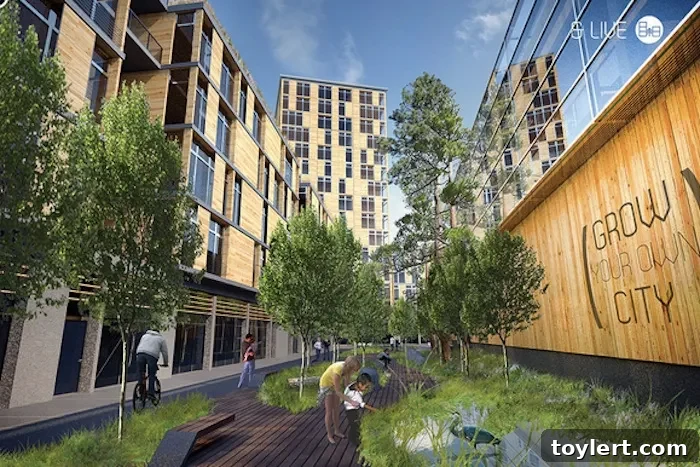
The University of Oregon students rose to this formidable challenge with their winning design, aptly named “Grow Your Own City.” This visionary proposal captivated the judges by offering a holistic, interconnected, and deeply sustainable approach to urban development in Red Hook. Their plan was not merely a collection of buildings but a thoughtfully integrated ecosystem designed to foster community, sustainability, and economic vitality.
Design Philosophy and Components
“Grow Your Own City” envisioned a dynamic architectural landscape comprising both low-rise buildings and a distinctive higher tower. The low-rise structures were meticulously designed to house a mix of crucial amenities: modern apartments providing much-needed housing, a community-focused restaurant, and a convenient bike shop, all seamlessly integrated to create a pedestrian-friendly environment. The inclusion of a higher tower demonstrated the feasibility and aesthetic potential of using wood for vertical urban expansion, pushing the boundaries of mass timber construction.
Central to their design was an expansive eco public park, around which the entire development was thoughtfully built. This park was far more than just green space; it was conceived as a vibrant communal heart, a biodiverse habitat, and a critical piece of green infrastructure capable of managing stormwater, improving air quality, and providing vital recreational opportunities for residents and the wider Red Hook community. This emphasis on a central green space underscored a commitment to biophilic design – connecting inhabitants with nature – and creating a truly livable urban environment.
Structural Innovation: Cross-Laminated Timber (CLT) and Modular Construction
A cornerstone of the “Grow Your Own City” project was its innovative construction method, featuring modular pods fabricated from Cross-Laminated Timber (CLT) panels. CLT is an engineered wood product made by gluing together multiple layers of solid lumber, with each layer oriented perpendicular to the next. This creates panels of exceptional strength, stability, and rigidity, comparable to concrete or steel, but with a significantly smaller environmental footprint.
The benefits of using CLT are extensive and crucial to sustainable development. It is a highly fire-resistant material; contrary to popular belief, mass timber elements char on the outside, forming an insulating layer that protects the inner wood and maintains structural integrity for extended periods, often outperforming unprotected steel in fire scenarios. Furthermore, CLT offers excellent seismic performance, improved thermal insulation, and significantly faster construction times due to prefabrication. The modular pod system proposed by the University of Oregon team further enhanced these advantages, allowing for off-site fabrication under controlled conditions, reducing construction waste, minimizing on-site disruption, and accelerating the overall project timeline. This approach perfectly aligned with the competition’s requirement for a local wood production facility, potentially creating a streamlined supply chain from production to assembly.
The Broader Implications: Wood as the Future of Sustainable Construction
The “Timber in the City” competition, and particularly the “Grow Your Own City” winning design, underscores a global paradigm shift towards mass timber construction as a viable and preferred alternative in sustainable urban development. The use of engineered wood products like CLT offers a multitude of benefits that extend far beyond the immediate construction site:
- Environmental Sustainability: Wood is a renewable resource that sequesters carbon dioxide throughout its life cycle, making timber buildings powerful carbon sinks. Its production requires significantly less energy and generates less pollution compared to concrete and steel.
- Economic Revitalization: The demand for mass timber can stimulate sustainable forestry practices, create jobs in rural logging and manufacturing industries, and foster innovation in architectural and engineering fields.
- Health and Well-being: Studies suggest that biophilic design, incorporating natural materials like wood, can enhance occupant well-being, reduce stress, and improve indoor air quality.
- Resilience and Durability: Engineered wood products demonstrate excellent performance against seismic activity and fire, contributing to the long-term resilience of urban infrastructure.
Projects like “Timber in the City” serve as crucial catalysts, inspiring future architects, developers, and policymakers to embrace these transformative materials and methods, paving the way for healthier, more sustainable, and aesthetically rich urban environments.
Beyond the Winners: A Catalyst for Change
While the University of Oregon’s “Grow Your Own City” earned the top honor, the competition also celebrated other innovative submissions. To explore the second-place winner and other commendable designs, readers are encouraged to visit the original Curbed post for further insights. Additionally, a comprehensive overview of all the honorable mentions and detailed information about the competition can be found on the official Timber in the City site.
The “Timber in the City” competition stands as a testament to the power of academic and industry collaboration in fostering innovation. It has not only provided a platform for emerging architectural talent but has also significantly advanced the dialogue around sustainable construction, demonstrating the immense potential of wood to shape the future of our urban landscapes. The designs generated through this initiative offer tangible blueprints for more resilient, environmentally conscious, and community-focused developments worldwide.
Design Students Imagine A Mixed-Use Complex For Red Hook [Curbed]
Rendering via Curbed