By Barbara Russo and Dean Moses, amNY
NYC Rent Guidelines Board Votes to Increase Rent for Over a Million Stabilized Tenants Amidst Fierce Protests
New York City’s housing landscape continues to be a battleground for affordability, a reality starkly underscored by the Rent Guidelines Board’s (RGB) recent decision. On Monday night, the board cast a decisive vote to increase rents for more than one million rent-stabilized tenants across the five boroughs, igniting immediate and furious opposition from housing advocates and concerned residents.
The contentious vote, held amidst a throng of impassioned protestors, approved a 2.75 percent increase for one-year leases and a 5.25 percent increase for two-year leases. This move represents a significant financial adjustment for a substantial portion of New York City’s population, many of whom are already grappling with the city’s notoriously high cost of living and the persistent pressures of inflation.
The Controversial Decision: A Split Vote and Widespread Discontent
The Rent Guidelines Board, a nine-member body appointed by the mayor and comprising representatives from tenant, owner, and public sectors, arrived at its decision following weeks of public hearings, debates, and impassioned testimony. The final vote of 5 to 4 in favor of the rent hike highlighted the deep divisions and conflicting interests inherent in New York City’s housing policy.
For tenants, this increase is not merely a percentage but a tangible rise in their monthly expenses, impacting budgets already strained by groceries, transportation, and other necessities. Advocate groups immediately condemned the decision, arguing that it places an undue burden on working-class families, seniors, and vulnerable populations who rely on rent stabilization to maintain their homes in an otherwise unaffordable market.
Understanding Rent Stabilization in New York City
Rent stabilization is a cornerstone of New York City’s housing policy, designed to protect tenants from exorbitant rent increases and sudden displacements. It applies to buildings constructed before 1974 with six or more units, as well as certain properties that received tax benefits. These regulations cover a vast number of apartments, providing a critical safety net for residents in a city where market-rate rents are often out of reach for average incomes.
The Rent Guidelines Board’s primary mandate is to set annual rent adjustments for these rent-stabilized units. In theory, the board balances the financial needs of property owners to maintain their buildings with the economic realities faced by tenants. However, achieving this balance is a perpetual challenge, often leading to decisions that are met with either relief or outrage from either side.
The Roar of Protest: Tenants Take to the Streets
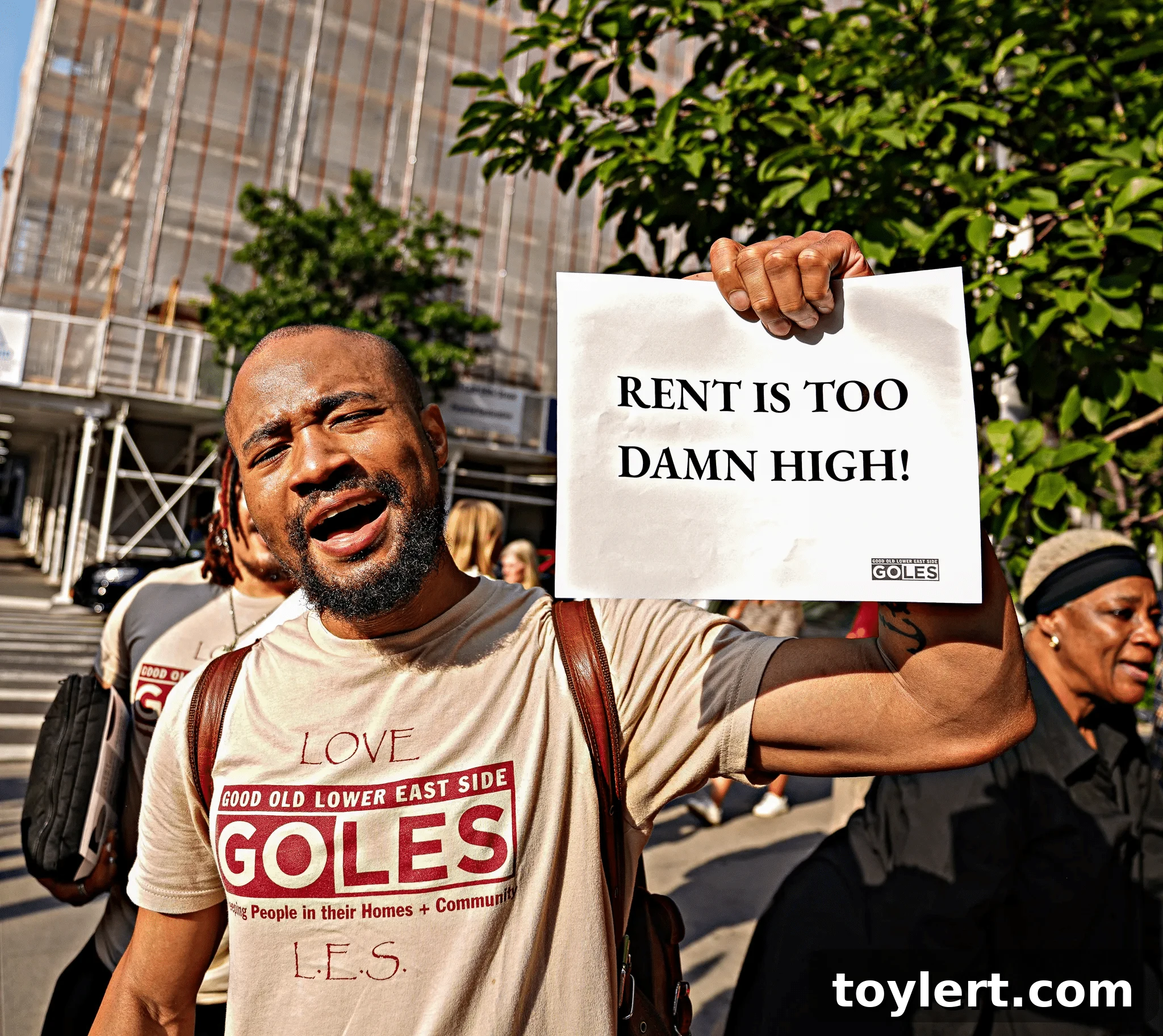
The immediate aftermath of the vote saw hundreds of enraged tenants and advocates spill into the streets of the Upper East Side. Dozens blocked the entrance to Hunter College, the venue where the pivotal decision was made. Chants of “Shame on you!” and “Our homes are not for profit!” echoed through the night, underscoring the raw emotion and deep-seated frustration felt by those directly affected.
Protestors held signs decrying the board’s decision, many highlighting the severe impact on their personal finances. Speakers, some visibly emotional, shared stories of struggling to make ends meet, fearing that even a seemingly small percentage increase could force them out of their homes or into impossible financial predicaments. The demonstration was a powerful display of community solidarity and a clear message to city officials that the fight for affordable housing is far from over.
Voices of Discontent: The Human Cost of Rent Hikes
Many tenants expressed feelings of betrayal, especially given the current economic climate. With inflation affecting everything from food to utilities, an additional increase in rent is perceived by many as an insurmountable hurdle. “We are barely surviving as it is,” stated one protestor, “This isn’t just about paying more; it’s about sacrificing essentials, cutting back on food, or giving up medical appointments just to keep a roof over our heads.”
Tenant advocacy groups argue that the board often prioritizes the financial interests of landlords over the well-being of the city’s working class. They highlight data suggesting that many landlords are already profitable and that excessive rent hikes contribute to displacement, gentrification, and an exacerbation of the city’s homelessness crisis. These groups call for a rent freeze or even rent reductions, citing the need for stronger tenant protections in a city increasingly defined by its economic disparities.
The Landlords’ Perspective: Justifying the Increases
While the protests garnered significant attention, property owners and their representatives presented a different narrative to the Rent Guidelines Board. They argue that rent increases are essential for the upkeep and maintenance of rent-stabilized buildings, many of which are aging and require significant capital investment. Landlords point to rising operating costs, including property taxes, water and sewer charges, fuel, insurance premiums, and the ever-increasing expense of repairs and labor.
From the owners’ viewpoint, the board’s decision to increase rents is a necessary measure to ensure the financial viability of their properties. Without adequate revenue, they contend, it becomes impossible to fund necessary repairs, comply with building codes, and provide safe, habitable living conditions for tenants. They emphasize that failing to allow for reasonable rent adjustments could lead to property deterioration, disinvestment, and ultimately, a reduction in the quality of housing stock across the city.
Balancing Act: The RGB’s Difficult Mandate
The Rent Guidelines Board is tasked with the unenviable job of weighing these competing claims. On one side are the tenants, who face the immediate and personal impact of increased housing costs. On the other are the owners, who manage businesses dependent on rental income to cover expenses and generate a return. The public representatives on the board often serve as the tie-breakers, attempting to navigate this complex socio-economic landscape.
The board reviews extensive data, including the operating costs for apartment buildings (measured by the Price Index of Operating Costs, or PIOC), tenant income, and the overall economic health of the city. However, interpreting this data and translating it into a fair rent adjustment is inherently subjective and often contentious, leading to outcomes that rarely satisfy both sides fully.
Historical Context and Broader Implications for NYC Housing
This latest rent hike is not an isolated event but part of a long-standing pattern in New York City’s housing history. Over the past decade, the RGB has largely approved rent increases, with occasional rent freezes during periods of significant economic downturn or political pressure. The cumulative effect of these annual adjustments has been a steady rise in housing costs for rent-stabilized tenants, chipping away at the affordability protections they once relied upon.
The decision also carries significant political implications. Mayors and city councils often face intense scrutiny over RGB appointments and decisions, as housing affordability remains a top concern for voters. The outcome of these votes can sway public opinion and influence future elections, making the board’s deliberations a highly charged political arena.
Beyond the immediate financial impact, this decision contributes to the broader housing crisis plaguing New York City. The scarcity of affordable housing, coupled with a high demand, continues to drive up prices across all sectors. Rent stabilization serves as a crucial bulwark against an even more acute crisis, yet decisions like these raise questions about its long-term effectiveness in an increasingly expensive metropolis. The city’s ability to retain its diverse population, its essential workforce, and its unique cultural fabric depends heavily on accessible and affordable housing options.
Seeking Sustainable Solutions: A Path Forward
The deep divisions revealed by the Rent Guidelines Board’s vote underscore the urgent need for more comprehensive and sustainable solutions to New York City’s housing challenges. Tenant advocates propose a range of measures, including stronger enforcement of existing tenant protections, increased public investment in truly affordable housing, expansion of rent subsidy programs, and a re-evaluation of the formulas used by the RGB to determine rent adjustments.
Some suggest that a more nuanced approach is needed, one that accounts for the varying financial situations of both tenants and landlords, and that explores innovative mechanisms for property maintenance that do not solely rely on tenant rent increases. Dialogue between tenant groups, property owners, and city officials is critical to forge policies that genuinely support both the vibrancy of the city’s housing stock and the well-being of its residents.
Ultimately, the Rent Guidelines Board’s decision Monday night reflects the ongoing struggle for housing justice in New York City. For over a million tenants, it signifies a fresh financial strain and renewed anxieties about their future in the city. For advocates, it serves as a rallying cry, reinforcing their commitment to fighting for a city where secure and affordable housing is a right, not a luxury. The debate over who pays for the maintenance and future of New York’s housing stock will undoubtedly continue, shaping the lives of millions and the very character of the city itself.