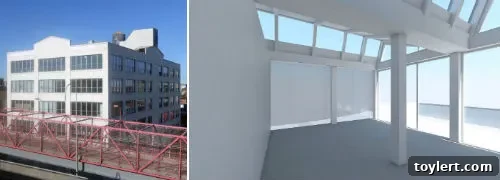
Unveiling the Vision for 338 Berry Street: A Williamsburg Noodle Factory’s Green Transformation
The vibrant landscape of Williamsburg, Brooklyn, constantly buzzes with the hum of transformation, turning historic industrial sites into modern residential havens. One such ambitious project, located at 338 Berry Street, aims to convert a former noodle factory into a cutting-edge, sustainable apartment building. While the vision for this eight-story structure, slated to house 65 diverse apartments ranging from studios to spacious three-bedrooms, paints a picture of innovative urban living, the journey has met its initial hurdle. Architectural firm DXA studio, known for its commitment to design excellence and sustainability, had proposed a thoughtful restoration of the warehouse exterior coupled with the integration of advanced solar panels and luxurious rooftop amenities. However, the New York City Department of Buildings (DOB) recently disapproved the application, sending the ambitious plans back to the drawing board and highlighting the complex realities of urban development. This article delves into the transformative potential of 338 Berry Street, exploring its design philosophy, sustainable features, and the challenges inherent in revitalizing Brooklyn’s industrial past for its residential future.
The Enduring Appeal of Adaptive Reuse in Urban Development
The concept of adaptive reuse has gained significant traction in contemporary urban planning, particularly in dynamic cities like New York. It represents a sustainable approach to development, breathing new life into underutilized or derelict buildings by repurposing them for new functions. In the case of 338 Berry Street, the conversion of a former noodle factory into residential units exemplifies this trend. Such projects not only conserve resources by avoiding demolition and new construction but also preserve the unique historical fabric and architectural heritage of a neighborhood. Industrial buildings, with their robust structures, high ceilings, and expansive floor plates, offer ideal canvases for creative residential designs, appealing to a demographic that values character, spaciousness, and a connection to the city’s past. Williamsburg, with its rich industrial history, has become a prime location for such conversions, contributing to its reputation as a hub for artistic expression and modern living.
Beyond the environmental benefits, adaptive reuse projects like the proposed 338 Berry Street conversion offer economic advantages by revitalizing blighted areas and attracting new residents and businesses. They often become catalysts for further neighborhood improvement, increasing property values and fostering a sense of community pride. The inherent charm of these converted spaces, blending historic details with contemporary finishes, creates unique living environments that stand apart from conventional new constructions. For developers, navigating the intricacies of adaptive reuse requires a nuanced understanding of architectural preservation, structural engineering, and regulatory compliance, but the rewards—in terms of market appeal and urban legacy—are substantial.
DXA Studio’s Vision: Blending Heritage with Modern Sustainability
At the heart of the 338 Berry Street project is the architectural firm DXA studio, renowned for its innovative approach to design that often bridges historical context with modern sensibilities. Their plans for the former noodle factory illustrate a thoughtful balance between honoring the building’s industrial past and integrating cutting-edge sustainable practices. The proposal outlines a meticulous restoration of the warehouse exterior, ensuring that the building retains its distinctive character and contributes positively to the streetscape of Berry Street. This commitment to preservation is crucial in Williamsburg, where rapid development sometimes threatens to erase the very history that makes the neighborhood so appealing.
Yet, DXA studio’s vision extends far beyond mere aesthetic preservation. A cornerstone of their design is the integration of advanced solar panels onto the building’s facade or rooftop. This initiative is designed to generate a significant portion of the electricity required for the building’s residents, marking a bold step towards energy independence and environmental responsibility. Such green building features are increasingly vital in today’s urban landscape, not only reducing the carbon footprint but also appealing to environmentally conscious residents seeking sustainable living options. The combination of historical reverence and future-forward sustainability positions 338 Berry Street as a model for responsible urban development.
Luxury Amenities and Elevated Urban Living
Modern urban dwellers seek more than just a place to live; they desire a lifestyle that offers convenience, comfort, and opportunities for relaxation and community. The proposed plans for 338 Berry Street reflect this demand with a suite of upscale amenities designed to enhance resident experience. Central to these offerings is a luxurious rooftop penthouse, promising breathtaking views of the Manhattan skyline and the surrounding Williamsburg neighborhood. This exclusive space would provide an unparalleled living experience, combining privacy with panoramic vistas.
Complementing the penthouse is an expansive 5,000-square-foot landscaped terrace. This significant outdoor space is envisioned as a verdant oasis amidst the urban sprawl, offering residents a tranquil retreat for leisure, social gatherings, or simply enjoying the outdoors. Such a large green space is a coveted luxury in densely populated areas like Brooklyn, fostering a sense of community and well-being. The provision of these high-quality amenities underscores the project’s aim to deliver a premium residential experience, attracting discerning individuals and families looking for sophisticated urban living with a touch of nature and exclusivity.
Navigating the Regulatory Landscape: The DOB’s Role and the Path Forward
The journey of any major development project in New York City is inherently complex, marked by rigorous reviews and adherence to a myriad of regulations. The initial disapproval of the 338 Berry Street application by the New York City Department of Buildings (DOB) is a testament to this intricate process. The DOB serves as the primary regulatory body responsible for ensuring the safety and structural integrity of buildings, as well as compliance with zoning laws, building codes, and environmental regulations. Applications can be disapproved for various reasons, including discrepancies in architectural plans, structural concerns, non-compliance with zoning ordinances (such as height, setback, or density requirements), or even minor administrative omissions.
For DXA studio and the development team, going “back to the drawing board” signifies an opportunity to refine their plans, address the specific concerns raised by the DOB, and resubmit a more robust and compliant application. This iterative process, while often frustrating for developers, is a critical safeguard for urban planning, ensuring that new constructions and conversions are safe, sustainable, and harmonious with their surroundings. It may involve minor adjustments to the building’s design, re-evaluating structural elements, or even revising the proposed number or type of units. The eventual approval will hinge on the development team’s ability to meticulously satisfy all regulatory requirements, demonstrating their commitment to delivering a project that not only meets their ambitious vision but also adheres to the highest standards of urban development.
Williamsburg: A Hotbed for Transformative Residential Projects
The choice of Williamsburg for a project of this scale and vision is no accident. Over the past few decades, Williamsburg has transformed from a predominantly industrial and working-class neighborhood into one of Brooklyn’s most sought-after residential enclaves. Its unique blend of historic charm, vibrant cultural scene, culinary excellence, and convenient access to Manhattan has made it incredibly attractive to a diverse demographic, including young professionals, artists, and families. This surging demand for housing has fueled a wave of residential conversions and new constructions, making Williamsburg a dynamic laboratory for modern urban living.
Projects like 338 Berry Street play a pivotal role in shaping the evolving identity of the neighborhood. They contribute to the diverse housing stock, activate streetscapes, and integrate sustainable practices that set new benchmarks for urban development. The area around Berry Street, known for its mix of quaint brownstones and converted warehouses, perfectly embodies the neighborhood’s character. As Williamsburg continues to evolve, preserving its industrial heritage through adaptive reuse while integrating forward-thinking design and sustainability initiatives remains crucial for maintaining its unique appeal and ensuring its continued prosperity as a premier Brooklyn destination.
What Lies Ahead for 338 Berry Street?
Despite the temporary setback with the DOB, the potential for 338 Berry Street remains immense. The vision presented by DXA studio—a harmonious blend of historical preservation, modern luxury, and environmental responsibility—aligns perfectly with the contemporary aspirations of Williamsburg residents and the broader goals of sustainable urban development. The iterative process of architectural and regulatory review is a standard part of any major project in New York City, and it often leads to even stronger, more refined designs.
As the development team works to revise their plans, the community eagerly awaits updates on this promising residential conversion. Once approved, 338 Berry Street is poised to become a landmark addition to Williamsburg’s residential landscape, offering future residents not just a home, but a vibrant and sustainable lifestyle rooted in the rich history of Brooklyn. Its journey underscores the challenges and triumphs inherent in transforming urban spaces, ultimately contributing to the dynamic narrative of one of New York City’s most iconic neighborhoods.
Originally reported by BuzzBuzzHome: 338 Berry Street in Williamsburg Going for Residential Conversion