Brooklyn’s Rental Market: Decoding the End of a Rising Rent Streak
Headlines often grab attention with bold statements, and a recent one from The Real Deal certainly did: “Streak of rising rents in Brooklyn comes to an end.” This news, citing Douglas Elliman’s monthly rental report, suggested that Brooklyn’s formidable 14-month climb in rental prices concluded in August, largely attributed to a fresh influx of new development units hitting the market. While this announcement offers a glimmer of hope for prospective tenants, a closer examination of the underlying data reveals a more intricate and nuanced picture than a simple declaration of falling rents might imply.
Unpacking the Numbers: A Nuanced Perspective on Brooklyn Rents
On the surface, the end of a long streak of rising rents is indeed a cause for renters to celebrate. However, diving into the finer print of the Douglas Elliman report presents a considerably less dramatic scenario. The median rental price in Brooklyn did experience a modest dip, falling 1.5 percent in August compared to the previous month, settling at $2,808. While any decrease is positive, this figure alone doesn’t tell the whole story for every segment of the market.
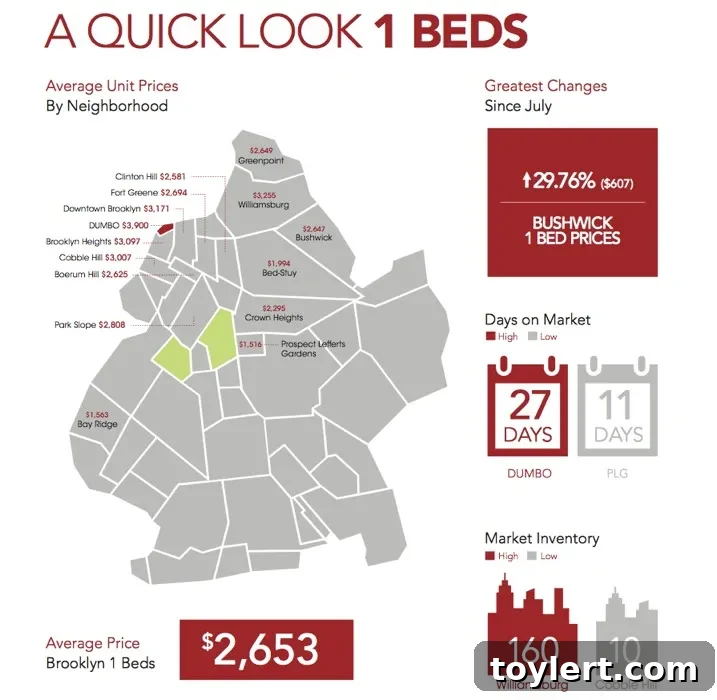
Interestingly, the averages for studios and one-bedroom apartments actually saw an increase. This suggests continued strong demand for smaller, more affordable units, pushing their prices upward despite the overall median trend. Conversely, two-bedroom apartments experienced a more significant decline, slipping 6.1 percent to an average of $3,292 when compared to the same period in the previous year. This particular trend offers good news for families, roommates, and shares looking to secure more spacious accommodations, particularly in the borough’s historically more expensive neighborhoods. Such a divergence highlights the complex dynamics at play, where general market trends can mask contrasting movements within specific unit types.
The Catalytic Role of New Developments
The primary driver behind the reported stabilization and slight dip in Brooklyn’s median rent is the increased supply from new developments. Over the past few years, Brooklyn has witnessed an unprecedented construction boom, with countless residential projects transforming its skyline. These new buildings, often featuring modern amenities and sought-after designs, introduce thousands of new units into the rental pool. When a substantial volume of these units becomes available simultaneously, it naturally increases competition among landlords, potentially leading to a moderation of rental price increases or even slight reductions to attract tenants.
This surge in supply is particularly impactful in neighborhoods that have seen extensive redevelopment, such as Downtown Brooklyn, Williamsburg, Bushwick, and Long Island City (though technically Queens, its proximity influences parts of Brooklyn). The availability of brand-new, often luxury-tier apartments can draw renters away from older, established units, forcing some landlords to adjust their pricing strategies to remain competitive. However, it’s also worth noting that many of these new developments cater to the higher end of the market, which might explain why the most significant price drops are observed in larger, more expensive units like two-bedrooms, where the luxury market has more room to fluctuate.
What This Means for Brooklyn Renters
For individuals and families navigating the competitive Brooklyn rental market, these trends offer a mixed bag of opportunities and challenges:
- For Families and Shares: The decline in two-bedroom apartment prices is a significant relief. Larger units often come with a premium, and a 6.1 percent drop can translate into substantial monthly savings, making some desirable neighborhoods more accessible for those needing extra space. This could encourage more families to stay within the borough or attract new ones seeking better value.
- For Individuals and Couples: While the overall median rent saw a slight dip, the rise in studio and one-bedroom prices indicates continued fierce competition for smaller units. Renters in this category may still face upward pressure on prices, requiring diligence and quick decision-making when a suitable apartment becomes available.
- Negotiation Potential: The increased supply and slight market cooling might empower renters with more leverage during lease negotiations. It’s an opportune time to inquire about concessions, such as a month of free rent or a reduction in brokerage fees, especially for new developments keen to fill vacancies.
- Timing is Key: Paying attention to market reports and seasonal trends can be crucial. Traditionally, the late summer and fall see a slight softening in the rental market compared to the peak spring/early summer months.
Beyond Supply: Other Influencing Factors
While new developments are a major factor, the Brooklyn rental market is also shaped by several other interconnected forces:
- Economic Conditions: A robust job market and strong local economy generally fuel rental demand. Conversely, economic slowdowns or uncertainties can lead to less migration and potentially fewer renters, impacting prices.
- Interest Rates and Homeownership: When interest rates for mortgages are high, purchasing a home becomes less affordable for many, keeping them in the rental pool for longer. This sustained demand for rentals can counteract the effects of increased supply.
- Migration Patterns: The ebb and flow of people moving into and out of New York City, and specifically Brooklyn, profoundly impacts demand. Factors like remote work trends, quality of life considerations, and the perceived “vibrancy” of Brooklyn continue to draw new residents, maintaining a baseline of demand.
- Neighborhood-Specific Dynamics: Brooklyn is incredibly diverse. Rent trends can vary wildly from one neighborhood to another. Areas with limited new construction or exceptionally high demand (e.g., Cobble Hill, Park Slope) might continue to see price increases, while areas with abundant new inventory (e.g., Downtown Brooklyn, Bushwick) may experience more stabilization or even drops.
Navigating Brooklyn’s Diverse Neighborhoods
The generalized statistics about Brooklyn rents provide an overview, but the true experience of a renter or landlord varies dramatically by neighborhood. Wealthier enclaves like Brooklyn Heights, Carroll Gardens, and Dumbo often maintain high price points due to their established appeal, strong community, and limited new construction that isn’t ultra-luxury. Conversely, rapidly developing areas such as Bushwick, Crown Heights, and Bed-Stuy, which have seen a significant amount of recent development, might be more susceptible to the current softening trends, offering more competitive pricing for larger units.
Renters should conduct thorough research specific to their desired neighborhoods, understanding that a borough-wide median can obscure local realities. Property types also play a role; a brownstone apartment in Park Slope might follow different trends than a unit in a new high-rise in Downtown Brooklyn.
Advice for Tenants and Landlords in a Shifting Market
For Tenants:
- Do Your Homework: Utilize multiple rental platforms and speak with local real estate agents to get a comprehensive understanding of prices in your target neighborhoods.
- Be Prepared: Have all necessary documents (proof of income, credit report, references) ready to go, especially for desirable units.
- Don’t Be Afraid to Negotiate: In a market with increased supply, there might be room to negotiate rent, ask for a month free, or even lower broker fees.
- Consider All Options: Explore different neighborhoods or unit types. A slightly longer commute might yield a more spacious or affordable apartment.
For Landlords:
- Price Competitively: Overpricing in a market with increased supply can lead to longer vacancy periods. Research comparable units and be willing to adjust.
- Highlight Unique Selling Points: Emphasize amenities, location advantages, or unique features of your property.
- Maintain and Upgrade: A well-maintained and updated unit is more attractive to prospective tenants, justifying its price point.
- Flexibility: Be open to negotiation or offering minor concessions to secure a good tenant quickly.
The Future Outlook for Brooklyn Rentals
While the 14-month streak of relentless rent increases in Brooklyn has indeed paused, it would be premature to declare a sustained downward trend across the board. The market is complex, influenced by a delicate balance of supply from new construction, ongoing demand, economic health, and the unique characteristics of its many vibrant neighborhoods. For now, the easing in some segments of the market offers a welcome respite for renters, particularly those seeking larger units. As Brooklyn continues to evolve, its rental landscape will remain a fascinating and dynamic space to watch.
Read the original report summary on The Real Deal.
Access Douglas Elliman’s full rental market report.