Unraveling Brooklyn’s Real Estate Mysteries: Red Hook, East Williamsburg, and Beyond
Brooklyn’s real estate market continues to be a captivating subject, a constantly evolving landscape where historical charm meets modern vibrancy. It’s a borough renowned for its distinctive neighborhoods, each offering a unique lifestyle and investment opportunity. For many, tracking the pulse of this market is an ongoing fascination, driven by the desire to understand community shifts, architectural preservation, and the ever-fluctuating values of coveted properties. Events like “Open House Picks” serve as invaluable guides, offering curated glimpses into homes that embody the spirit and current trends of various Brooklyn enclaves.
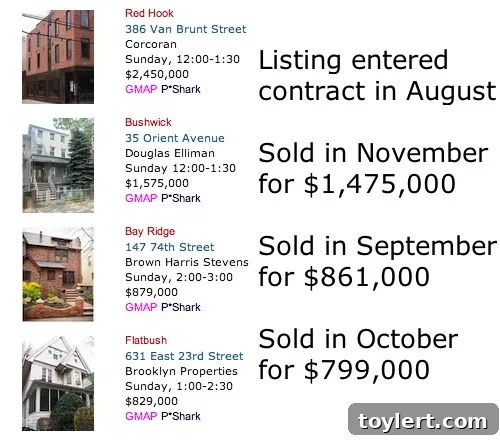
A past observation from an “Open House Picks” feature perfectly illustrates the depth of interest and the critical nuances within this market: “Comment: How much will the Red Hook house go for? The sale hasn’t yet hit public records, and we’re dying to know! By the way, the Orient Avenue home is in East Williamsburg, not Bushwick, which explains the high sales price.” This concise comment unpacks a wealth of real estate insights, from the human curiosity about final sale figures and the necessity of public record transparency to the crucial role of accurate neighborhood identification in property valuation. It prompts a deeper exploration into the distinct characteristics and market dynamics of Red Hook, East Williamsburg, and Bushwick, three neighborhoods that, while geographically proximate, offer uniquely different living experiences and investment potentials.
The Allure of the Unknown: Why Final Sale Prices Matter
The sentiment of “dying to know” the sale price of a particular property resonates deeply within the real estate community. This eagerness is not merely driven by gossip; it stems from a profound need for market intelligence. In a competitive and often opaque market, every recorded sale acts as a vital data point, helping to shape future decisions for both buyers and sellers. The waiting period between a finalized offer and the public appearance of the sale record can feel protracted, yet the information, once available, is invaluable.
There are several key reasons why these figures are so keenly anticipated:
- Establishing Market Comps: Each sale contributes to a database of comparable properties (comps), which real estate professionals use to accurately appraise new listings. An unexpected sale price can significantly recalibrate perceived values within a micro-market.
- Informing Buyer Strategies: Prospective buyers watch sale prices closely to understand what their budget can afford in specific areas and to gauge the intensity of competition. Knowing what similar homes have recently sold for empowers them to make competitive, yet realistic, offers.
- Guiding Seller Expectations: For those planning to list their homes, recent sale prices provide a realistic benchmark, influencing their asking price and negotiation strategies. It helps them avoid overpricing or underpricing their property.
- Reflecting Market Health: The aggregate data from recorded sales paints a broader picture of market health. Rising prices and quick sales indicate a robust seller’s market, while stagnant or falling prices can signal a slowdown. This macroscopic view is crucial for economists and urban planners.
- Transparency and Trust: The public record system ensures transparency in real estate transactions. It fosters trust by making property ownership and transaction details accessible, preventing speculative practices based on insider information and upholding market integrity.
The Red Hook house, mentioned in the original comment, exemplifies a property whose final price would hold significant sway, given the neighborhood’s unique identity and evolving market. Understanding Red Hook means appreciating its distinct place in Brooklyn’s diverse tapestry.
Red Hook: Brooklyn’s Unconventional Waterfront Haven
Red Hook stands as one of Brooklyn’s most enigmatic and cherished neighborhoods. Tucked along the Upper New York Bay, it offers breathtaking panoramic views of the Manhattan skyline and the Statue of Liberty, yet it steadfastly maintains an industrial-maritime aesthetic distinct from its more polished Brooklyn counterparts. Its relative isolation, historically due to a lack of direct subway service, has forged a resilient community spirit and preserved its inimitable character, making it a truly unique proposition in the urban landscape.
A Tapestry of History and Regeneration
Once a bustling shipping port, Red Hook’s cobblestone streets and formidable brick warehouses bear witness to a rich maritime legacy. Over the past few decades, this former industrial heartland has undergone a remarkable metamorphosis. It has blossomed into a creative hub, attracting artists, artisans, and entrepreneurs who have repurposed its industrial architecture into vibrant studios, workshops, and acclaimed eateries. This transformation has been deliberate and organic, shying away from the rapid, sometimes homogenizing, development seen in other parts of Brooklyn, thereby retaining its authentic, slightly rugged charm.
Understanding the Red Hook Real Estate Market
The properties available in Red Hook are as diverse as its history, encompassing everything from classic brownstones and traditional row houses to expansive industrial loft conversions and modern, amenity-rich waterfront residences. The demand for real estate here is propelled by a confluence of unique factors:
- Distinctive Character and Aesthetic: Buyers are drawn to Red Hook’s unpretentious, artistic atmosphere and its unique architectural blend of old-world industrialism and modern design. It offers a genuine alternative to the more conventional Brooklyn neighborhoods.
- Unrivaled Waterfront Access and Views: Direct access to the waterfront and the stunning, unobstructed views of Manhattan and the harbor are significant luxury drivers. Properties boasting these features, especially those with private outdoor spaces, command a substantial premium.
- Strong Community Ethos: Red Hook prides itself on a tight-knit community where local businesses thrive and neighbors know each other. This strong sense of belonging, coupled with local green spaces like Valentino Pier, fosters a highly desirable lifestyle.
- Enhanced Accessibility: While traditional subway access remains limited, significant improvements in transportation, including the popular NYC Ferry service, increased bus routes, and the proximity to the BQE, have made Red Hook more connected than ever, broadening its appeal to a wider demographic.
- Scarcity of Inventory: Given its geographical constraints and the preservation of many industrial areas, Red Hook has a naturally limited housing supply. This scarcity, in conjunction with high demand, creates an environment where property values are robust and competitive.
Any “Red Hook house” that enters the market is therefore likely to generate considerable interest, with its eventual sale price serving as a key indicator of the ongoing vitality and unique appeal of this truly extraordinary Brooklyn neighborhood.
Navigating Brooklyn’s Dynamic Neighborhoods: East Williamsburg vs. Bushwick
The clarifying note regarding the “Orient Avenue home” — that it’s in East Williamsburg, “not Bushwick” — is a testament to the critical importance of precise geographical distinctions in real estate. While adjacent and often sharing cultural influences, the boundaries between neighborhoods in New York City are far from arbitrary; they profoundly impact property values, market perceptions, and the very lifestyle a resident experiences. East Williamsburg and Bushwick, though intertwined in Brooklyn’s narrative, possess distinct identities that are clearly reflected in their respective real estate markets.
East Williamsburg: The Epicenter of Industrial-Chic Living
Often perceived as the edgier, more artistically raw counterpart to central Williamsburg, East Williamsburg has successfully forged its own identity. Its urban fabric is characterized by a fascinating blend of repurposed industrial buildings—now housing trendy lofts, creative studios, and innovative businesses—interspersed with traditional residential blocks that retain a classic Brooklyn feel.
Defining the East Williamsburg Advantage
Generally situated east of the Brooklyn-Queens Expressway (BQE) and north of Flushing Avenue, stretching towards its Bushwick border, East Williamsburg’s prime asset has always been its exceptional connectivity to Manhattan via the L train (serviced by stops like Grand Street, Lorimer Street, and Graham Avenue). This accessibility is a primary driver of its enduring desirability.
The Pillars of East Williamsburg’s High Property Values
The “high sales price” for a property on Orient Avenue, firmly rooted in East Williamsburg, is not merely justifiable but expected, owing to a combination of compelling market factors:
- Unparalleled Manhattan Proximity: In New York City, swift and reliable public transport to Manhattan is a premium. East Williamsburg’s L train access makes it an ideal location for a vast segment of the workforce, fueling consistent demand.
- A Thriving Creative and Cultural Scene: The neighborhood has historically been a magnet for artists, musicians, and design professionals, cultivating a vibrant cultural ecosystem. Independent galleries, intimate music venues, and unique culinary establishments contribute to an undeniable artistic cachet that significantly enhances its appeal.
- Coveted Loft Spaces and Industrial Conversions: The abundance of robust former industrial buildings has facilitated the creation of spacious, high-ceilinged lofts, a highly sought-after housing type in Brooklyn. These conversions often blend historic charm with modern amenities, offering unique living experiences.
- Sustained Gentrification and Robust Development: Over the past two decades, East Williamsburg has undergone substantial gentrification, attracting continuous investment in new residential buildings, upscale retail, and essential amenities. This ongoing development reinforces property values and boosts long-term growth prospects.
- Distinct Identity and Lifestyle Appeal: While benefiting from its proximity to Williamsburg’s trendsetting allure, East Williamsburg has cultivated an authentic, slightly more understated vibe. It appeals to those seeking a dynamic urban environment balanced with a strong sense of local community.
Bushwick: Art, Authenticity, and Community Heartbeat
Venturing further east and south from East Williamsburg, we arrive in Bushwick, a neighborhood celebrated globally for its sprawling street art, rich cultural diversity, and an ever-growing independent business scene. While it shares some bohemian spirit with its western neighbor, Bushwick offers a more expansive and overtly residential feel, punctuated by pockets of industrial heritage and explosive creative energy.
The Unique Fabric of Bushwick
Bushwick encompasses a larger geographical area than East Williamsburg, featuring diverse sub-neighborhoods with distinct characteristics. Historically a working-class community with deep roots, it has experienced a dramatic cultural and economic renaissance, attracting a new generation of residents who coexist and collaborate with its long-standing community members.
Key Drivers of the Bushwick Real Estate Market
Bushwick’s real estate market is equally dynamic and complex, driven by factors that are both unique to the neighborhood and, at times, overlap with its surrounding areas:
- Relative Affordability (Historically): While property values have experienced significant appreciation, Bushwick historically offered more accessible entry points compared to areas closer to Manhattan, making it an attractive option for those seeking Brooklyn living at a more attainable price point.
- World-Renowned Art Scene: Bushwick is synonymous with its vibrant street art, particularly the Bushwick Collective, which draws visitors from around the globe. This powerful artistic identity is a major draw for residents seeking a creatively charged environment.
- Diverse Housing Stock: The neighborhood features an eclectic mix of traditional multi-family brownstones, industrial warehouse conversions, and modern new constructions. This variety caters to a broader spectrum of housing preferences and budgets.
- Robust Community Activism: Bushwick boasts a strong sense of local identity and a vibrant culture of community engagement and activism. This appeals greatly to residents who seek a neighborhood with a strong social fabric and opportunities for local involvement.
- Evolving Amenities Landscape: As the neighborhood’s population has grown and diversified, so too has its array of local amenities. A growing number of independent restaurants, cafes, boutiques, and bars now cater to its eclectic and energetic demographic.
The Cruciality of Distinction: Value Beyond Borders
The seemingly minor clarification that the Orient Avenue home is in “East Williamsburg, not Bushwick” is a stark reminder of how geographical nuances profoundly affect real estate valuations. While both neighborhoods offer compelling reasons to reside or invest, East Williamsburg generally commands higher prices due to its closer proximity to Manhattan and its often more established infrastructure, including specific subway lines and commercial corridors. A property on Orient Avenue, squarely within East Williamsburg, inherently carries a different market value than a comparable property situated deeper within Bushwick. This distinction extends beyond price; it also reflects subtle differences in commuter times, local amenities, school districts, and overall neighborhood ambiance – factors that are paramount to prospective buyers and crucial for accurate market analysis.
Decoding High Sales Prices: More Than Just Location, Location, Location
While the comment rightly identifies East Williamsburg’s location as a primary driver for a “high sales price,” it’s important to recognize that property valuation is a multifaceted process. Beyond geographical advantage, several other critical elements converge to determine a property’s ultimate market worth, particularly in a premium market like Brooklyn’s.
- Property Condition and Modern Features: A meticulously renovated home boasting contemporary amenities, desirable architectural details, and well-maintained structural and mechanical systems will consistently achieve a higher price. Features such as private outdoor spaces (gardens, terraces, rooftop decks), central air conditioning, state-of-the-art kitchens, and luxurious bathrooms are particularly valued in today’s market.
- Size, Layout, and Functionality: Larger properties, especially those offering multiple bedrooms, flexible living areas, and efficient layouts, command higher prices. The functionality and flow of a home, how well it meets modern living needs, significantly impact its appeal and perceived value.
- Market Dynamics: Demand vs. Supply: A strong seller’s market, characterized by low housing inventory and robust buyer competition, invariably drives prices upward. Brooklyn has frequently experienced such conditions, where bidding wars and quick sales become common.
- Broader Economic Climate: Macroeconomic factors, including prevailing interest rates, employment figures, and overall consumer confidence, profoundly influence individuals’ capacity and willingness to invest in real estate. Favorable economic conditions typically translate into stronger property values.
- Unique Attributes and Scarcity: Properties possessing truly unique attributes—whether it’s historical significance, unparalleled architectural design, exceptional views, or an unusually large lot size—can often transcend standard market comparables and achieve premium prices due due to their inherent scarcity and distinct appeal.
Therefore, a “high sales price” for an Orient Avenue home in East Williamsburg is not just about its coveted address. It is the culmination of its prime location, the neighborhood’s overall desirability, and very likely, the intrinsic superior qualities and features of the property itself. This holistic view is essential for truly understanding the dynamics of Brooklyn’s most sought-after submarkets.
The Enduring Significance of Real Estate Insights
The initial comment, simple yet profound, vividly illustrates the enduring value of dedicated real estate platforms like Brownstoner and their “Open House Picks” features. These resources do more than merely showcase aesthetically pleasing homes; they cultivate community dialogue, disseminate crucial market intelligence, and help demystify the inherently complex world of urban property. In the fast-paced, highly competitive Brooklyn market, timely, accurate, and context-rich information is an invaluable asset for everyone, from seasoned real estate investors to aspirational first-time homebuyers.
Grasping the subtle distinctions between neighboring communities, meticulously tracking transaction data, and appreciating the myriad factors that collectively contribute to a property’s market worth are all fundamental aspects of engaging meaningfully with the real estate landscape. As Brooklyn continues its relentless evolution, these insights remain indispensable for navigating its unique challenges and capitalizing on its abundant opportunities.
Conclusion: Brooklyn’s Continuously Evolving Narrative
What began as a concise comment regarding a Red Hook house and an Orient Avenue home in East Williamsburg has served as a powerful catalyst for a deeper dive into the intricate world of Brooklyn real estate. It has underscored the universal fascination with property values, emphasized the non-negotiable importance of transparent sales records, and highlighted the profound impact of precise geographical distinctions on market dynamics. Red Hook, with its maritime soul and distinctive artistic flair, and the culturally rich, yet subtly different, landscapes of East Williamsburg and Bushwick, each narrate a unique story of urban transformation, community resilience, and enduring allure.
Brooklyn’s real estate market transcends mere bricks and mortar; it is a vibrant, living entity continuously shaped by a rich tapestry of history, the dynamic spirit of its communities, and the relentless forces of economic demand and urban development. Whether one is a potential buyer “dying to know” a final sale price, a visionary investor seeking the next growth frontier, or simply an admirer of compelling urban architecture and development, the stories embedded within each “Open House Pick” offer a compelling, unfolding narrative of a borough that constantly reinvents itself. As the market continues its ceaseless evolution, so too does our collective understanding of what truly defines value, potential, and desirability within these remarkable and ever-changing Brooklyn neighborhoods.
Open House Picks: 6/15/2012 [Brownstoner]