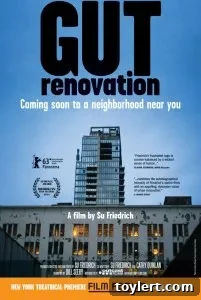
Gut Renovation: Unpacking Williamsburg’s Transformation from Bohemian Hub to Condoburg
The urban landscape of New York City is a constantly evolving tapestry, but few neighborhoods have experienced as dramatic a metamorphosis as Williamsburg, Brooklyn. Once a vibrant haven for artists, immigrants, and independent businesses, its character underwent a seismic shift following the consequential 2005 rezoning. This profound transformation, often lauded by developers and debated by residents, forms the powerful core of filmmaker Su Friedrich’s poignant documentary, “Gut Renovation.” Premiering at Film Forum, the film offers a critical, deeply personal look at the forces of gentrification and development that reshaped Williamsburg, earning it the stark nickname “Condoburg.”
Friedrich, a long-time resident who moved to the neighborhood in 1989, presents an unflinching account of a community in flux. Her lens captures not just buildings rising, but a vibrant cultural ecosystem being systematically dismantled. The film is a crucial historical document, illustrating the irreversible changes brought about by ambitious urban planning and the relentless march of luxury real estate, particularly in neighborhoods like Williamsburg.
Williamsburg: A History of Diversity and Creativity Before the Boom
Before the sleek glass towers and high-end boutiques began to dominate its waterfront, Williamsburg boasted a rich, multi-layered identity that had evolved over centuries. It was a mosaic of diverse communities, home to a large Hasidic Jewish population with deep historical roots, a vibrant Hispanic community that had established strong cultural ties, and a burgeoning enclave of artists and musicians drawn to its industrial lofts and relatively affordable rents. Its industrial past, marked by numerous factories and warehouses, provided ample space for creative endeavors, transforming abandoned commercial buildings into studios, galleries, and unconventional performance spaces. This unique blend of cultures and creative energy fostered a bohemian atmosphere, making Williamsburg synonymous with independent culture and artistic innovation throughout the late 20th century. Local businesses, many family-owned for generations, served as the essential backbone of the community, providing not just goods and services, but also fostering social connections and contributing immeasurably to the neighborhood’s distinct charm and character.
The 2005 Rezoning: A Catalyst for Unprecedented Change
The landscape of Williamsburg began its dramatic and irreversible shift with the highly controversial 2005 rezoning of the North Brooklyn waterfront. Championed by then-Mayor Michael Bloomberg’s administration, the rezoning aimed to transform what were once neglected industrial areas along the East River into a bustling residential zone. Proponents argued it would create much-needed housing, revitalize the waterfront with new parks and amenities, and spur significant economic growth across the borough. However, critics, including many long-term residents, local businesses, and community advocates, foresaw the inevitable consequences: rampant luxury development, skyrocketing property values, and the widespread displacement of existing communities. The rezoning effectively opened the floodgates for real estate developers, eager to capitalize on Williamsburg’s growing popularity, its unique cultural cachet, and its strategic proximity to Manhattan. What followed was an unprecedented building boom, turning former industrial plots into sites for massive condominium projects and fundamentally altering the neighborhood’s social and architectural fabric.
Su Friedrich’s “Condoburg”: Documenting a Neighborhood’s Transformation
It is against this backdrop of rapid, top-down urban planning and aggressive development that Su Friedrich anchors her incisive documentary, “Gut Renovation.” Her deep personal connection to Williamsburg—having resided there since 1989—lends the film an authentic, often melancholic, and deeply resonant perspective. Through her lens, she chronicles the visible changes with an almost forensic precision, identifying an astonishing 173 new-construction sites across the neighborhood. This staggering figure underscores the sheer scale and speed of the development and fuels her coining of the term “Condoburg”—a wry, yet potently accurate, descriptor that perfectly encapsulates Williamsburg’s transformation into a dense cluster of luxury condominiums, often at the expense of its unique identity and diverse community. Friedrich doesn’t merely present statistics or architectural shifts; she masterfully weaves together meticulous observation, poignant interviews with affected residents, and her own personal story to paint a holistic, emotionally charged picture of a beloved neighborhood under siege. Her film stands as a powerful testament to the impact of individual witness against overwhelming systemic forces.
The Human Cost: Displacement and the Erosion of Community Identity
At the very heart of “Gut Renovation” lies the profound human cost of this relentless urban “renewal.” Friedrich meticulously documents the stories of countless small business owners, established artists, and long-term residents who found themselves caught in the relentless tide of rising rents, punitive property taxes, and forced evictions. These are the narratives often overlooked or dismissed in grand urban development schemes—the corner grocers, the independent bookstore owners, the local artisans, and the family-run restaurants that collectively formed the irreplaceable soul of the neighborhood. As property values soared and the demand for luxury housing intensified, many found their commercial leases terminated or their residential rents made impossibly high, forcing them to close shop or relocate to less fashionable, more affordable areas, taking with them decades of history, unique character, and vital community ties. Friedrich’s own experience mirrors this larger tragedy: she and her partner were compelled to move from the abandoned commercial loft they had lovingly renovated and called home for years, a personal testament to the widespread displacement afflicting the area. The film thus transforms abstract economic trends into palpable, deeply personal struggles, giving a much-needed voice to those marginalized and dispossessed by the “progress.”
The Illusion of Luxury: Small Spaces, Exorbitant Prices
Towards the film’s poignant conclusion, Friedrich employs a particularly effective and revealing narrative device: she assumes the role of a prospective buyer, touring several units in the newly constructed luxury developments. This segment provides a stark, first-hand look at the actual offerings of “Condoburg.” Her findings are illuminating and often disheartening: the units, despite their exorbitant price tags and glossy marketing, are frequently characterized by their surprisingly small dimensions, generic layouts, and a pervasive aesthetic that distinctly lacks the character, history, and spaciousness of the older Williamsburg buildings. This revealing tour serves as a powerful and direct critique of the real estate market driving the boom, exposing a significant disconnect between the perceived value and the actual living experience provided. It provocatively questions who these new developments truly serve and whether the promised “luxury” genuinely justifies the significant social, cultural, and economic sacrifices made to build them. The film implicitly but powerfully asks: is this the future we truly desire for our cities—a landscape of unaffordable, homogenous spaces, stripped bare of their essential community essence and historical resonance?
A Broader Dialogue on Urbanism, Gentrification, and Sustainable Futures
“Gut Renovation” transcends its specific focus on Williamsburg to become a vital and urgent commentary on broader issues of urbanism, gentrification, and housing affordability affecting cities worldwide. It prompts essential, difficult questions about the ethics of urban development: How do we effectively balance economic growth with the preservation of cultural heritage and social equity? Who truly benefits from large-scale rezoning initiatives, and who bears the brunt of their consequences? What responsibility do city planners, developers, and policymakers have to existing communities when envisioning urban futures? Friedrich’s meticulous and empathetic work encourages audiences to look beyond the shiny facades of new buildings and consider the intricate social ecosystems that are irrevocably altered in the name of progress. The film serves as a powerful reminder that neighborhoods are not merely collections of bricks and mortar, but living, breathing entities shaped by the people, cultures, histories, and shared experiences they contain. It advocates powerfully for a more nuanced, community-centric, and inclusive approach to urban planning, one that prioritizes genuine sustainability, equity, and affordability over unchecked expansion and short-term profit.
Conclusion: The Enduring Legacy of “Gut Renovation”
Premiering at a crucial time, “Gut Renovation” stands as a potent and profoundly timely document, capturing a pivotal moment in Williamsburg’s history—a moment that continues to resonate in urban planning discussions today. Su Friedrich’s unflinching lens reveals the profound human and cultural costs exacted by rapid urban transformation, urging viewers to consider the impact beyond mere economic metrics. Her film is not just a critique of a specific rezoning decision but a universal narrative about the enduring tension between progress and preservation, affordability and luxury, community and capital. It urges us to remember the individual stories behind the statistics, the lives behind the constantly changing skylines, and the irreplaceable value of genuine neighborhood character and social cohesion. As cities continue to evolve globally, the profound lessons and insights from “Gut Renovation” remain profoundly relevant, prompting us to critically evaluate the true meaning of urban renewal and its long-term impact on the very soul of our communities.
For further insights into the film’s critical reception, you can read the compelling review in The New York Times: A Work in Progress.