Discovering Brooklyn’s Iconic Rowhouses: History, Architecture, and Distinctive Charm
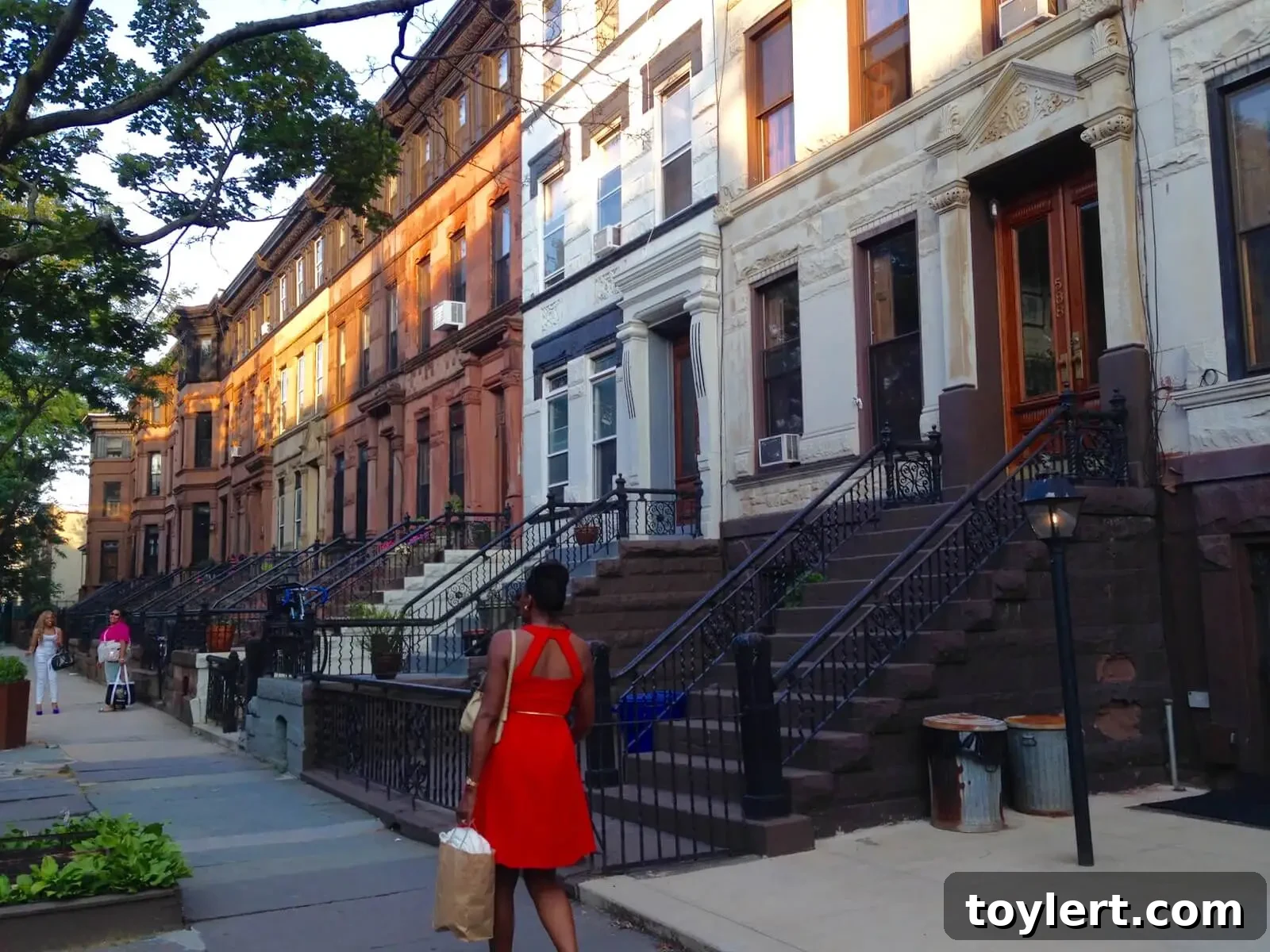
Brooklyn, a borough renowned for its rich history and captivating streetscapes, is arguably best defined by one of its most prevalent architectural forms: the rowhouse. These distinctive residences line the verdant streets of many of the borough’s oldest and most cherished neighborhoods, presenting a fascinating tapestry of architectural styles that range from the whimsical flourishes of Queen Anne confections to the timeless elegance of classic Italianate brownstones. Each facade tells a story, contributing to the unique character and historical depth that Brooklyn is celebrated for.
Yet, for many, the terminology surrounding these homes can be a source of confusion. What precisely defines a rowhouse? And how does it diverge from an apartment building, a general “townhouse,” or specifically a “brownstone”? This comprehensive guide aims to demystify these distinctions, offering a clear understanding of what makes a Brooklyn rowhouse not just a building, but a cultural landmark and a coveted place to call home.
What Exactly Is a Rowhouse? A Deep Dive into Brooklyn’s Architectural Backbone
At its core, a rowhouse is an individual dwelling that shares one or both side walls with neighboring houses, forming a continuous, uniform facade along a street. This architectural typology originated as an efficient solution for urban living, maximizing land use while providing individual residences within densely populated areas. Unlike detached homes, which stand alone on their plots, or apartment buildings, which house multiple families within a single structure, rowhouses offer the unique combination of private ownership and a connected urban fabric.
The defining characteristics of a rowhouse include its narrow frontage, often multiple stories (typically two to four), and a distinct individual entrance directly from the street. This design inherently fosters a sense of community while preserving the privacy and autonomy of single-family living. In Brooklyn, the rowhouse emerged as the dominant housing type during the 19th and early 20th centuries, catering to a burgeoning middle class that desired the prestige of homeownership without the impracticality or expense of large, detached estates.
A Journey Through Architectural Styles
The beauty of Brooklyn’s rowhouses lies in their astonishing stylistic diversity. As architectural tastes evolved over the decades, so too did the facades and interior layouts of these homes. Early examples often embraced the sturdy grandeur of the Greek Revival style, characterized by classical columns, symmetrical forms, and bold cornices. As the century progressed, the ornate charm of Italianate became popular, recognizable by its tall, narrow windows, elaborate cornices, and decorative stoops. These were frequently clad in the distinctive brownstone material that would become synonymous with Brooklyn’s historic districts.
Later architectural movements also left their indelible mark. The Gothic Revival introduced pointed arches and intricate detailing, while the Romanesque Revival showcased robust stone work and round arches. Towards the end of the 19th century and into the early 20th, styles like Neo-Grec, with its angular geometric patterns, and the more whimsical and asymmetrical Queen Anne style, complete with turrets, bay windows, and varied textures, added further richness to the urban landscape. Even the more subdued Beaux-Arts and Colonial Revival styles found their way into rowhouse design, reflecting a continuous adaptation to contemporary aesthetics while maintaining the fundamental rowhouse structure. This architectural evolution means that a stroll through neighborhoods like Brooklyn Heights, Park Slope, or Bed-Stuy is a journey through time, with each block showcasing a different era and artistic sensibility.
Rowhouse vs. Townhouse: Understanding the Nuance
The terms “rowhouse” and “townhouse” are frequently used interchangeably, especially in modern real estate parlance, leading to considerable overlap and occasional confusion. However, there’s a subtle distinction that historically and sometimes presently defines their usage.
Historically, a “townhouse” referred specifically to a city residence owned by an aristocrat or wealthy family whose main residence was often a country estate. It denoted a certain social status and a connection to urban life for the elite. Architecturally, these townhouses were often, though not exclusively, built in rows, sharing walls, much like what we now call a rowhouse.
In contemporary usage, particularly in America, “townhouse” has become a broader term. It can refer to any multi-story, individually owned dwelling that shares walls with adjacent units. This can include traditional rowhouses in historic districts, but also newer developments where units are often part of a larger complex or homeowner’s association, sometimes featuring common amenities. While most rowhouses are technically townhouses, not all townhouses are traditional rowhouses in the historic sense. In Brooklyn, especially within its older neighborhoods, the terms are practically synonymous, describing the same beloved architectural form. When residents speak of buying a “townhouse” in Brooklyn, they are almost invariably referring to a classic rowhouse with its distinctive charm and historical integrity.
Rowhouse vs. Brownstone: A Material Distinction
Perhaps one of the most common misconceptions is treating “brownstone” as a structural building type akin to a rowhouse. In reality, “brownstone” refers exclusively to the specific building material: a reddish-brown sandstone commonly used for the facades of many residential buildings in the Northeastern United States, particularly during the 19th century. Therefore, a brownstone is not a different type of house from a rowhouse; rather, it is a rowhouse (or sometimes a detached house) that happens to be clad in brownstone. Many, if not most, of Brooklyn’s most iconic and sought-after rowhouses are indeed brownstones, contributing to their distinctive aesthetic and historical prestige.
However, it is crucial to remember that not all rowhouses are brownstones. Many beautiful rowhouses throughout Brooklyn are constructed with other materials, such as brick (often red, yellow, or even painted), limestone, or even bluestone. Each material lends a different character to the streetscape, from the robust elegance of limestone to the more utilitarian but equally charming appearance of brick. The preference for brownstone developed due to its availability, ease of carving for decorative elements, and fashionable appeal during its peak popularity. Today, the term “brownstone” has transcended its material definition to become a cultural shorthand for a certain type of desirable, historic Brooklyn home, almost always implying a rowhouse structure.
Rowhouse vs. Apartment Building: Ownership and Lifestyle
The distinction between a rowhouse and an apartment building is perhaps the clearest. The fundamental difference lies in ownership structure and the nature of the living space.
A rowhouse represents individual, single-family ownership. The owner typically owns the entire building, from the foundation to the roof, including the land it sits on (often a small front garden or backyard). This means complete control over the property, from renovations and maintenance to garden design. Residents enjoy a private entrance directly to their home, offering a level of privacy and autonomy akin to a detached house, but within an urban context.
An apartment building, conversely, is a multi-family dwelling where individuals or entities own individual units (condominiums) or rent units from a single landlord (rental apartments). While apartment living often provides amenities like doormen, shared gyms, or rooftop access, it involves shared common areas, often a single main entrance, and a different sense of community and privacy. Decisions about building maintenance, external appearance, and major renovations are typically handled by a building association or landlord. The lifestyle in a rowhouse leans towards more self-reliance and the joys (and responsibilities) of direct property ownership, offering a vertical living experience with distinct separation from neighbors on either side, save for the shared wall.
The Enduring Appeal of Brooklyn Rowhouses
Beyond their architectural diversity and historical significance, Brooklyn’s rowhouses hold an enduring appeal that transcends mere structure. They represent a unique blend of urban convenience and residential charm, offering a lifestyle that many find irresistible.
Their historical character is a major draw. Living in a rowhouse means inhabiting a piece of history, with original details like fireplace mantels, intricate plasterwork, high ceilings, and sweeping staircases adding unparalleled elegance. This connection to the past, combined with the potential for modern renovations, allows residents to create homes that are both historically authentic and perfectly suited for contemporary living. Many rowhouses also boast enchanting garden levels or private backyards, providing cherished outdoor space in a bustling city.
Furthermore, rowhouse neighborhoods foster a strong sense of community. The close proximity of homes and the presence of stoops encourage neighborly interactions, creating vibrant, pedestrian-friendly environments. These streets are often tree-lined, with a consistent architectural rhythm that is aesthetically pleasing and calming. The adaptability of rowhouses is another key factor; they can be configured as single-family homes, or in some cases, converted to multi-unit dwellings (with proper zoning) to provide income or house extended family.
In an ever-evolving city, the Brooklyn rowhouse remains a symbol of stability, elegance, and desirability. It offers the coveted dream of homeownership with a distinctive personality, a connection to a storied past, and a unique place within one of the world’s most dynamic urban landscapes. From their intricate facades to their warm, inviting interiors, rowhouses continue to define the very essence of Brooklyn living.