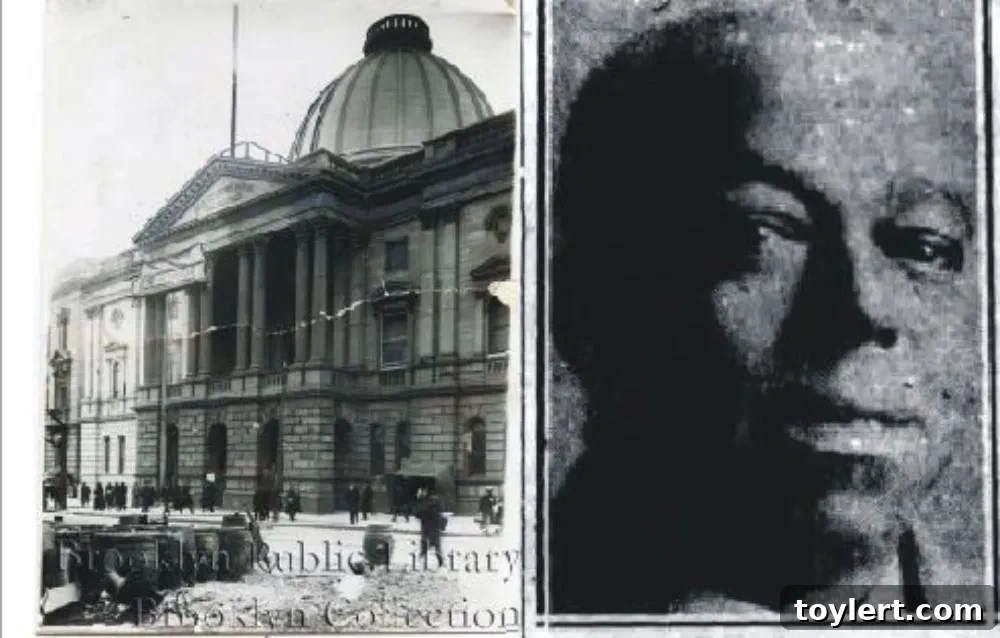
Rufus L. Perry Sr.: A Beacon of Hope and Intellect in 19th Century Brooklyn
The annals of Brooklyn’s vibrant history are replete with tales of remarkable individuals who shaped its cultural, social, and intellectual landscape. Among these luminaries, Reverend Dr. Rufus L. Perry Sr. stands out as a towering figure, whose life story embodies resilience, profound intellect, and unwavering dedication. During the latter half of the 19th century, Perry emerged as one of Brooklyn’s most prominent and influential ministers. His achievements were extraordinary, not least because he was an African American man who had endured the brutal realities of slavery in his childhood, only to rise to a position of immense respect and scholarly acclaim.
Dr. Perry’s remarkable journey from enslavement to becoming a leading Protestant clergyman in one of America’s most dynamic cities resonated deeply with his contemporaries. Like many of Brooklyn’s esteemed spiritual leaders of the era, he held a doctorate, was a prolific author whose insights reached wide audiences, and his impactful sermons frequently graced the religion pages of the esteemed Brooklyn Eagle. The very fact of his background – an African American man, a former slave, possessing such intellectual and spiritual authority – was not merely notable; it was an awe-inspiring testament to human potential and perseverance against incredible odds.
From Enslavement to Emancipation: The Genesis of a Leader
Born into bondage, Rufus L. Perry Sr.’s early life was undoubtedly marked by the dehumanizing conditions of slavery. While specific details of his early servitude may be scarce, one can infer the immense challenges he faced. The institution of slavery systematically denied education, curtailed personal freedoms, and sought to suppress the spirit. Yet, against this backdrop of oppression, Perry’s innate drive for knowledge and liberty must have flickered, eventually igniting into a powerful flame.
The precise circumstances of his emancipation are a crucial, yet often understated, chapter in his biography. Whether through self-liberation, the Emancipation Proclamation, or other means, his transition from a life of chattel to one of agency was a pivotal moment. This newfound freedom would not only redefine his personal destiny but also lay the groundwork for a life dedicated to uplifting his community and championing justice. For many newly freed individuals, the path to self-improvement was fraught with obstacles, but Perry’s resolve proved unyielding, propelling him towards an ambitious pursuit of education.
The Pursuit of Knowledge: An Unconventional Path to a Doctorate
In the post-Civil War era, for an African American to obtain a doctorate was an achievement of colossal proportions. Educational opportunities for Black individuals, especially those with a history of enslavement, were severely limited and often met with racial prejudice. Rufus L. Perry Sr.’s academic journey was therefore not just an individual pursuit but a groundbreaking act of defiance against systemic barriers. It signaled an unwavering commitment to intellectual excellence and a profound belief in the transformative power of education.
His doctorate, a testament to years of rigorous study and profound intellectual engagement, placed him in an elite class of scholars, irrespective of race. This academic credential was not merely symbolic; it provided him with the theological depth and intellectual credibility necessary to lead congregations, engage in public discourse, and author significant works. His ability to navigate and succeed within predominantly white academic and religious institutions underscored his exceptional talent and determination, paving the way for future generations of African American scholars and leaders.
A Leading Voice in Brooklyn: Ministry and Community Impact
Dr. Perry’s arrival and establishment in Brooklyn coincided with a period of rapid growth and demographic change for the borough. Brooklyn was a burgeoning urban center, attracting diverse populations, including a growing African American community seeking new opportunities in the wake of emancipation. It was within this dynamic environment that Reverend Perry found his calling, establishing himself as a formidable spiritual and intellectual force.
As a prominent minister, his sermons were more than just religious discourses; they were powerful oratorical events that captivated and inspired. His ability to articulate complex theological concepts with clarity and passion, often infused with themes of justice, equality, and human dignity, made him a magnetic figure. The regular citation of his sermons in the Brooklyn Eagle speaks volumes about his influence, indicating that his words transcended the confines of his church and resonated with a broader public, including those outside the African American community.
Perry’s ministry likely served as a cornerstone for the African American community in Brooklyn. Churches during this era were not just places of worship; they were vital social, educational, and political centers. They provided a space for community organizing, mutual aid, and cultural preservation. Dr. Perry, with his education and stature, would have been instrumental in these efforts, advocating for civil rights, promoting literacy, and fostering economic independence among his congregants and the wider Black population of Brooklyn. His leadership offered a sense of hope and direction during a time when African Americans still faced significant discrimination and systemic challenges.
The Pen as a Pulpit: Rufus L. Perry Sr.’s Literary Legacy
Beyond his captivating oratory, Dr. Perry’s impact was magnified through his prolific writing. Being “widely published” in the 19th century was a significant achievement, requiring not only intellectual prowess but also access to publishing networks often closed to African Americans. His published works likely spanned a variety of genres, from theological treatises and biblical commentaries to historical accounts and essays on social reform. These writings would have allowed his ideas to reach an even broader audience, cementing his reputation as a formidable scholar and intellectual.
Through his pen, Perry could dissect the pressing issues of his time, offering guidance, challenging injustice, and inspiring action. His writings might have explored the intersection of faith and freedom, the imperative for racial uplift, or the historical contributions of African Americans. By committing his thoughts to print, he ensured that his insights would endure, providing a lasting legacy that transcended his immediate temporal and geographical influence. His literary contributions served as a powerful complement to his ministerial work, establishing him as a multifaceted leader whose intellectual footprint was as profound as his spiritual guidance.
A Brooklyn Pioneer: Championing Progress and Breaking Barriers
Rufus L. Perry Sr. was not merely a minister; he was a pioneer. His life demonstrated a remarkable ability to navigate and succeed in a society that often sought to marginalize and diminish African Americans. By excelling in fields traditionally dominated by white men – academia, publishing, and prominent religious leadership – he shattered racial stereotypes and opened doors for others.
His pioneering spirit extended to his advocacy for racial equality and social justice. In an era marked by Reconstruction’s promise and its subsequent betrayal, figures like Dr. Perry were crucial in sustaining the fight for civil rights. He likely used his platform to speak out against segregation, advocate for voting rights, and promote educational opportunities for all. His very existence as an educated, respected African American leader in Brooklyn served as an inspiring model and a powerful counter-narrative to the prevailing racist ideologies of the time.
His influence undoubtedly extended beyond the pulpit and the printing press. He was likely a mentor to younger generations, a counselor to families facing hardship, and a strategic partner in local movements for social change. Perry’s presence in Brooklyn’s intellectual and spiritual circles brought an essential African American perspective to public discourse, enriching the city’s intellectual fabric and contributing to a more inclusive vision of American society.
An Enduring Legacy: Remembering Rufus L. Perry Sr.
The life and achievements of Rufus L. Perry Sr. continue to resonate today as a testament to the indomitable human spirit and the power of education and faith to overcome adversity. His journey from the chains of slavery to the heights of intellectual and spiritual leadership is a compelling narrative that deserves continued recognition. He stands as a symbol of aspiration and achievement for African Americans, demonstrating what is possible when intelligence, determination, and moral conviction converge.
Dr. Perry’s legacy is not just about his individual accomplishments, but also about the pathways he forged for others. He helped to lay the foundation for a more equitable society, showing that talent and wisdom know no racial bounds. His contributions to Brooklyn’s religious, intellectual, and social history were profound, enriching the borough in countless ways and leaving an indelible mark that continues to inspire. In an ongoing conversation about historical figures who fought for justice and enlightenment, Rufus L. Perry Sr.’s name shines brightly, a true pioneer whose remarkable life continues to inform and uplift.