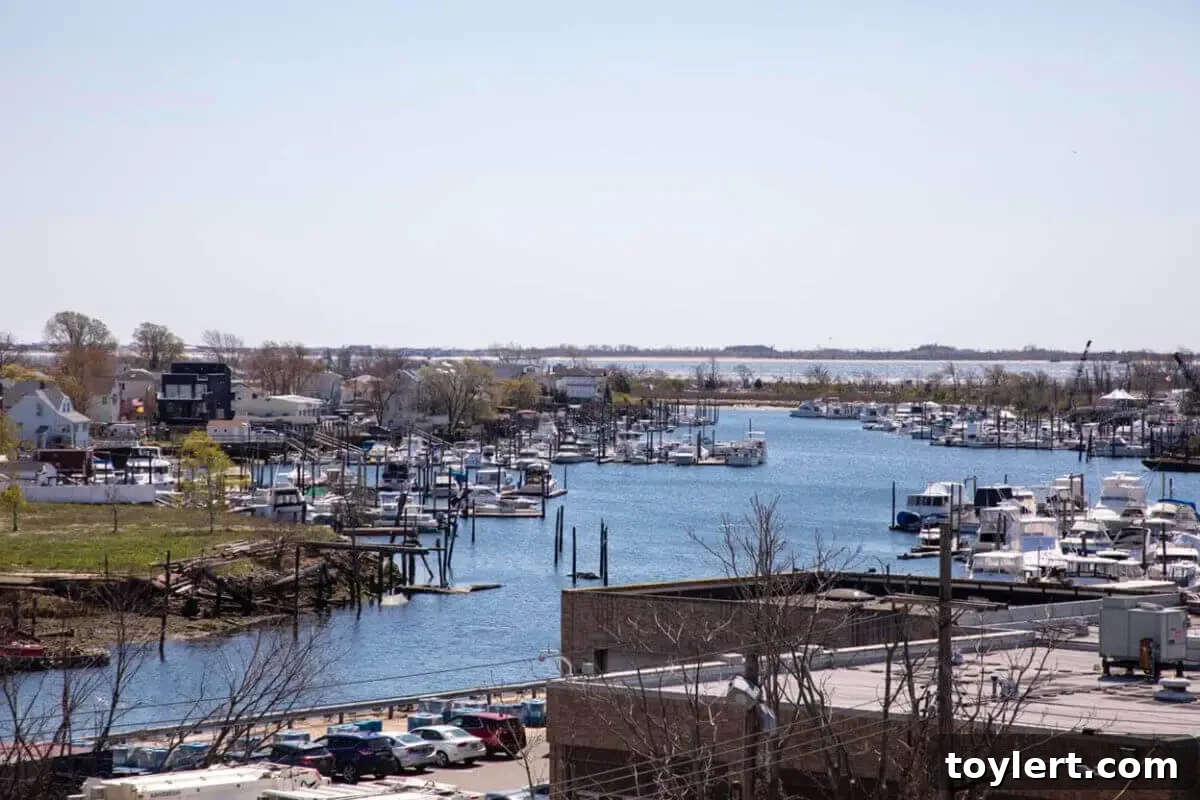
Sheepshead Bay Embraces Green Future: Major Upgrade for Coney Island Wastewater Resource Recovery Facility
A significant infrastructure project is actively transforming the landscape of Sheepshead Bay, Brooklyn, with the ongoing construction of a state-of-the-art wastewater treatment facility. City officials are heralding this initiative as a monumental stride towards environmental sustainability, projecting that its advanced “green infrastructure” will yield benefits equivalent to removing 109 passenger cars from the road annually. This development underscores New York City’s unwavering commitment to enhancing public health, safeguarding natural ecosystems, and fostering a more resilient urban environment for its vibrant communities.
The Vital Role of the Coney Island Wastewater Resource Recovery Facility
At the heart of this crucial environmental endeavor lies the Coney Island Wastewater Resource Recovery Facility. Despite its name, which often leads to common misconceptions, the facility is strategically located at 3002 Knapp Street in Sheepshead Bay, not Coney Island itself. This facility is an indispensable pillar of Brooklyn’s environmental infrastructure, responsible for cleaning and treating an astounding volume of wastewater every single day of the year. It processes over 110 million gallons daily, serving the needs of nearly 600,000 residents across southern and central Brooklyn.
The facility’s primary mission is to meticulously treat wastewater carried through an extensive network of sewage pipes before it is safely released into New York City’s precious waterways. This process is critical for preventing pollution, protecting marine life, and ensuring the health and safety of the city’s beaches and recreational areas. Without such facilities, untreated wastewater would contaminate natural water bodies, leading to severe ecological damage and significant public health risks.
A Testament to Environmental Stewardship: Commissioner Sapienza’s Vision
Vincent Sapienza, the Commissioner of the city’s Department of Environmental Protection (DEP), articulated the profound importance of this facility and its ongoing enhancements. “The Coney Island Wastewater Resource Recovery Facility cleans more than 110 million gallons of wastewater from nearly 600,000 Brooklyn residents every day of the year and protects the waterways and beaches in the area,” stated Commissioner Sapienza. His comments highlight the facility’s dual impact: providing essential sanitation services to a vast population while simultaneously acting as a crucial guardian of the region’s natural aquatic resources.
The DEP, under Sapienza’s leadership, is dedicated to managing and conserving New York City’s water supply, ensuring the quality of its drinking water, and treating its wastewater responsibly. Projects like the Sheepshead Bay upgrade are central to this mission, demonstrating proactive measures to adapt to evolving environmental challenges and meet the demands of a growing urban population. The emphasis on resource recovery in the facility’s name itself reflects a modern approach that goes beyond mere treatment, aiming to recover valuable resources from wastewater, such as energy and nutrients.
Understanding Green Infrastructure and Its Impact
The term “green infrastructure” is a cornerstone of this Sheepshead Bay project. But what exactly does it entail in the context of a wastewater treatment facility? Green infrastructure refers to a network of decentralized stormwater management practices that mimic natural processes to manage rainwater where it falls. While often associated with features like green roofs, permeable pavements, and rain gardens, in a broader sense, it encompasses any infrastructure improvement that significantly reduces environmental impact and promotes ecological health.
For the Coney Island Wastewater Resource Recovery Facility, the integration of green infrastructure signifies more than just aesthetic improvements. It implies the implementation of advanced technologies and sustainable practices aimed at reducing the facility’s carbon footprint, improving energy efficiency, and minimizing its overall environmental impact. The claim that these upgrades will be “equivalent to taking 109 passenger cars off the road” is a powerful metric. This equivalence is often calculated based on reductions in greenhouse gas emissions achieved through optimized energy consumption, potential renewable energy generation within the facility, and enhanced pollutant removal processes that prevent the release of harmful substances into the atmosphere and water.
Such advancements typically include, but are not limited to, highly efficient pumps and aeration systems, sophisticated nutrient removal processes that prevent harmful algal blooms, and potentially even biogas capture for energy production. By reducing energy demands and improving the quality of treated effluent, the facility contributes directly to cleaner air and water, leading to a healthier environment for both human residents and local wildlife.
Protecting Brooklyn’s Pristine Waterways and Beaches
The commitment to protecting waterways and beaches is a direct and tangible benefit of the Coney Island Wastewater Resource Recovery Facility’s upgrade. Brooklyn’s coastline, particularly areas like Sheepshead Bay and the broader Coney Island stretch, are vital for recreation, tourism, and local economies. These areas support diverse marine ecosystems, provide habitat for various species of fish, birds, and other wildlife, and offer invaluable spaces for residents to connect with nature.
Untreated or inadequately treated wastewater can introduce a host of pollutants into these sensitive environments, including bacteria, viruses, excess nutrients (like nitrogen and phosphorus), and chemical contaminants. These pollutants can lead to devastating consequences:
- Harmful Algal Blooms: Excess nutrients can fuel the rapid growth of algae, depleting oxygen in the water and creating “dead zones” where marine life cannot survive.
- Pathogen Contamination: Bacteria and viruses from human waste can render beaches unsafe for swimming and recreational activities, posing serious health risks to the public.
- Ecological Imbalance: Chemical pollutants can accumulate in the food chain, affecting fish and other aquatic organisms, and eventually impacting human health through seafood consumption.
The enhanced treatment capabilities of the facility mean a significantly reduced risk of these issues, ensuring that the water quality meets or exceeds stringent environmental standards, thereby preserving the ecological integrity and recreational value of Brooklyn’s waterfront.
A Broader Vision for Urban Sustainability
The project in Sheepshead Bay is more than just an isolated upgrade; it’s a testament to New York City’s broader vision for urban sustainability and resilience. As climate change continues to pose challenges, including more intense rainfall and rising sea levels, robust and adaptable wastewater infrastructure becomes increasingly critical. Green infrastructure components can play a role in managing stormwater, reducing pressure on the sewer system, and mitigating urban flooding—issues that are particularly relevant to low-lying coastal areas like Sheepshead Bay.
Moreover, modern wastewater treatment facilities are evolving into “resource recovery facilities” because they are designed not just to treat waste but also to extract valuable resources. This can include producing biosolids for agricultural use, generating energy from methane gas, and even recovering clean water for non-potable uses. These advancements contribute to a circular economy, minimizing waste and maximizing resource utilization, moving away from traditional linear consumption models.
Community Impact and Future Prospects
For the nearly 600,000 Brooklyn residents served by this facility, the upgrade translates into tangible improvements in their quality of life. Access to reliable and environmentally sound wastewater treatment is a fundamental public service, directly impacting health, comfort, and the environmental amenities available in their neighborhoods. Cleaner waterways mean more opportunities for fishing, boating, and enjoying local parks and beaches without fear of contamination.
The ongoing investment in facilities like the Coney Island Wastewater Resource Recovery Facility demonstrates a forward-thinking approach by New York City’s Department of Environmental Protection. It signifies a long-term commitment to safeguarding vital natural resources, fostering community well-being, and building a sustainable urban future that can withstand the environmental pressures of the 21st century. As construction progresses, Sheepshead Bay and the wider Brooklyn community can look forward to a healthier environment, supported by infrastructure that truly embodies the principles of green innovation and responsible resource management.