Myrtle Avenue’s Urban Renaissance: A New Era of Development in Clinton Hill
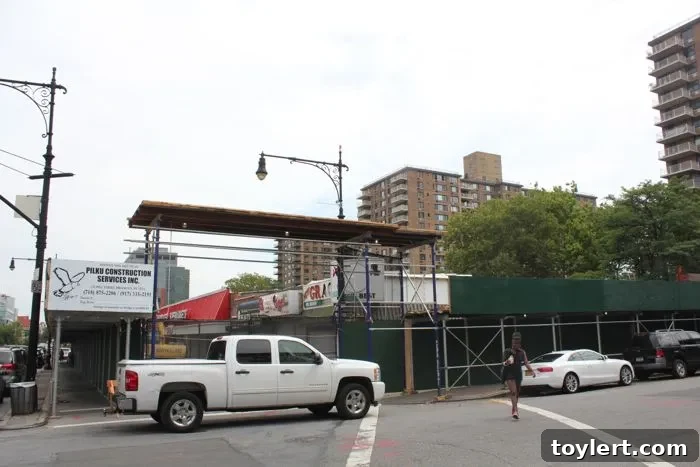
A significant transformation is underway on Myrtle Avenue in Brooklyn, as the highly anticipated mixed-use development by Silverstone Property Group officially begins its physical manifestation. Over the recent weekend, the familiar sight of plywood barriers emerged around the former Associated Supermarket and adjacent storefronts, signaling the commencement of construction on a project poised to redefine a pivotal stretch of this historic thoroughfare in Clinton Hill. This ambitious undertaking promises to introduce not just new residences but also revitalized retail spaces and enhanced public areas, marking a pivotal moment in the ongoing evolution of the neighborhood.
The groundwork for this development has been meticulously laid, with permits secured for both the ambitious construction and the necessary site preparations. While the presence of construction barriers might be a temporary inconvenience, it represents the exciting dawn of a project that aims to enrich the urban landscape of one of Brooklyn’s most vibrant communities. The vision behind this development goes beyond mere construction; it’s about crafting a dynamic environment where modern living intertwines seamlessly with community needs and historical character.
A Strategic Vision for Urban Living: Silverstone’s Ambitious Plan
Silverstone Property Group, known for its strategic urban developments, is spearheading this multi-faceted project, which will culminate in the construction of two distinct buildings: a seven-story structure and an eight-story counterpart. These additions will collectively introduce a substantial number of new residential units to Myrtle Avenue, addressing the increasing demand for housing in New York City’s highly sought-after boroughs. The scale of these buildings is designed to integrate thoughtfully with the existing streetscape while bringing a contemporary architectural presence to the area.
At the core of Silverstone’s plan is the creation of 240 new rental units, offering a diverse range of living options for future residents. A crucial aspect of this development, reflecting a commitment to inclusive urban growth, is the allocation of 20 percent of these units as affordable housing. This commitment is vital in a city grappling with housing affordability challenges, ensuring that the new growth benefits a broader spectrum of the community and maintains the diverse fabric of Clinton Hill. The integration of affordable units within a market-rate development is a model frequently championed in urban planning, aiming to foster economically diverse neighborhoods.
The Heart of the Community: Revitalized Retail and the Return of Associated
Beyond its residential offerings, the development places a strong emphasis on strengthening the local economy and enhancing daily life for residents through its ground-floor retail component. A particularly welcome announcement for the neighborhood is the expected return of the Associated Supermarket. The presence of a local, accessible grocery store is a cornerstone of any thriving urban community, providing essential services and contributing significantly to the convenience and quality of life for those living nearby.
The re-establishment of Associated Supermarket symbolizes more than just a place to buy groceries; it represents the developer’s understanding of community needs and a dedication to preserving the essential commercial infrastructure that makes Myrtle Avenue so vital. In addition to the supermarket, other retail spaces will be incorporated, promising to introduce a variety of shops and services. These new commercial offerings are expected to generate increased foot traffic, support local employment, and further establish Myrtle Avenue as a bustling commercial corridor, enhancing the overall vibrancy of the street and serving as a draw for both new and long-time residents.
Myrtle Plaza: Elevating the Public Realm with a $6 Million Streetscape Project
The residential and retail components of this development are just one part of a larger vision for Myrtle Avenue’s revitalization. The project will be significantly enhanced by the concurrent development of the “Myrtle Plaza,” an ambitious $6 million streetscape initiative. This public realm project is designed to extend from the development site all the way down to Emerson Place, promising to transform the pedestrian experience and create welcoming public spaces.
The Myrtle Plaza initiative is set to introduce a host of improvements, including expanded sidewalks, new landscaping, tree plantings, improved lighting, and potentially public art installations or seating areas. Such streetscape enhancements are crucial for fostering a more pedestrian-friendly and aesthetically pleasing urban environment. They not only encourage walking and outdoor activity but also contribute to a sense of place and community pride. This substantial investment underscores a collaborative effort to not only build structures but also to cultivate an inviting and functional public space that will serve as a green oasis and gathering spot for the entire neighborhood, connecting various parts of Myrtle Avenue and promoting a cohesive urban experience.
Clinton Hill: A Neighborhood’s Enduring Appeal and Future Growth
Myrtle Avenue’s transformation is deeply rooted in the broader context of Clinton Hill, a Brooklyn neighborhood celebrated for its distinctive charm, historic architecture, and vibrant community spirit. Known for its beautiful brownstones, tree-lined streets, and proximity to cultural institutions and educational hubs like Pratt Institute, Clinton Hill has long been a desirable location. The new development on Myrtle Avenue is poised to further enhance its appeal, attracting new residents and businesses while respecting the neighborhood’s rich heritage.
The area’s strategic location offers residents excellent access to public transportation, connecting them swiftly to Manhattan and other parts of Brooklyn. Nearby Fort Greene Park provides ample green space for recreation and relaxation, complementing the urban density. The ongoing evolution of Myrtle Avenue reflects a broader trend of thoughtful urban revitalization in Brooklyn, where new developments aim to meet contemporary demands while contributing positively to the existing neighborhood fabric. This project, with its blend of residential and retail spaces, coupled with significant public realm improvements, is a testament to Clinton Hill’s enduring vibrancy and its promising future as a dynamic urban center.
Addressing Brooklyn’s Housing Demands with Thoughtful Development
The addition of 240 new rental units is a significant contribution to Brooklyn’s housing supply, an issue of critical importance in one of the most populous and fastest-growing boroughs in New York City. The challenge of accommodating a burgeoning population while maintaining affordability and neighborhood character requires careful planning and responsive development strategies. The Silverstone project on Myrtle Avenue exemplifies a balanced approach, integrating market-rate housing with a substantial component of affordable units, thereby promoting socioeconomic diversity within the new residential community.
Furthermore, contemporary urban developments often prioritize sustainable design and integrate amenities that cater to modern lifestyles. While specific details about the interiors and building features are yet to be fully revealed, it is reasonable to anticipate that these new residences will offer a range of modern conveniences, including energy-efficient systems, appealing communal spaces, and potentially features like roof decks, fitness centers, or co-working areas that enhance urban living. Such features not only attract residents but also contribute to the long-term viability and desirability of the development, aligning with the evolving expectations of city dwellers.
Economic Ripple Effects and Community Integration
Beyond the immediate structures, projects of this scale generate significant economic ripple effects. The construction phase alone will create numerous jobs, from skilled trades to management positions, injecting vitality into the local economy. Once completed, the new retail spaces will sustain ongoing employment opportunities and contribute to the local tax base, providing resources for public services and infrastructure. The increased residential density will also support existing local businesses, fostering a more robust and self-sustaining neighborhood economy.
Effective community integration is paramount for the success of any large-scale development. The inclusion of the Associated Supermarket, a familiar and valued local business, demonstrates an understanding of the existing community’s needs and a desire to foster continuity. Thoughtful urban planning seeks to create developments that are not isolated enclaves but rather integral parts of the broader neighborhood, enhancing connectivity and creating opportunities for new residents to engage with the established community and vice versa. This integrative approach helps to ensure that new developments contribute positively to the social cohesion and livability of the area.
The Future of Myrtle Avenue: A Model for Urban Revitalization
The groundbreaking on Myrtle Avenue represents more than just another construction project; it signals a new chapter for a vital commercial and residential corridor in Clinton Hill. With its strategic blend of housing, including affordable options, a commitment to revitalizing ground-floor retail, and a significant investment in public space through the Myrtle Plaza, this development by Silverstone Property Group is set to become a model for thoughtful urban revitalization. It embodies a vision where historical charm meets modern amenities, and where community needs are integrated into ambitious urban planning.
As the plywood barriers stand as an initial marker, they herald a future where Myrtle Avenue will be an even more dynamic, vibrant, and inclusive place to live, work, and gather. The transformation taking shape promises to enhance the quality of life for current and future residents, solidifying Clinton Hill’s reputation as one of Brooklyn’s most desirable and forward-thinking neighborhoods.