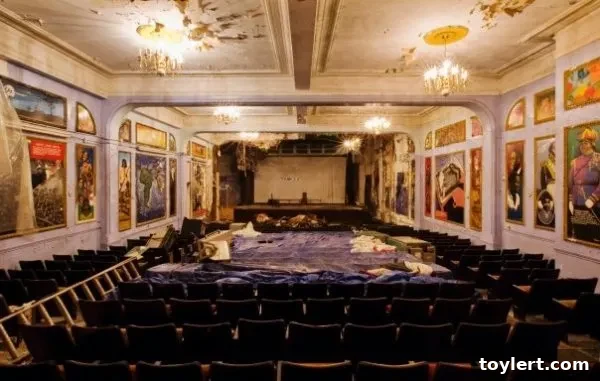
The Enduring Legacy and Uncertain Future of Bed-Stuy’s Slave Theater
In the vibrant heart of Brooklyn’s historic Bed-Stuy neighborhood, at the prominent address of 1215 Fulton Street, stands a building that carries immense cultural weight: the Slave Theater. Once a dynamic and indispensable Afrocentric cultural institution, a beacon of Black art, activism, and community gathering, its future has remained frustratingly uncertain for years. The powerful echoes of its vibrant past resonate through the community, even as the structure itself faces the very real threat of sale or redevelopment. The ongoing saga of its potential auction, coupled with persistent efforts to preserve its invaluable legacy, continues to captivate and concern residents, historians, and cultural advocates alike.
A Monument to Black Culture and Resistance in Bed-Stuy
The Slave Theater was far more than just a venue; it was a movement embodied in brick and mortar. Founded in the transformative late 1960s by the visionary Clarence J. Carter, this institution emerged during a pivotal era for Black Americans. It offered a crucial sanctuary and a powerful stage for revolutionary thought and artistic expression. Carter, a former Black Panther and civil rights activist, conceived of the theater as a dedicated space where Black artists could freely express themselves, where authentic Black narratives could be celebrated without compromise, and where critical discussions on race, identity, and liberation could thrive without external interference. It quickly became a vital community hub, nurturing and fostering a generation of influential playwrights, actors, musicians, and thinkers.
Throughout its active decades, the Slave Theater was renowned for its unapologetically Afrocentric programming. It hosted a remarkable array of powerful plays, evocative poetry readings, soul-stirring musical performances, and impactful political rallies that often challenged the prevailing status quo and ignited essential conversations crucial to the empowerment and upliftment of the Black community. Many prominent figures, including activists like Al Sharpton and various cultural icons, graced its stage or attended its seminal events, underscoring its immense significance that extended far beyond the immediate confines of Bed-Stuy. The theater served as a powerful testament to the principles of self-determination and cultural pride, standing as a bulwark against the homogenizing forces that frequently marginalize independent and culturally specific art spaces.
The Precipice of Change: Decline and Persistent Uncertainty
After decades of impactful operation, the Slave Theater, like many independent cultural institutions, began to face increasing challenges. It grappled with significant financial strains, mounting maintenance issues, and the rapidly evolving landscape of urban development that began to transform Bed-Stuy. By the early 2000s, its doors had largely closed, leaving a palpable void in the community. The building, currently owned by Reverend Samuel Boykin, has since become a subject of intense speculation and profound community concern. For years, the property’s fate has hung precariously in the balance, with rumors of potential sales and auctions periodically surfacing, only to be met with frustrating delays and a consistent lack of clear, definitive information.
The current chapter of this uncertainty began with an expected auction of the building at 1215 Fulton Street. However, recent reports indicate that this highly anticipated event, which many believed would finally determine the theater’s future, was not scheduled as initially anticipated. The precise reasons for this latest delay remain somewhat opaque, contributing significantly to the community’s heightened anxiety. It is presently unclear whether an auction will be rescheduled for the coming month, or indeed, at any point in the near future. Adding to the pervasive confusion, there has been no definitive word from the building owner, Rev. Samuel Boykin, regarding whether the property is currently under contract or has been sold. Despite earlier reports in August indicating keen interest from several potential buyers, the current status of these discussions, if they ever materialized into concrete offers, remains frustratingly unconfirmed, leaving the community in suspense.
A Community Fights Back: The New Brooklyn Theater’s Vision for Preservation
Amidst this atmosphere of pervasive uncertainty and growing concern, a dedicated group has emerged with a clear and compelling vision for the Slave Theater’s revitalization: the New Brooklyn Theater. This ambitious organization is passionately committed to acquiring the historic building and restoring it to its former glory, with the aim of transforming it once again into a vibrant, indispensable cultural and community hub. Their comprehensive plan envisions a thoughtfully renovated space that not only honors the Slave Theater’s profound legacy but also skillfully adapts to contemporary artistic and community needs, thereby ensuring its continued relevance and impact for future generations of Bed-Stuy residents and beyond.
The New Brooklyn Theater has actively pursued various avenues to raise the substantial funds required for such an endeavor. A significant component of their initial strategy involved a public crowdfunding campaign on Kickstarter, through which they sought to raise $200,000 to aid their acquisition efforts. While the campaign, despite considerable community support, did not ultimately reach its ambitious financial goal, the organization remains entirely undeterred. They are vigorously exploring other fundraising mechanisms, including soliciting direct donations from individuals and foundations, actively seeking grants from cultural preservation funds, and engaging in community outreach, all in their persistent and unwavering effort to gather the necessary capital. Their unwavering commitment powerfully underscores the profound desire within the community not just to see the Slave Theater saved from development, but to witness its triumphant rebirth.
However, even the most dedicated and well-intentioned efforts can face unforeseen obstacles. Sarah Wolff, Executive Producer for the New Brooklyn Theater, recently shed light on some of the significant recent setbacks. She explicitly stated, “Due to the hurricane, I have been told that the entire process may get pushed back because of availability from the Department of Buildings who is going to be helping with Sandy related issues.” This poignant statement highlights how external forces, such as the widespread and devastating impact caused by Hurricane Sandy, can have far-reaching and unintended consequences. These ripple effects can significantly slow down crucial administrative processes and divert vital resources away from pressing cultural preservation efforts. The Department of Buildings, understandably overwhelmed with the immediate and critical recovery efforts across the city, has naturally prioritized urgent safety inspections and structural assessments, inadvertently delaying proceedings related to historically significant properties like the Slave Theater, further complicating its precarious situation.
The Broader Context: Preserving Cultural Heritage in a Rapidly Changing City
The ongoing struggle to save the Slave Theater is emblematic of a much larger and more complex narrative playing out across New York City, particularly in rapidly gentrifying neighborhoods such as Bed-Stuy. Independent cultural institutions, especially those deeply rooted in minority communities and serving specific cultural needs, frequently find themselves exceptionally vulnerable to powerful market forces and intense development pressures. As property values in these coveted areas soar to unprecedented heights, the temptation for owners to sell historically significant buildings for highly profitable commercial or residential redevelopment becomes immense, threatening to erase the very fabric of established communities.
Preserving spaces like the Slave Theater is not merely about saving an old building; it is profoundly about safeguarding invaluable cultural heritage, historical memory, and the core identity of a community. These institutions serve as invaluable anchors, connecting generations through shared experiences, fostering local talent, and providing essential platforms for voices that might otherwise be marginalized or silenced. The potential loss of the Slave Theater would represent not only the erasure of a significant and powerful chapter in Bed-Stuy’s rich history but would also diminish the vibrant and diverse tapestry of Black cultural institutions that have profoundly shaped Brooklyn and extended their influence far beyond its boroughs.
The persistent uncertainty surrounding the future of the Slave Theater serves as a poignant and urgent reminder of the continuous and multifaceted effort required to protect and sustain these vital community assets. It unequivocally calls for sustained advocacy, innovative fundraising strategies, and a collaborative spirit among dedicated community leaders, passionate preservationists, and forward-thinking policymakers. Their collective action is essential to ensure that the invaluable cultural landmarks of yesterday can continue to inspire, educate, and empower the diverse communities of tomorrow.
What Lies Ahead for Bed-Stuy’s Cultural Gem?
As the community anxiously awaits concrete updates on the prospective auction or potential sale, the future of 1215 Fulton Street remains delicately and precariously balanced. Will the Slave Theater rise again, a phoenix reborn through the tireless efforts of dedicated groups like the New Brooklyn Theater and the unwavering support of a passionate community? Or will this invaluable cultural landmark ultimately succumb to the relentless pressures of development, its revolutionary spirit relegated to the annals of history books, its physical space transformed into something entirely new and devoid of its original purpose?
The definitive answers to these critical questions are not yet clear, shrouded in bureaucratic delays and market uncertainties. However, one thing remains absolutely certain: the profound legacy of the Slave Theater, as an enduring symbol of Black resilience, artistic freedom, and community solidarity, will undeniably endure. The ongoing fight for its physical preservation is a powerful testament to the strength of that legacy and the unwavering determination of those who passionately believe its story is far from over.
Photo by Andreas Burgess
Source: New Brooklyn Theater to Hold Meeting About Slave Theater [Brownstoner]