Modern Living Meets Historic Charm: A Crown Heights Townhouse Transformation
For a contemporary family seeking more space and a strategic investment, the path led to the vibrant streets of Crown Heights, Brooklyn. This narrative begins with a couple and their two school-age children, previously nestled in a compact, modern condo in Prospect Heights—a dwelling expertly carved from an older edifice. Their desire for expansion was clear, yet their aesthetic preference remained steadfastly modern. As Long Island City-based architect Sarah Jacoby keenly observed, “They were open to the same kind of vibe” as their former residence, emphatically stating, “They did not want a lot of complicated original detail that needed to be restored.” This specific directive set the tone for a renovation that would blend clean lines and functional design with the inherent character of a classic Brooklyn row house.
The quest for a new home was not merely about increased square footage; it was also driven by a pragmatic desire for rental income. This dual objective guided their search to Crown Heights, a neighborhood rich in architectural heritage and community spirit, offering an array of attractive properties. Here, they discovered a promising three-story brick row house, distinguished by a classic front bay window and an eye-catching original cornice—elements that hinted at its storied past. Structurally, the house was in “OK shape, pretty decent structurally,” according to Jacoby, the visionary architect who would orchestrate its comprehensive overhaul. Her approach, characterized as “a solid, clean, but not insane renovation,” became the cornerstone of a project designed to maximize value and aesthetic appeal without excessive expenditure. Through careful prioritization of the family’s wants and needs, and a judicious allocation of resources for fixtures and materials, the project aimed for efficiency and elegance.
The Strategic Renovation: Balancing Budget and Ambition in Crown Heights
The existing layout of the Crown Heights row house presented an initial challenge: it had long been configured as three separate floor-through apartments. The architectural mission was to transform this multi-unit dwelling into a more cohesive living arrangement: an owner’s duplex occupying the upper two floors, complemented by a garden-level rental unit. This significant re-imagining of space required extensive planning and execution, though it fell short of a complete gut renovation. The family demonstrated remarkable flexibility and commitment to the project, opting to move into the downstairs rental unit immediately upon closing. This arrangement allowed them to live on-site while the extensive renovations proceeded on the upper floors, a process that unfolded over the better part of a year. Such a strategic move not only saved on temporary housing costs but also allowed the family to remain intimately connected to the evolving transformation of their future home.
Navigating the Nuances of Design: A Modern Vision for a Historic Structure
Sarah Jacoby’s expertise was pivotal in translating the family’s modern aspirations into a tangible design that respected the building’s historical envelope. The key was to avoid the pitfalls of overly complex or costly restoration work while infusing the interiors with contemporary functionality and a sense of spaciousness. The “solid, clean” aspect of the renovation meant focusing on fundamental improvements: updating infrastructure, reconfiguring walls for better flow, and selecting finishes that resonated with a modern aesthetic. This involved a deliberate choice of materials—think natural woods, neutral color palettes, and streamlined fixtures—that create a calm, uncluttered environment conducive to family life. The architect emphasized durability and timelessness, ensuring that while the design was modern, it would not quickly become dated, thus offering long-term value.
One of the central tenets of this renovation was the intelligent allocation of the budget. Jacoby worked closely with the clients to distinguish between essential investments and desirable upgrades. For instance, while structural integrity and foundational systems (plumbing, electrical, HVAC) received significant attention, decorative elements might have been chosen for their cost-effectiveness without sacrificing style. This pragmatic approach allowed for strategic splurges on key features that would have the most impact, such as a custom kitchen or well-designed bathrooms, while opting for more budget-friendly solutions in less critical areas. The goal was to achieve a high-end feel where it mattered most, without the prohibitive cost of a full luxury build-out.
From Multifamily to Modern Family Oasis: Crafting the Owner Duplex
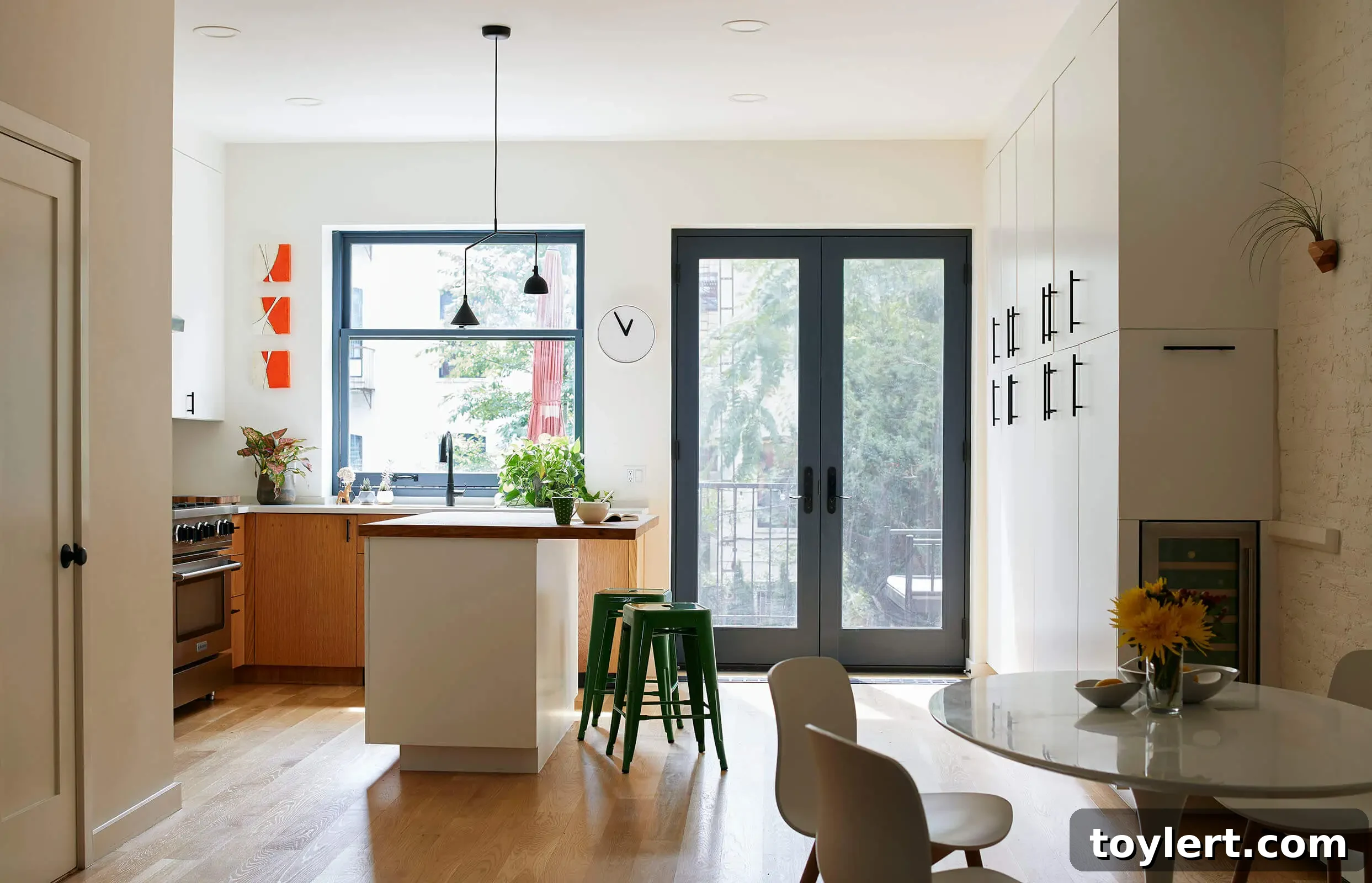
The transformation of the upper floors into a spacious owner duplex was at the heart of the project. This required careful planning to integrate distinct living zones—communal spaces for family gatherings, private retreats for parents and children, and functional areas like the kitchen and home office—into a cohesive narrative. The design prioritized an open-plan living concept for the main floor, creating an expansive area where the kitchen, dining, and living rooms flow seamlessly into one another. This design choice not only enhances the sense of space but also maximizes natural light, a crucial element for modern urban living. Large windows were either restored or replaced with energy-efficient alternatives that maintain the building’s exterior aesthetic while vastly improving indoor illumination.
Creating functional yet aesthetically pleasing spaces for the children was also a priority. The design incorporated clever storage solutions and versatile areas that could adapt as the children grew. Bedrooms were designed as peaceful sanctuaries, while communal play areas or study nooks were integrated into the duplex layout. For the parents, the master suite became a sophisticated retreat, perhaps featuring a luxurious en-suite bathroom and ample closet space, reflecting the desire for comfort and privacy. Throughout the duplex, the choice of materials like engineered hardwood flooring, clean-lined cabinetry, and contemporary lighting fixtures contributed to the desired modern “vibe,” creating a home that feels fresh, inviting, and eminently livable.
Maximizing Investment: The Garden Rental Unit
The garden rental unit, crucial for generating income, was approached with the same thoughtful design philosophy, albeit with a focus on durability and broad appeal for tenants. While the family occupied this unit during the renovation, its ultimate purpose was to be a highly attractive rental property. This meant ensuring it had its own private entrance, efficient layout, and modern amenities. The design likely incorporated resilient finishes, a compact yet fully functional kitchen, and a comfortable bathroom. By creating a self-contained, well-appointed rental unit, the homeowners not only secured a valuable income stream but also added to the overall value and versatility of their Crown Heights property. This strategic division of space exemplifies how thoughtful architectural planning can meet both lifestyle needs and financial goals simultaneously.
The Final Outcome: A Harmonious Blend of Past and Present
After a year of dedicated effort and meticulous planning, the Crown Heights townhouse emerged transformed. What was once a series of disjointed apartments is now a beautifully integrated family home—a spacious, light-filled owner duplex that perfectly embodies the family’s preference for modern living, complemented by a revenue-generating garden apartment. The renovation masterminded by Sarah Jacoby stands as a testament to the power of thoughtful design, demonstrating that it is entirely possible to honor the historical context of a Brooklyn row house while simultaneously updating it for contemporary family needs and modern aesthetics. The project successfully navigated the complexities of budget constraints, structural challenges, and the clients’ specific desires, resulting in a home that feels both expansive and intimately personal.
This Crown Heights transformation offers valuable insights for anyone considering a similar renovation in a historic urban setting. It underscores the importance of a clear vision, a collaborative relationship with a skilled architect, and a strategic approach to budgeting and material selection. The success of this project lies in its ability to deliver a “solid, clean” renovation that not only enhanced the property’s value but, more importantly, created a cherished family home where modern comfort and historic charm coexist in perfect harmony. The family now enjoys a vibrant new chapter in Crown Heights, with ample space for growth and the added security of a strategic investment, all within the enduring beauty of a classic Brooklyn brownstone.