Ben Snead’s “Fish Farm: Brooklyn Snappers” – A Deep Dive into Dumbo’s Public Art
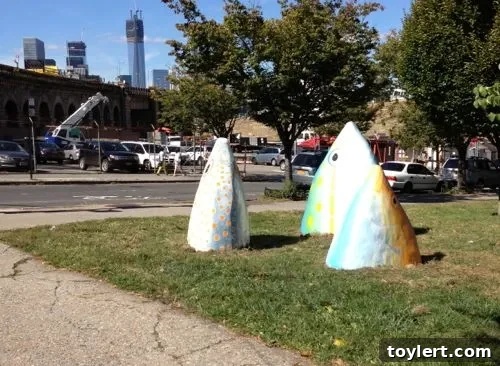
The vibrant streets of Dumbo, Brooklyn, once again transformed into an open-air gallery, pulsating with artistic expression during the renowned Dumbo Arts Festival. Among the myriad captivating installations that graced the neighborhood, one particular piece drew significant attention and sparked thoughtful conversation: Ben Snead’s “Fish Farm: Brooklyn Snappers.” Located strategically at the bustling corner of Washington Street (also known as Cadman Plaza East) and Prospect Street, this striking art installation invited passersby to ponder humanity’s intricate relationship with the natural world, particularly our marine ecosystems and consumption habits.
A true testament to the power of public art, “Fish Farm: Brooklyn Snappers” was more than just a collection of sculptures; it was a carefully curated statement, a visual dialogue between urban life and the often-unseen origins of our food. The installation, which was a highlight of the Dumbo Arts Festival, presented a series of monumental fish-head sculptures, each meticulously crafted to represent species commonly found in local Brooklyn fish markets. These included the distinctive lane snapper, the vibrant yellowtail snapper, and the robust rock hind. The artist’s choice of these specific species was deliberate, serving as a direct link to the everyday experience of Brooklyn residents, connecting their tables to a broader, global narrative.
The Artist’s Vision: Ben Snead and the Human-Nature Connection
At the heart of “Fish Farm: Brooklyn Snappers” lies the profound artistic philosophy of Ben Snead. Known for his compelling work that consistently delves into the complex relationship between humans and nature, Snead masterfully utilizes juxtaposition and scale to challenge conventional perceptions. His pieces often feature elements of the natural world, magnified or placed in unexpected settings, compelling viewers to reconsider their environment and their place within it. With “Fish Farm,” Snead continued this exploration, taking familiar culinary elements and elevating them to sculptural art, thus forcing a re-evaluation of their significance.
The online description of the installation eloquently summarizes Snead’s intent: “The fish live in tropical waters such as the Caribbean and are transported here for human consumption. By enlarging them and placing them on grass, they are taken further out of context.” This core concept is critical to understanding the depth of “Fish Farm.” By dramatically increasing the size of these fish heads, Snead imbues them with an almost mythic presence, impossible to ignore. Furthermore, placing them not in water, not on a market slab, but on a patch of urban grass, creates a powerful visual dissonance. This “out of context” placement serves to strip away the familiarity that often desensitizes us to the origins of our food. It highlights the vast journey these creatures undertake from their tropical homes to our dinner plates, a journey often unseen and unconsidered by the end consumer. Ben Snead’s work consistently asks us to look closer, to question the systems that govern our interaction with the natural world, and to acknowledge the often-invisible connections that sustain us.
Dumbo Arts Festival: A Platform for Innovation and Engagement
The Dumbo Arts Festival, a beloved annual tradition in Brooklyn, has long been celebrated for its commitment to making art accessible and engaging for everyone. This unique festival transforms the historic waterfront neighborhood of Dumbo into a dynamic stage for contemporary art, performance, and creative expression. With a mission to foster a vibrant cultural dialogue and showcase both established and emerging artists, the festival plays a crucial role in enriching New York City’s artistic landscape. Installations like “Fish Farm: Brooklyn Snappers” perfectly embody the spirit of the Dumbo Arts Festival: innovative, thought-provoking, and deeply embedded within the urban fabric, inviting serendipitous encounters with art.
For one vibrant weekend, the cobblestone streets, industrial architecture, and scenic waterfront views of Dumbo become the backdrop for an extraordinary array of artistic endeavors. From large-scale outdoor sculptures and interactive installations to intimate gallery showings and live performances, the festival encourages exploration and discovery. It provides a vital platform for artists to experiment with scale, material, and context, often engaging directly with the unique characteristics of the Dumbo environment. “Fish Farm” was a quintessential festival piece, leveraging its prominent outdoor location to capture public imagination and catalyze reflection. The festival’s ability to seamlessly integrate art into the daily lives of residents and visitors alike underscores its lasting impact on the community and its status as a premier cultural event.
The Intersection of Urban Life and Environmental Consciousness
The choice of Dumbo, Brooklyn, as the setting for “Fish Farm: Brooklyn Snappers” is no mere coincidence; it is integral to the installation’s message. Dumbo, short for “Down Under the Manhattan Bridge Overpass,” has undergone a remarkable transformation from an industrial wasteland into a thriving, creative hub. Its striking blend of historic architecture, cobblestone streets, and iconic bridge views provides a dramatic contrast to the natural elements Snead introduces. The intersection of Washington Street (or Cadman Plaza East) and Prospect Street is a particularly high-visibility spot, ensuring that the giant fish heads commanded attention from residents, tourists, and daily commuters alike, compelling them to pause and engage with the artwork.
This urban backdrop intensifies the environmental themes inherent in Snead’s work. In a city where most food items arrive through complex global supply chains, often obscuring their origins, “Fish Farm” serves as a stark reminder of our dependence on distant ecosystems. The fish represented in the sculptures – lane snapper, yellowtail snapper, and rock hind – are not native to Brooklyn’s local waters. Their presence in Brooklyn markets, and subsequently as public art, speaks volumes about global trade, resource consumption, and the ecological footprint of urban populations. Snead effectively uses the urban environment as a stage to highlight these critical global issues, bridging the gap between our daily routines and the distant natural processes that sustain them. His work encourages viewers to consider the journey from ocean to plate, fostering a greater awareness of sustainability and responsible consumption.
Beyond the Visual: Sparking Dialogue and Environmental Awareness
Beyond its striking visual appeal, “Fish Farm: Brooklyn Snappers” excelled at its primary objective: sparking dialogue and raising environmental awareness. By presenting these familiar yet alien forms in such an unusual context, Ben Snead successfully prompted viewers to think about several crucial aspects of our world. The oversized sculptures highlighted the scale of human consumption and its impact on marine life. They served as a potent symbol for the vast number of fish harvested from tropical waters and transported across continents to meet consumer demand.
The installation subtly questioned the sustainability of such practices, urging a reflection on the future of our oceans and the delicate balance of marine ecosystems. What does it mean for these tropical species to be readily available in Brooklyn’s local fish markets? What are the ecological and ethical implications of this global food system? These are the kinds of uncomfortable yet vital questions that Ben Snead’s artwork brings to the forefront. Public art, especially temporary installations like those at the Dumbo Arts Festival, has a unique ability to infiltrate daily life and introduce challenging concepts in an accessible way, transforming ordinary spaces into sites of contemplation and critical engagement. The “Fish Farm” achieved this with remarkable clarity and impact.
The Lasting Impression of Public Art in Brooklyn
While the Dumbo Arts Festival, and “Fish Farm: Brooklyn Snappers” along with it, were temporary installations, their impact extends far beyond the duration of the event. Public art plays a vital role in shaping urban identity, fostering community spirit, and stimulating cultural discourse. Ben Snead’s work, by bringing a piece of the tropical ocean into the heart of Brooklyn, left a memorable impression on all who encountered it. It served as a powerful reminder of the interconnectedness of our world, encouraging greater empathy for nature and a more conscious approach to our daily choices.
Installations like “Fish Farm” exemplify the transformative power of art to transcend aesthetic pleasure and delve into profound societal and environmental concerns. They encourage us to look beyond the surface, to question, and to engage with the world around us in a more meaningful way. Ben Snead’s “Fish Farm: Brooklyn Snappers” stands as a testament to the enduring relevance of public art in fostering environmental awareness and enriching the cultural landscape of vibrant communities like Dumbo, leaving a legacy of thoughtful reflection long after the sculptures have been removed. This artwork not only celebrated the Dumbo Arts Festival but also solidified its place in the broader conversation about art, nature, and urban living. For more on the specific location and surrounding area, you can explore the map: View on Google Maps.