Stunning Transformation: A Romanesque Revival Gem Reimagined in Park Slope
Uncovering the modern reinvention of 27 7th Avenue, a historic Romanesque Revival townhouse meticulously updated by The Brooklyn Home Company.
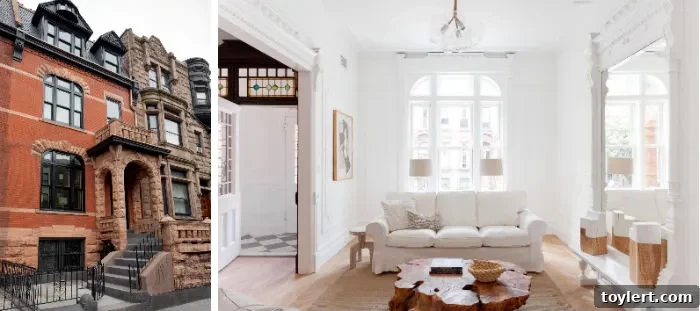
A Historic Canvas in Park Slope: The Allure of 27 7th Avenue
Nestled within the enchanting and historically rich neighborhood of Park Slope, Brooklyn, stands 27 7th Avenue – a remarkable Romanesque Revival townhouse that has recently undergone a breathtaking metamorphosis. This magnificent property, once affectionately dubbed a “time capsule” for its remarkably preserved original features, has been meticulously updated by the renowned The Brooklyn Home Company. Acquired in 2012 for a significant $1,565,000, the firm embarked on an ambitious renovation project, artfully breathing new life into a residence that now seamlessly marries historical grandeur with contemporary luxury.
Park Slope is universally celebrated for its idyllic tree-lined streets, iconic brownstones, and a vibrant community spirit. Properties within this coveted locale frequently boast intricate architectural details that whisper tales of a bygone era. The Romanesque Revival style, particularly prominent in the late 19th century, is distinguished by its robust and monumental character, often featuring heavy masonry, distinctive round arches, and elaborate decorative stonework. Such homes are considered veritable treasures, and their comprehensive renovation invariably sparks lively discussions about striking the delicate balance between modern living requirements and the imperative of historical preservation.
The original state of 27 7th Avenue, prior to its acquisition by The Brooklyn Home Company, was widely recognized for retaining much of its authentic charm and period details. This “time capsule” status made it a subject of fascination, offering a rare glimpse into the architectural and interior design sensibilities of its original construction era. The challenge for any developer undertaking such a project is not just to modernize, but to do so with an acute understanding and respect for the property’s inherent history.
The Visionaries Behind the Transformation: The Brooklyn Home Company
The Brooklyn Home Company has expertly carved out a distinguished niche in Brooklyn’s fiercely competitive real estate landscape, particularly lauded for its unparalleled expertise in transforming historic residences into cutting-edge modern marvels. Known for their thoughtful design philosophy and unwavering commitment to superior quality, the company consistently focuses on crafting homes that are both aesthetically stunning and supremely functional. Their projects typically encompass extensive structural and aesthetic overhauls, meticulously designed to meet the sophisticated demands of today’s discerning buyers while always honoring the intrinsic character of the original architecture.
Their ambitious work at 27 7th Avenue serves as a prime exemplar of this guiding philosophy. The inherent challenge presented by a “time capsule” property lies in carefully stripping away layers of history without inadvertently erasing its soul. The Brooklyn Home Company’s deliberate decision to embrace a currently fashionable all-white aesthetic speaks volumes about their innovative approach and confidence in creating a fresh, luminous ambiance that resonates with a broad contemporary audience. This transformation transcends mere superficial adjustments; it represents a comprehensive re-engineering of the living spaces, meticulously designed to amplify natural light, enhance spatial flow, and seamlessly integrate state-of-the-art amenities befitting a luxury modern home.
Their process often involves a deep dive into the property’s potential, identifying areas where modern interventions can coexist harmoniously with historic elements. While some purists might advocate for strict restoration, The Brooklyn Home Company often leans towards a refreshed interpretation that respects the past while firmly looking to the future. This balanced approach has cemented their reputation as leaders in Brooklyn’s high-end renovation market, consistently delivering homes that command attention and premium valuations.
The All-White Aesthetic: A Modern Design Debate in Historic Settings
The defining characteristic of this particular renovation is, without a doubt, the pervasive all-white aesthetic – a design choice that has gained immense popularity in recent years across various architectural styles. This minimalist approach extends uniformly from the freshly painted walls to the newly installed pale white oak floors, collectively creating a cohesive, serene, and undeniably luminous environment. Proponents of the all-white trend enthusiastically champion its remarkable ability to maximize natural light, impart a sense of greater space and openness, and provide an incredibly versatile backdrop for a diverse array of furniture styles, artwork, and personal touches. It elegantly evokes a sense of calm, immaculate cleanliness, and sophisticated simplicity, aligning perfectly with prevailing contemporary luxury living ideals.
The Compelling Case for White: Brightness, Versatility, and Modernity
In dense urban environments, where the penetration of natural light can often be a precious commodity, an all-white color palette performs as an extraordinary reflector, effectively bouncing light deeper into rooms and illuminating every conceivable corner. This transformative effect can effortlessly convert even modestly sized spaces into expansive, airy havens. Furthermore, white offers an unparalleled degree of versatility in interior design. Homeowners are empowered to easily infuse personality and warmth through carefully selected textiles, captivating artwork, and thoughtfully chosen furnishings, secure in the knowledge that their stylistic choices will prominently stand out against a neutral, unburdened canvas. It represents a timeless design choice that consistently feels fresh and modern, yet remains inherently adaptable to evolving tastes without necessitating a full-scale redecoration every few years.
The Counterpoint: Preserving Character and Warmth in Historic Homes
However, the starkness inherent in an unadorned all-white interior, particularly when juxtaposed with the rich architectural tapestry of a historic Victorian or Romanesque Revival home, frequently ignites a vigorous debate among architectural enthusiasts, interior design critics, and historical preservationists. The sentiment expressed in the original article encapsulates this ongoing discussion perfectly: “We don’t know if the dark wood had already been painted or if the floors were beyond saving, but we’re not big fans of stark all-white walls and pale white oak floors in general, but especially in Victorians.”
These distinguished architectural styles are celebrated globally for their intricate details, rich, warm wood finishes, ornate moldings, and often, exquisite stained-glass elements. The dark wood, in particular, was not merely a superficial design choice but a profound reflection of the era’s superior craftsmanship, available materials, and aesthetic preferences. It intrinsically conveyed a profound sense of permanence, unparalleled warmth, and unmistakable opulence. Consequently, for many, the act of stripping away these distinctive elements in favor of an unyielding all-white scheme can feel like a dilution of the home’s intrinsic character, a deliberate erasure of its unique historical narrative, and a significant departure from its original architectural integrity. The profound contrast and visual depth traditionally provided by darker tones are often considered absolutely integral to preserving the quintessential charm and undeniable authenticity of such irreplaceable properties.
Navigating the Balance: History and Modernity in Renovation
The comprehensive renovation of a significant historic Romanesque Revival home such as 27 7th Avenue presents an inherently fascinating and complex challenge: how to meticulously update a venerable structure for contemporary living while simultaneously honoring and respecting its storied past. The Brooklyn Home Company undoubtedly made pivotal decisions regarding the property’s original features. Whether the distinctive dark wood—a hallmark of such period homes—had already been painted over prior to their acquisition, or if the original floors were genuinely beyond salvaging and required replacement, these critical choices ultimately dictated the new and decisively modern aesthetic direction of the entire property.
For architectural purists and staunch preservationists, the ideal renovation endeavors to meticulously restore and enhance the original architectural elements, thereby proudly showcasing the intricate craftsmanship of a bygone era. This often involves painstaking processes such as stripping layers of paint from original woodwork, delicately repairing intricate plaster details, and meticulously refinishing existing hardwood floors to reveal their natural, historical glory. Such an approach is specifically designed to preserve the authenticity that renders these homes so exceptionally unique and endlessly desirable, offering a true connection to their historical roots.
Conversely, a modern renovation, particularly one championed by firms like The Brooklyn Home Company, frequently prioritizes maximizing brightness, fostering open-plan living environments, and integrating sleek, contemporary finishes. The overarching goal is to craft a living space that feels unequivocally current, exquisitely spacious, and supremely efficient for today’s dynamic lifestyle, even if this means consciously departing from some of the original design intentions. The all-white trend, with its unwavering emphasis on clean lines, uncluttered spaces, and minimalist aesthetics, stands as a prime illustration of this contemporary design philosophy. It expertly caters to a specific market segment that deeply values minimalist aesthetics and a fresh, unburdened, and highly sophisticated living environment, aligning perfectly with modern tastes and functional demands.
Impact on Park Slope Real Estate and Evolving Design Trends
The remarkable transformation of 27 7th Avenue is highly indicative of broader, significant trends currently shaping the Brooklyn real estate market. High-end renovations executed by reputable and acclaimed firms like The Brooklyn Home Company invariably contribute to a substantial boost in property values, effectively attracting affluent buyers who are actively seeking turn-key luxury homes in desirable, historically rich neighborhoods. Park Slope consistently remains one of Brooklyn’s most sought-after and prestigious addresses, and impeccably renovated properties within its confines consistently command premium prices, reflecting both the quality of the renovation and the enduring appeal of the location.
Furthermore, this specific project significantly contributes to the ongoing evolution of interior design within historic urban settings. While some architectural aficionados may genuinely mourn the perceived loss of traditional elements, others wholeheartedly celebrate the refreshing infusion of modern lightness and functionality into classic structures. The debate itself serves to highlight the dynamic and often captivating tension between historical preservation and progressive modernization, a conversation that is perpetually reshaping how we perceive, interpret, and ultimately inhabit our invaluable historical urban landscapes. It underscores the ever-changing nature of design preferences and the continuous quest to balance heritage with contemporary living needs.
Ultimately, the unequivocal success of such a high-profile renovation is frequently measured not only by its immediate market appeal but also by its profound ability to successfully create a harmonious, functional, and aesthetically pleasing living space for its future occupants. The Brooklyn Home Company’s signature style, vividly evident in every corner of 27 7th Avenue, undoubtedly resonates with a substantial portion of today’s luxury home buyers who deeply appreciate a clean, sophisticated, and contemporary aesthetic meticulously housed within a historically rich and structurally sound shell. It stands as a testament to their skill in navigating the complexities of renovating historic Brooklyn properties for a new generation.