Unlocking the Potential: A Deep Dive into 271 Decatur Street, Bed-Stuy’s Challenging Brownstone
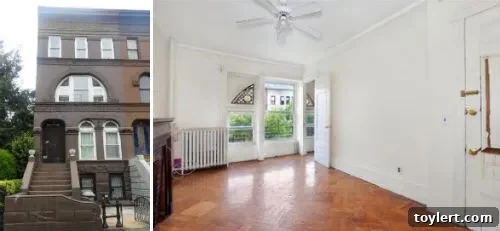
Brooklyn’s Stuyvesant Heights, a crown jewel within the broader Bed-Stuy neighborhood, is renowned for its magnificent tree-lined streets and architecturally significant brownstones. Among these historic facades, 271 Decatur Street stands out – not just for its prime location on what is undoubtedly one of Bed-Stuy’s most coveted blocks, but also for the intriguing paradox it presents to the discerning eye of a real estate investor or aspiring homeowner.
Priced at an ambitious $1.3 million, this once-grand four-family residence, regrettably, appears to be in a significantly dilapidated state. Upon initial inspection, and judging from available photographs, it’s clear that much of its original, charming detail has been lost to time or previous alterations, and the interior condition suggests a comprehensive overhaul is not just recommended, but absolutely essential. This scenario naturally sparks a crucial question: Does the esteemed address alone justify such a hefty price tag, especially when juxtaposed against the property’s current “wrecked” appearance?
The Irresistible Allure of Bed-Stuy and Stuyvesant Heights
To truly understand the valuation of 271 Decatur Street, one must first appreciate the enduring appeal of its surroundings. Bed-Stuy, or Bedford-Stuyvesant, is a neighborhood steeped in history and vibrant culture. Its streets tell tales of generations, adorned with some of the finest examples of late 19th-century architecture in New York City, particularly the majestic brownstones and limestones that line its blocks. Stuyvesant Heights, a historic district within Bed-Stuy, is especially prized for its preserved architectural integrity, tight-knit community, and convenient access to diverse amenities.
Why Decatur Street Commands Attention
- Architectural Grandeur: Decatur Street is synonymous with classic brownstone architecture. These blocks are often characterized by their uniform rows of well-maintained facades, intricate stoops, and mature street trees that create a picturesque urban canopy.
- Community & Lifestyle: Residents enjoy a strong sense of community, with local businesses, cafes, restaurants, and cultural institutions contributing to a lively yet residential atmosphere. Parks like Saratoga Park and Herbert Von King Park offer green spaces for relaxation and recreation.
- Accessibility: Excellent public transportation links, including the A, C, J, and Z subway lines, provide swift access to Manhattan and other parts of Brooklyn, making it an ideal location for commuters.
- Historical Significance: Owning a piece of property in Stuyvesant Heights means becoming a steward of history, contributing to the preservation of one of Brooklyn’s most cherished architectural legacies.
The inherent value of a brownstone on such a desirable block cannot be overstated. Location, in real estate, often outweighs other factors, and Decatur Street offers an undeniable premium. Yet, even in this context, the condition of 271 Decatur Street introduces a layer of complexity to its current asking price.
271 Decatur Street: A Closer Inspection of a Challenging Prospect
While the address alone might ignite the imagination of many, a deeper look at 271 Decatur Street reveals a property crying out for significant intervention. The initial description of it being “pretty much wrecked” is a stark assessment that suggests more than just cosmetic updates are needed.
The Extent of the “Wrecked” Condition
When a historic home is described in such terms, it typically implies a range of issues that go far beyond superficial wear and tear. Prospective buyers should anticipate:
- Structural Concerns: Potential foundation issues, compromised joists, or water damage that could affect the structural integrity of the building.
- Outdated Systems: Original plumbing, electrical, and HVAC systems are almost certainly obsolete, requiring full replacement to meet modern safety codes and efficiency standards. This is often the most expensive component of a gut renovation.
- Interior Deterioration: Peeling paint, crumbling plaster, damaged flooring, and severely outdated fixtures are highly probable, necessitating a complete interior demolition and rebuild.
- Exterior Maintenance: Roof replacement, facade repair (brownstone repointing, stoop restoration), and window upgrades are often critical for historic properties in disrepair.
- Hazardous Materials: Older homes frequently contain lead paint and asbestos, which require professional abatement, adding substantial cost and time to a renovation project.
The absence of original detail further diminishes its immediate appeal. Historic brownstones are cherished for their period-specific elements – ornate moldings, decorative fireplaces, pocket doors, and original hardwood floors. When these features are missing, either stripped away or damaged beyond repair, a significant part of the brownstone’s intrinsic charm and market value is lost. Recreating such details is possible but comes with a hefty price tag for custom millwork and skilled craftsmanship.
The Four-Family Configuration: A Blank Canvas or a Regulatory Maze?
The fact that 271 Decatur Street is a four-family home presents both opportunities and challenges.
- Investment Potential: For an investor, restoring it as a multi-unit rental property could yield significant income in a high-demand rental market.
- Owner-Occupant with Income: A common strategy in Brooklyn is for an owner to live in one unit and rent out the others, using the rental income to offset mortgage costs.
- Single-Family Conversion: Many buyers dream of converting such a property back into a grand single-family residence, creating an expansive, custom-designed home. This often involves navigating zoning laws and extensive architectural planning.
Each option requires a different approach to renovation, permits, and financial modeling. The current condition means that whatever path a buyer chooses, the property essentially represents a blank canvas, demanding vision, resources, and a readiness for a comprehensive gut renovation.
Deconstructing the $1.3 Million Asking Price
The asking price of $1.3 million for a property in such a state naturally raises eyebrows. While land value in prime Brooklyn locations is high, this figure suggests that the seller is factoring in not just the desirable address, but also the perceived potential of the building.
Comparables in Stuyvesant Heights: What Does a Million-Dollar Brownstone Offer?
Our observation about other million-dollar-plus homes in Stuyvesant Heights is critical. These properties, selling for similar or often higher amounts, typically boast features that are starkly absent at 271 Decatur Street:
- Incredible Original Detail: Meticulously preserved or painstakingly restored original features that command a premium.
- Luxurious Kitchens and Baths: State-of-the-art appliances, high-end finishes, and modern designs that integrate seamlessly with historic charm. These are often the most expensive rooms to renovate and are key selling points.
- Impeccable Maintenance: Properties that have been lovingly cared for, with all systems updated and structural integrity confirmed, requiring little to no immediate work.
- Generous Size and Layout: Often larger homes, thoughtfully renovated to maximize space and natural light, with functional and aesthetically pleasing layouts.
The contrast is striking. A fully renovated brownstone in this area, move-in ready with modern amenities and restored historic charm, can easily fetch upwards of $2 million, sometimes significantly more. This means that a buyer of 271 Decatur Street is essentially purchasing the shell of a house at a price point that, for others, buys turn-key luxury.
The Renovation Equation: Beyond the Purchase Price
For a property in this condition, renovation costs will be substantial. A full gut renovation of a brownstone in Brooklyn can easily range from $500 to $800 per square foot, and for a complete luxury overhaul, it could even exceed $1,000 per square foot. Given the size of a typical brownstone, a renovation budget of $1 million to $2 million would not be unreasonable to bring it up to the standard of other million-dollar-plus homes in the area.
This means a total investment, combining purchase price and renovation, could easily soar to between $2.3 million and $3.3 million. The critical question then becomes: What would the market value of a fully renovated, meticulously detailed, and modernized four-family brownstone at 271 Decatur Street be? Does the potential upside justify the considerable risk and financial outlay?
Investment Perspective: Who is the Buyer for 271 Decatur Street?
This property is clearly not for the faint of heart or those seeking a quick flip without significant investment. The target buyer is likely one of the following:
- Experienced Developer/Investor: Someone with a proven track record in brownstone renovations, deep pockets, and a team ready to tackle a complex project. They would analyze the after-repair value (ARV) meticulously.
- Visionary Homeowner: An individual or family with a passion for historic preservation, a substantial budget for renovation, and the desire to create their dream home from scratch, tailored precisely to their tastes. They might prioritize the prime location and the opportunity to customize over immediate move-in readiness.
- Long-Term Hold Investor: Someone willing to invest heavily, knowing that Brooklyn real estate, particularly in historic districts, tends to appreciate significantly over the long term, making the initial investment worthwhile over decades.
The $1.3 million price point acts as a barrier, filtering out many casual buyers and focusing on those with serious intent and financial capacity.
The Final Reckoning: What Do You Think They’ll Get For It?
The analysis of 271 Decatur Street reveals a classic Brooklyn real estate dilemma: a phenomenal location shackled by a demanding renovation. The asking price of $1.3 million sets a high bar, especially when compared to turnkey properties offering immediate luxury.
The ultimate sale price will depend on several factors: the seller’s urgency, the buyer’s vision and budget, the true extent of the structural and systemic issues, and the prevailing market sentiment for significant renovation projects in Bed-Stuy. Will a buyer step forward, ready to pour millions into transforming this derelict beauty into a modern masterpiece while preserving its historic soul? Or will the sheer scale of the undertaking lead to a negotiation that brings the price down closer to its “as-is” value, accounting for the massive costs ahead?
The market for historic brownstones in Brooklyn remains robust, but even in a strong market, properties requiring such extensive work at this price point demand a specific kind of buyer. What are your thoughts? Given its prime location and challenging condition, what do you believe 271 Decatur Street will ultimately sell for? We invite your insights and predictions on this fascinating Bed-Stuy brownstone.
271 Decatur Street [Douglas Elliman] GMAP P*Shark