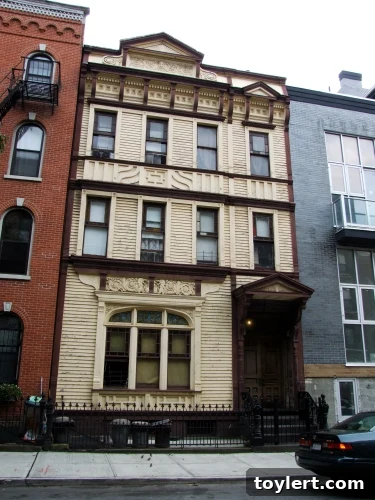
A Williamsburg Gem: Unveiling the F. J. Berlenbach House, a Brooklyn Landmark
Brooklyn, one building at a time. Few structures encapsulate the rich architectural tapestry and historical evolution of Brooklyn quite like the F. J. Berlenbach House at 174 Meserole Street in Williamsburg. This exceptional wood-frame residence stands as a testament to the distinctive Queen Anne style, a cherished relic from a bygone era, and a proud Brooklyn landmark. Designed by the prolific and influential architect Franz Joseph Berlenbach, this house is more than just a home; it’s a meticulously crafted piece of history, reflecting the aspirations and aesthetic sensibilities of late 19th-century Brooklyn.
In a city often synonymous with brownstones and brick row houses, the presence of such an ornate and well-preserved wood-frame dwelling is a remarkable sight. It beckons us to delve into its origins, its creator, and the vibrant neighborhood that has grown around it, offering a unique window into Brooklyn’s past.
The Visionary Behind the Beauty: Franz Joseph Berlenbach
The F. J. Berlenbach House bears the name of its original owner and, more importantly, its architect: Franz Joseph Berlenbach. Born in Germany in 1859, Berlenbach immigrated to the United States and quickly established himself as a prominent and prolific architect in Brooklyn. His career, spanning the late 19th and early 20th centuries, left an indelible mark on the borough’s streetscapes, with his designs gracing numerous residential, commercial, and ecclesiastical buildings.
Berlenbach was known for his versatility and his embrace of popular architectural styles of the era, particularly the Queen Anne and Romanesque Revival. His firm, based in Williamsburg, was highly active during Brooklyn’s rapid expansion, designing buildings for a diverse clientele. From grand churches to bustling commercial blocks and elegant private residences, Berlenbach’s work showcased a mastery of detail, proportion, and craftsmanship. The house at 174 Meserole Street served not only as his personal residence but also as a magnificent showcase for his architectural prowess and an advertisement for his firm’s capabilities.
His designs are characterized by their thoughtful ornamentation, often incorporating a variety of materials and textures, and a strong sense of visual interest. Berlenbach’s contributions are vital to understanding the architectural heritage of neighborhoods like Williamsburg, Bushwick, and Greenpoint, where many of his structures still stand, contributing to the unique character of these areas.
A Symphony of Styles: The Queen Anne Aesthetic
The F. J. Berlenbach House is an exemplary specimen of the Queen Anne architectural style, which flourished in America from roughly 1880 to 1910. This style, distinct from the earlier colonial Queen Anne, is celebrated for its picturesque and often exuberant qualities, moving away from the strict symmetry of earlier Victorian designs.
Key characteristics beautifully displayed at 174 Meserole Street include:
- Asymmetrical Facade: Unlike traditional, balanced structures, the Queen Anne style embraces an irregular outline, featuring projecting bays, turrets, and varied rooflines.
- Varied Textures and Materials: The house skillfully incorporates different siding materials, such as clapboard, decorative shingles (often in fish-scale or scallop patterns), and intricate woodwork. This interplay of textures creates visual depth and interest.
- Ornate Woodwork: Richly detailed spindlework, turned columns, carved panels, and decorative trim adorn porches, gables, and eaves, showcasing the skill of late Victorian artisans.
- Prominent Tower or Turret: A hallmark of the Queen Anne style, the conical-roofed turret at the corner of the Berlenbach House adds a whimsical yet elegant focal point, commanding attention.
- Projecting Bays and Dormers: These elements break up the flat surface of the facade, providing more interior light and adding to the building’s dynamic form.
- Decorative Fenestration: Windows often vary in size and shape, sometimes featuring stained glass or leaded panes, contributing to the eclectic charm.
- Complex Roofline: Gables, cross-gables, and often a prominent hip roof create a visually intriguing silhouette against the sky.
The F. J. Berlenbach House truly embodies these features, creating a vibrant, almost sculptural presence on its street. Its wooden construction, while common in older parts of Brooklyn, became less frequent for new construction in the late 19th century as brick gained favor for fire safety and durability. This makes its well-preserved state and elaborate design even more remarkable and historically significant.
Williamsburg’s Evolving Landscape and the Role of Wood-Frame Homes
To fully appreciate the F. J. Berlenbach House, one must understand the context of late 19th-century Williamsburg. Once an independent city before its consolidation into Greater New York in 1898, Williamsburg underwent significant transformation during this period. It evolved from a relatively pastoral village into a bustling urban center, attracting waves of immigrants and experiencing a building boom. Factories, breweries, and docks lined its waterfront, while residential streets filled with housing for its burgeoning population.
Wood-frame houses, like 174 Meserole Street, were once a common sight across Brooklyn, particularly in areas developed earlier in the 19th century. They were generally quicker and more affordable to construct than brick homes, offering a practical solution for housing a rapidly growing population. However, over time, many wood-frame structures succumbed to fire, demolition, or neglect, replaced by more fire-resistant brick or masonry buildings.
The survival and pristine condition of the Berlenbach House are therefore extraordinary. It serves as a tangible link to a period when woodworking artistry was at its peak and when neighborhoods like Williamsburg were embracing new architectural expressions. It stands as a reminder of the rich diversity of Brooklyn’s housing stock and the various materials and styles that contributed to its growth.
A Testament to Preservation and Historical Significance
The F. J. Berlenbach House is not merely an old house; it is a designated Brooklyn landmark, a status that underscores its profound historical and architectural significance. Landmark designation protects buildings from inappropriate alterations or demolition, ensuring that their unique character and history are preserved for future generations. This recognition highlights the house’s exceptional value as an intact example of Queen Anne architecture and as a direct representation of Franz Joseph Berlenbach’s influential career.
Its intricate detailing, from the complex roofline and decorative shingling to the spindlework of its porches and the commanding presence of its turret, speaks volumes about the craftsmanship of its era. The house remains remarkably true to its original design, offering an authentic glimpse into the aesthetic preferences and construction techniques of the late 1800s. It stands proudly amidst its surroundings, a vibrant contrast to newer developments and a source of architectural inspiration.
For architectural enthusiasts, historians, and local residents alike, the F. J. Berlenbach House is a point of pride and interest. It inspires conversations about architectural styles, urban development, and the importance of preserving the unique fabric of our cities. It demonstrates how a single building can tell a broader story about a community’s past, its people, and its artistic achievements.
The Enduring Legacy of 174 Meserole Street
The F. J. Berlenbach House at 174 Meserole Street continues to captivate and educate. It is more than just a residence; it is a historical artifact, a piece of art, and a powerful symbol of Brooklyn’s enduring architectural legacy. It reminds us of a time when architects like Franz Joseph Berlenbach were shaping the very identity of our neighborhoods, one meticulously designed building at a time.
Its Queen Anne elegance, its remarkable state of preservation, and its connection to a pivotal figure in Brooklyn architecture make it a cherished landmark. As Williamsburg continues to evolve, this magnificent wood-frame house stands as a steadfast reminder of the borough’s rich past, inviting us all to appreciate the beauty and history embedded in its intricate details.
To truly understand Brooklyn is to appreciate its individual buildings, and the F. J. Berlenbach House offers an unparalleled lesson in architectural excellence and historical resilience. It is a genuine treasure, firmly etched into the architectural landscape of New York City.