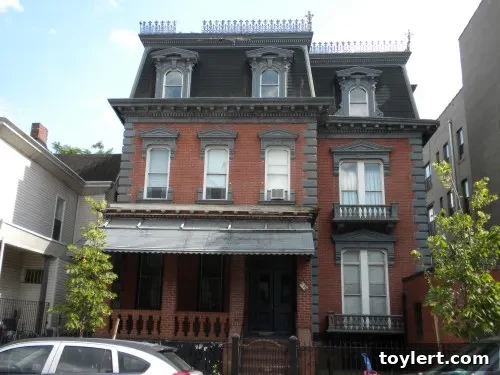
Discovering Brooklyn’s Legacy: The Enduring Charm of 186 Quincy Street
In a city celebrated for its vibrant character and diverse neighborhoods, Brooklyn stands out as a living testament to architectural splendor and rich history. Every street, every block, and indeed every building, holds a unique narrative, contributing to the grand tapestry of this iconic borough. Our journey to uncover these stories takes us deep into the heart of Brooklyn, focusing on its magnificent structures one at a time. Today, our gaze settles upon an exceptional edifice in the historically rich neighborhood of Bedford-Stuyvesant: the esteemed property at 186 Quincy Street, famously recognized as the original J. C. Hoagland House.
Brooklyn’s Architectural Heritage: A Story Told in Stone
Brooklyn’s reputation as an architectural marvel is well-earned. The borough boasts an unparalleled collection of historic homes, from the quaint carriage houses of Brooklyn Heights to the imposing mansions of Prospect Park South. Among these, the brownstone stands as an emblematic symbol of Brooklyn’s Gilded Age prosperity. These meticulously crafted residences, often adorned with intricate details and built with enduring materials, are more than mere shelters; they are tangible links to a bygone era, echoing the ambitions and artistic expressions of the late 19th and early 20th centuries. They invite us to ponder the lives of the prominent figures and hardworking families who once called these grand houses home, shaping the very foundation of modern Brooklyn.
The J. C. Hoagland House: A Glimpse into Prominent Pasts
The residence at 186 Quincy Street is a profound embodiment of this architectural heritage. Its designation as the original J. C. Hoagland House immediately connects it to a significant chapter in American industrial and social history. Joseph C. Hoagland was not just a name; he was a titan of his time, a co-founder of the Royal Baking Powder Company. This enterprise became a household staple, transforming everyday baking across the nation and establishing Hoagland as an immensely wealthy and influential figure. His substantial fortune and prominent social standing naturally demanded a residence that reflected his success, a home of considerable grandeur and impeccable taste.
Constructed during a period of rapid expansion and sophistication in Brooklyn, the J. C. Hoagland House perfectly encapsulates the era’s architectural aspirations. While the specific architect may not be universally known, the building’s robust aesthetic and detailed craftsmanship align with popular styles favored by the affluent of the time, most notably the Romanesque Revival. This style, often blended with elements of Queen Anne, allowed for expressive designs that conveyed both solidity and artistry.
Architectural Splendor: Unpacking the Romanesque Revival Style
The J. C. Hoagland House at 186 Quincy Street likely presents a prime example of the Romanesque Revival style, a dominant architectural trend for grand urban residences in the late 19th century. This particular style, championed by influential architects such as H.H. Richardson, is celebrated for its monumental quality, heavy masonry, and rich textural variety. Such buildings exude a sense of permanence and strength, often appearing as imposing yet elegantly detailed structures.
Imagine a facade predominantly constructed from sturdy brownstone or rich Roman brick, possibly interspersed with rough-hewn stone accents that enhance its robust character. A hallmark of Romanesque Revival is the prevalence of deeply recessed, round-arched windows and doorways. These architectural elements create dramatic shadows and add a palpable sense of depth to the building’s exterior. It wouldn’t be uncommon for such a significant home to feature a grand, sweeping stoop, leading up to an elaborately carved double-door entrance, designed to impress and welcome guests with equal measure.
Further embellishments might include intricate carvings around window frames, ornate cornices, and perhaps decorative dormers or finials adorning a complex roofline. The interplay of materials – from the finely cut stone to the wrought-iron railings and gate details – would have been of the highest quality, unequivocally reflecting the Hoagland family’s elevated status. Bay windows, common in Victorian architecture, could also punctuate the facade, offering abundant natural light and picturesque views of Quincy Street, while adding visual interest and breaking the strong verticality of the design.
Quincy Street: A Resilient Corridor in Bedford-Stuyvesant
Quincy Street itself holds a distinctive place within Brooklyn’s urban narrative, particularly nestled within the historic boundaries of Bedford-Stuyvesant, affectionately known as Bed-Stuy. This street is a tranquil oasis, lined with mature shade trees and impressive rows of impeccably preserved brownstones, each contributing to a visual chronicle of Brooklyn’s residential evolution. Quincy Street’s serene ambiance, combined with its convenient proximity to vibrant commercial corridors and significant cultural institutions, cements its status as both a desirable residential location and a historically invaluable thoroughfare.
A stroll down Quincy Street today offers a captivating journey through time, allowing one to fully appreciate the architectural magnificence that defines the neighborhood. Every single building, including the esteemed J. C. Hoagland House, plays an integral role in weaving a collective story of community resilience, urban ambition, and profound artistic expression, all articulated through brick and stone. The street serves as a powerful, living reminder of an era when meticulous craftsmanship was paramount, and homes were constructed with the express intention of lasting for many generations, embodying a spirit of enduring prestige and familial legacy.
The Enduring Allure of Historic Brooklyn Homes
The lasting appeal of remarkable properties like 186 Quincy Street extends far beyond their mere aesthetic charm; it is deeply rooted in their profound historical resonance. These magnificent buildings offer more than just shelter; they provide a tangible, immersive connection to Brooklyn’s storied past, enabling both residents and visitors to transport themselves back in time and truly experience the distinctive grandeur of the late 19th century. They serve as crucial, irreplaceable links in the continuous chain of urban development, vividly illustrating how vibrant communities evolved and how various architectural styles meticulously reflected the significant societal changes of their respective eras.
Furthermore, the dedicated preservation of such invaluable historic properties is absolutely vital for safeguarding the unique and irreplaceable character of neighborhoods like Bedford-Stuyvesant. Local community organizations, passionate preservationists, and dedicated residents often collaborate tirelessly, investing immense effort to ensure that these architectural treasures are meticulously protected and lovingly maintained for the edification and enjoyment of future generations. This commitment involves a delicate balance of integrating modern living requirements with an unwavering dedication to historical integrity. Often, these meticulous restoration efforts entail utilizing historically accurate materials and time-honored techniques, thereby ensuring that the original vision of the pioneering builders and distinguished owners continues to inspire profound awe and admiration today.
J. C. Hoagland’s Legacy: Beyond the Royal Baking Powder Empire
Joseph C. Hoagland’s indelible impact on American commerce, primarily through the revolutionary success of his Royal Baking Powder Company, is comprehensively documented and widely celebrated. However, his significant investment in and ownership of prominent residences like 186 Quincy Street reveals an equally compelling aspect of the era’s elite. These grand, stately homes were far more than simple personal dwellings; they functioned as powerful declarations of immense success, serving as enduring monuments to personal achievement and integral components within the intricate social fabric of the burgeoning city. Such estates often played host to lavish gatherings, exquisite balls, and pivotal social events, thereby contributing substantially to the vibrant cultural and dynamic social life of New York City during a period of unprecedented growth and transformation.
The J. C. Hoagland House, consequently, represents something far deeper than just a specific architectural style; it profoundly embodies the very spirit of an age where visionary industrialists not only reshaped the national economy but also profoundly influenced the physical landscape and the very essence of urban living. It stands as a powerful, eloquent reminder of the inextricable link between influential individuals, their magnificent personal estates, and the expansive, rich historical narrative of a city in its triumphant ascendancy.
Preserving Brooklyn’s Living History: One Building at a Time
As our exploration of 186 Quincy Street draws to a close, we are powerfully reminded of the immense significance of appreciating Brooklyn’s architectural heritage, truly one building at a time. Each individual structure holds a unique, captivating story, contributing profoundly to a larger, intricate historical mosaic, and offering invaluable insights into the borough’s illustrious past. From the charming, humble row house to the truly opulent mansion, every single building plays an indispensable role in defining Brooklyn’s distinctive charm and its enduring, captivating appeal.
The venerable J. C. Hoagland House at 186 Quincy Street proudly stands as an exemplary symbol of this architectural legacy – a magnificent building that consistently inspires admiration and serves as a powerful, tangible reminder of the unparalleled craftsmanship, ambitious vision, and profound historical richness that collectively define Brooklyn. Its continued, majestic presence ensures that the fascinating stories of its past, and the captivating architectural styles it so beautifully embodies, remain a vibrant, cherished part of the city’s ongoing, evolving narrative.
We passionately encourage everyone to embark on their own journeys to explore Brooklyn’s historic streets, to take a moment to pause and deeply appreciate the intricate, often hidden details of its diverse buildings, and to uncover the countless, compelling histories that lie quietly embedded within its magnificent, historic facades. Each “Building of the Day” serves as a profound invitation to connect with a glorious past and to celebrate the enduring, captivating beauty of one of the world’s most dynamic and historically rich cities.