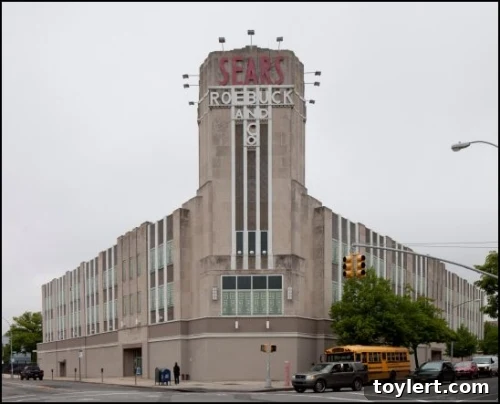
(All photos by Christopher D. Brazee, for Landmarks Preservation Commission, 2012)
The Enduring Legacy of Sears, Roebuck & Company: A Brooklyn Architectural Icon
Nestled within the vibrant borough of Brooklyn stands a testament to American retail history and architectural resilience: the former Sears, Roebuck & Company Department Store at 2307 Beverley Road. This impressive edifice, once a bustling hub of commerce and community life, continues to tell a story of innovation, urban development, and the evolving landscape of retail. From its grand opening, this building served as more than just a place to shop; it was a cornerstone of the neighborhood, reflecting the aspirations and daily lives of Brooklynites for generations. Today, its striking presence invites reflection on a bygone era while highlighting the importance of preserving the architectural heritage that defines our cities, one historic building at a time.
The Sears store on Beverley Road is a prime example of the monumental commercial architecture that characterized the early to mid-20th century. Its robust construction and distinctive design elements speak volumes about the period’s confidence in urban growth and consumer culture. As we delve into the history and architectural significance of this landmark, we uncover not only the narrative of a single building but also a broader understanding of Brooklyn’s rich past and the legacy of a retail giant that shaped the American experience.
A Glimpse into Retail History: The Sears, Roebuck & Company Department Store in Brooklyn
A Beacon of Commerce on Beverley Road
The Sears, Roebuck & Company Department Store at 2307 Beverley Road in Brooklyn once stood as a prominent beacon of commerce, drawing shoppers from across the borough and beyond. Opened during a transformative period in American retail, this expansive establishment quickly became an integral part of the local community. It wasn’t merely a place to acquire goods; it was a destination, a social center where families gathered, browsed the latest fashions, and purchased everything from appliances to children’s toys. The store’s strategic location on Beverley Road, a major thoroughfare, ensured its accessibility and visibility, cementing its status as a vital urban anchor.
For decades, this Sears store buzzed with activity, its aisles filled with the promise of modernity and convenience. It played a significant role in the daily lives of countless Brooklyn residents, shaping their shopping habits and contributing to the economic vitality of the surrounding neighborhoods. The building itself, with its imposing facade and substantial footprint, symbolized the burgeoning consumer culture and the widespread accessibility of a vast array of products previously available only through the iconic Sears catalog. Its presence underscored the shift towards large-scale, comprehensive department stores as central figures in the American retail landscape.
Sears: More Than Just a Store
To understand the significance of the Brooklyn department store, one must appreciate the colossal impact of Sears, Roebuck & Company on American society. Founded in 1893, Sears revolutionized retail through its innovative catalog sales, bringing goods directly to rural communities nationwide. As the 20th century progressed, Sears expanded into brick-and-mortar department stores, transforming the shopping experience for urban and suburban populations. These stores were designed to be grand, welcoming spaces that offered a diverse range of products under one roof, often boasting features like in-store restaurants, auto centers, and extensive customer service departments.
Sears was more than just a retailer; it was an institution that mirrored the aspirations of a growing middle class. It offered quality products at accessible prices, often pioneering new consumer trends and technologies. From tools and hardware to clothing and home furnishings, Sears provided everything a household could need, becoming synonymous with American ingenuity and affordability. The company’s stores fostered a sense of community, serving as gathering places and economic engines. The Beverley Road location was a direct reflection of this corporate philosophy, designed to integrate seamlessly into the urban fabric of Brooklyn while providing the comprehensive retail experience that Sears was famous for. Its operations had a profound social and economic impact, providing employment and contributing significantly to the local tax base, thus reinforcing its importance as a pillar of the community.
Architectural Grandeur and Functional Design
A Testament to Commercial Architecture of its Era
The Sears, Roebuck & Company Department Store at 2307 Beverley Road stands as a compelling architectural example of early 20th-century commercial design. While specific details may vary, many large department stores of this era adopted a style that blended functionality with a sense of civic grandeur, often incorporating elements of Neo-Classical or Art Deco influence, adapted for commercial efficiency. The Brooklyn store likely featured a robust and utilitarian structure, typical for such a large retail operation, but adorned with decorative details that conveyed permanence and quality.
The facade would have been characterized by substantial masonry – perhaps brick, limestone, or terra cotta – providing a sense of solidity and permanence. Large display windows at street level, designed to entice passersby with the latest merchandise, would have been a central feature, allowing for abundant natural light to flood the interior. Above these, the upper stories likely featured a regular rhythm of windows, possibly with decorative lintels or sills, signifying the expansive sales floors and administrative offices within. Architectural details might have included stylized pilasters, decorative cornices, or subtle geometric patterns, characteristic of the period’s modern aesthetic. The main entrance would have been particularly emphasized, perhaps with an elaborate archway or a set-back entry leading into a grand lobby, designed to welcome thousands of daily shoppers.
Engineering for the Shopping Experience
Beyond its exterior aesthetics, the Sears building was meticulously engineered to optimize the customer experience and operational efficiency. The internal layout would have been a masterclass in retail logistics, featuring wide, unobstructed aisles to facilitate easy movement of large crowds and merchandise. High ceilings and strategically placed lighting – both natural through abundant windows and artificial with early electrical fixtures – ensured a bright and inviting atmosphere conducive to leisurely shopping. The use of durable materials for flooring and interior finishes was essential to withstand the heavy daily foot traffic.
The building’s design would have also incorporated advanced (for its time) infrastructure, including multiple elevators and escalators to transport customers between floors, alongside freight elevators for stock movement. Basement levels often housed storage, receiving docks, and mechanical systems, while upper floors were dedicated to specific departments, creating a logical flow for shoppers. Ventilation systems, fire safety measures, and even customer amenities like restrooms and waiting areas were carefully integrated into the design. Every element, from the grand escalators to the intricate display cases, was conceived to enhance the customer’s journey and streamline the retail process, transforming the mundane act of shopping into a sophisticated and enjoyable experience.
Preserving Brooklyn’s Heritage: The Role of Landmark Status
From Commercial Hub to Cherished Landmark
The journey of the Sears, Roebuck & Company building from a bustling commercial hub to a cherished landmark underscores a broader shift in how society values its built environment. Buildings like the one on Beverley Road, originally conceived purely for economic function, gain new significance over time as cultural artifacts. The involvement of organizations like the Landmarks Preservation Commission (LPC), as indicated by the photo credits, highlights the recognition of its architectural, historical, and cultural importance. Landmark designation is not merely about preserving old bricks and mortar; it’s about safeguarding tangible connections to our past, allowing future generations to understand the evolution of urban life, commerce, and community spirit.
Preserving such structures prevents the erasure of history, maintaining the unique character and narrative of neighborhoods like those in Brooklyn. These buildings act as visual anchors in an ever-changing urban landscape, offering a sense of continuity and identity. The Sears building, with its distinctive architecture and storied past, serves as a powerful reminder of a time when department stores were central to the fabric of American life, influencing everything from fashion trends to social gatherings. Its status as a recognized landmark ensures that its story continues to be told and its physical presence continues to enrich the Brooklyn streetscape, contributing to the borough’s rich tapestry of historic architecture.
The Future of Historic Structures: Adaptive Reuse
In the contemporary urban context, the preservation of large historic commercial buildings often involves the innovative concept of adaptive reuse. Given the vast scale of a former department store like Sears, simply maintaining it as a museum piece is rarely feasible. Instead, these structures offer incredible potential for transformation, breathing new life into old spaces while respecting their historical integrity. Adaptive reuse is a sustainable approach that minimizes waste, reduces the demand for new construction, and allows historic buildings to continue serving a vibrant purpose in modern society.
For a building of this size and prominence, future possibilities could be diverse. It might be reimagined as residential condominiums or apartments, transforming former sales floors into unique living spaces. Alternatively, it could house a mixed-use development, combining ground-floor retail or restaurants with office spaces or even community facilities on upper levels. The robust construction and flexible interiors of such commercial buildings make them ideal candidates for these transformations. Successfully executed adaptive reuse projects honor the past by retaining architectural character while ensuring the building remains economically viable and socially relevant. The Sears store on Beverley Road, with its significant footprint and historical gravitas, stands as a prime candidate for a thoughtful adaptive reuse project that could secure its future for generations to come, ensuring it remains a vital part of Brooklyn’s ongoing story.
Conclusion: An Enduring Symbol of Brooklyn’s Past and Present
The Sears, Roebuck & Company Department Store at 2307 Beverley Road is far more than just an old building; it is a profound symbol of Brooklyn’s dynamic history, its commercial evolution, and the enduring power of architectural heritage. From its beginnings as a retail giant, catering to the needs and desires of a growing city, to its current status as a recognized landmark, this edifice embodies an important chapter in American urban and retail history. Its impressive scale and period-specific architectural details tell a story of innovation, economic prosperity, and the vibrant consumer culture that shaped the early 20th century.
As Brooklyn continues to evolve, the preservation of structures like the former Sears store serves as a critical link to its past, providing tangible reminders of the people, industries, and social movements that have defined the borough. It stands as a testament to the importance of recognizing and protecting our architectural treasures, not only for their aesthetic value but for the rich narratives they carry. The Sears building on Beverley Road remains an enduring icon, connecting generations of Brooklynites and reminding us that truly great architecture possesses a timeless quality, continuing to inspire and inform long after its original purpose has passed.