The Enduring Legacy of Brooklyn’s Storage Warehouses: A Look at 2525 Tilden Avenue
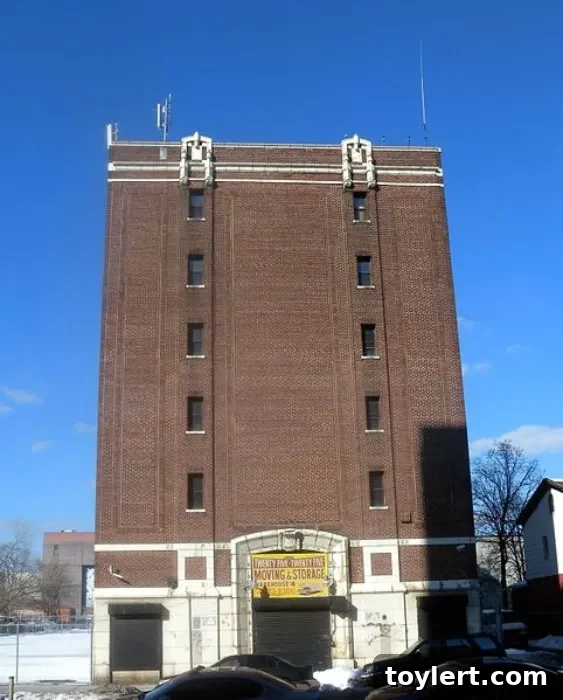
Brooklyn, one building at a time. This philosophy guides our journey into the borough’s diverse architectural landscape, where even the most utilitarian structures hold stories of industry, commerce, and community evolution. Today, we turn our gaze to a building that embodies the quiet resilience and fundamental utility often found within Brooklyn’s urban fabric: the storage warehouse located at 2525 Tilden Avenue.
Often overlooked in favor of more ornate brownstones or groundbreaking modern constructions, the humble storage warehouse plays a pivotal, albeit unsung, role in the daily lives of countless Brooklynites and businesses. These structures are the silent custodians of possessions, memories, and commercial inventory, standing as steadfast reminders of the city’s continuous flux and growth. The building at 2525 Tilden Avenue, identified simply as a “Storage warehouse,” offers a fascinating lens through which to explore the broader narrative of Brooklyn’s industrial heritage and urban development.
A Glimpse into Brooklyn’s Industrial Heartbeat
Brooklyn has always been a hive of activity, a borough shaped by its formidable port, burgeoning industries, and ever-growing population. From the bustling factories of Bushwick to the maritime commerce of Red Hook, the need for robust storage solutions has been intrinsic to its economic engine. Storage warehouses like the one at 2525 Tilden Avenue emerged as essential infrastructure, facilitating trade, manufacturing, and the personal transitions of a dynamic populace.
The Historical Context of Brooklyn’s Warehouses
The late 19th and early 20th centuries marked a boom in warehouse construction across New York City, particularly in Brooklyn. As the borough industrialized and its population swelled, so did the demand for secure, spacious facilities to store raw materials, finished goods, and the household effects of migrating families. These buildings were strategically placed near transportation hubs – rail lines, docks, and later, major roadways – to ensure efficient logistics. The very presence of 2525 Tilden Avenue as a storage warehouse hints at the historical commercial patterns and transportation arteries that once defined or continue to define its specific locale within Flatbush.
Many of these early warehouses were built with an emphasis on durability and functionality. Their construction often featured sturdy brickwork, reinforced concrete, and large, easily accessible loading docks, designed to withstand heavy usage and protect valuable contents. While specific historical records for 2525 Tilden Avenue might reveal a fascinating individual past, its classification immediately places it within this significant lineage of Brooklyn’s industrial architecture.
Architectural Character: Form Follows Function
The architecture of a storage warehouse, while not typically celebrated for elaborate aesthetics, possesses a distinct beauty rooted in its functionality. These buildings are monuments to utility, their design dictated by the practical demands of storage, security, and access. The structure at 2525 Tilden Avenue likely exemplifies these characteristics.
Defining Features of Industrial Warehouses
- Robust Construction: Typically built with durable materials like brick, concrete, or steel, these buildings are designed to support heavy loads and endure the rigors of commercial activity.
- Minimal Ornamentation: Unlike residential or institutional buildings, warehouses prioritize practicality over decorative flourishes. Architectural details, if present, are often subtle and structural.
- Large Open Spans: Interior spaces are usually expansive and column-free, or with widely spaced columns, to maximize storage capacity and allow for flexible racking systems and movement of goods.
- Loading Docks and Large Entrances: Essential for efficient loading and unloading of trucks, these features are prominent and integral to the building’s facade.
- Strategic Fenestration: Windows, if present, are often placed high or designed to provide light without compromising security or wall space for storage.
The image associated with 2525 Tilden Avenue, referencing “Healey’s,” suggests a history possibly tied to a specific business or family that once operated or owned the facility. This detail adds a layer of personal history to what might otherwise appear as a purely commercial structure, hinting at generations of commerce and community connection within the Flatbush neighborhood.
2525 Tilden Avenue in its Flatbush Setting
Tilden Avenue runs through a historically rich and diverse section of Brooklyn, specifically within the greater Flatbush area. This neighborhood is known for its blend of residential streets featuring Victorian homes, commercial strips, and a tapestry of community spaces. A storage warehouse at 2525 Tilden Avenue is not an isolated entity but an integral part of this dynamic urban environment.
The Evolving Landscape of Flatbush
Flatbush has undergone significant transformations throughout Brooklyn’s history. Once a largely suburban area characterized by spacious homes and tree-lined streets, it has steadily urbanized, accommodating waves of immigrants and evolving commercial needs. A storage warehouse in such a neighborhood serves a critical function, providing essential services to residents undergoing moves, businesses managing inventory, or even artists seeking studio space.
The presence of such a facility reflects the ongoing demand for logistical support within a dense urban environment. It speaks to the practical needs of a community where space is at a premium, and flexibility in managing personal and commercial assets is highly valued. As Brooklyn continues to grow and adapt, these foundational structures ensure that the city’s inhabitants and enterprises have the necessary support systems.
The Enduring Relevance in a Modern Age
In an era increasingly dominated by digital transactions and just-in-time logistics, the physical storage warehouse might seem like an anachronism. Yet, its relevance has not diminished; it has merely evolved. While some historical warehouses find new life through adaptive reuse – transforming into residential lofts, art galleries, or office spaces – many continue to serve their original purpose, albeit with modern upgrades in security, climate control, and accessibility.
Storage in Contemporary Brooklyn
For individuals, storage facilities offer crucial space during life transitions: moving homes, downsizing, or simply needing extra room for seasonal items. For businesses, they provide vital inventory management, especially for e-commerce operations that require physical space for goods before distribution. The demand for self-storage units and commercial warehousing remains robust, highlighting the continued necessity of these facilities in a densely populated and commercially active borough like Brooklyn.
The building at 2525 Tilden Avenue, whether it’s an active commercial warehouse or a self-storage facility, contributes to the economic vitality of its immediate surroundings. It generates employment, supports local businesses, and provides an essential service that underpins the smooth functioning of both personal and commercial life in Flatbush.
Conclusion: Appreciating the Unsung Structures
As we conclude our examination of the storage warehouse at 2525 Tilden Avenue, we are reminded that true appreciation for Brooklyn’s architecture extends beyond its most famous landmarks. It encompasses the entirety of its built environment, including the workhorse structures that quietly facilitate its ongoing life. These warehouses, with their no-nonsense design and enduring utility, are as much a part of Brooklyn’s identity as its iconic bridges and historic districts.
They tell a story of practicality, commerce, and the persistent human need for space and order amidst the urban sprawl. So, the next time you pass a storage warehouse, take a moment to consider its history, its purpose, and its quiet contribution to the vibrant tapestry that is Brooklyn. The building at 2525 Tilden Avenue stands as a testament to this enduring legacy, a silent guardian of Brooklyn’s past and present, playing its part, one building at a time.