Unearthing Brooklyn’s Hidden Architectural Gems: A Journey Through Time and Heritage
Brooklyn, a borough renowned for its vibrant culture, diverse communities, and undeniable charm, is also a living museum of architectural history. Every street, every block, tells a story etched in brick, brownstone, and wrought iron. Yet, amidst the celebrated landmarks and well-documented masterpieces, lie hundreds of equally captivating buildings for which detailed historical information remains elusive. For too long, the lack of extensive records has meant these structures, despite their intrinsic beauty and historical significance, have largely remained unsung heroes of the Brooklyn streetscape.
This year, we embark on a dedicated mission to change that narrative. Our goal is to shine a much-deserved spotlight on these overlooked architectural treasures. We aim to feature some of these compelling structures, sharing every piece of information we can gather, however sparse. Each building, regardless of the celebrity of its architect or the fame of its former residents, is a vital thread in the intricate tapestry of Brooklyn’s past and present. They are, without question, worthy of being celebrated as a “Building of the Day.” We believe that uncovering their stories enriches our collective understanding of Brooklyn’s unique heritage, fostering a deeper appreciation for the artistry and craftsmanship that shaped this incredible borough. We also warmly invite our readers – historians, enthusiasts, and long-time residents alike – to contribute any information they might possess. Your insights are invaluable as we piece together these forgotten narratives.
The Silent Narratives: Why Many Brooklyn Buildings Remain Undocumented
The reasons why many exquisite Brooklyn buildings lack comprehensive documentation are multifaceted. Unlike grand public structures or properties designed by famous architects, many residential and commercial buildings were constructed by local builders and developers whose names have faded with time. Records from the 19th and early 20th centuries, though available, can be fragmented, making it challenging to trace a building’s full lineage, from its initial construction to its various owners and uses. Furthermore, as neighborhoods evolved, priorities shifted, and the focus often landed on newer developments or more prominent landmarks, leaving earlier structures to quietly stand as testaments to bygone eras without a formal chronicle.
Another factor is the sheer volume of construction during Brooklyn’s rapid expansion. In the late 19th century, Brooklyn was a bustling city unto itself, experiencing an unprecedented building boom. Thousands of row houses, tenement buildings, and commercial establishments sprang up to accommodate a surging population. While this created the rich architectural landscape we admire today, it also meant that individual buildings often didn’t receive the kind of detailed historical recording that might be common for a more select number of structures. Our endeavor seeks to address this gap, recognizing that the sum of these individual stories paints a more complete and vibrant picture of Brooklyn’s urban development.
A Glimpse into Brooklyn’s Architectural Diversity: Focusing on 28 Stuyvesant Avenue
Let’s consider a prime example that embodies the spirit of our exploration: 28 Stuyvesant Avenue. While specific historical data for this particular address might be scarce, we can infer much from its location within the historic Stuyvesant Heights section of Bedford-Stuyvesant. This neighborhood is a veritable outdoor gallery of stunning brownstone architecture, characterized by its elegant streetscapes and remarkably preserved rows of late 19th-century homes. A building like 28 Stuyvesant Avenue likely represents the quintessential Brooklyn experience from that period, offering insights into the residential styles and urban planning prevalent during its construction.
Typically, buildings on Stuyvesant Avenue date back to the late 1800s, a period when developers crafted intricate dwellings for Brooklyn’s burgeoning middle and upper-middle classes. These structures often feature the signature reddish-brown sandstone facades, elaborate stoops, and decorative elements that define the architectural aesthetic of the time. We might expect to find elements of Romanesque Revival, Neo-Grec, or Queen Anne styles in its design. These styles are evident in the robust stone carving around windows and doors, the distinctive cornices, and perhaps decorative tile work or stained glass transoms. Imagine the carefully chosen details: the ornamental ironwork on the fences and railings, the grand entryway, the large bay windows designed to flood interiors with natural light, and the high ceilings within that speak to a different era of living.
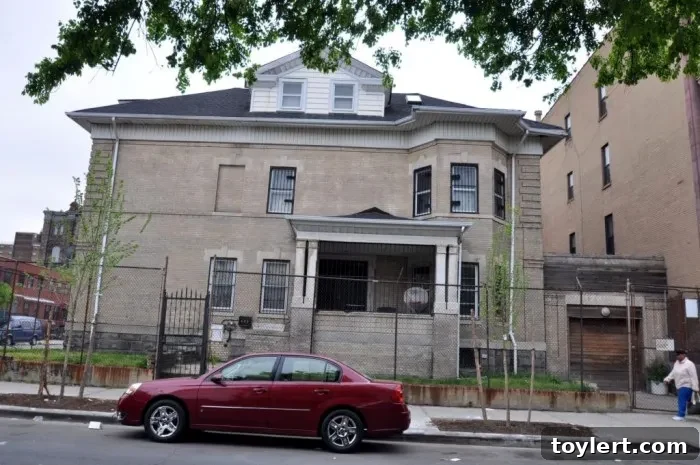
The exterior of 28 Stuyvesant Avenue, as shown in the accompanying image, instantly conveys a sense of enduring grace. It stands as a testament to the skilled artisans who shaped Brooklyn’s streetscapes. Without detailed records, we piece together its story through its visual language: its proportions, the materials used, and its relationship to neighboring buildings. These details tell us about the aspirations of the people who built and lived in these homes – their desire for beauty, stability, and a sense of community. Its presence contributes significantly to the cohesive and historic charm of Stuyvesant Avenue, a thoroughfare celebrated for its architectural integrity and leafy tranquility.
Decoding the Details: Common Features of Historic Brooklyn Homes
Delving deeper into the characteristics of buildings like 28 Stuyvesant Avenue helps us appreciate the broader architectural context of Brooklyn. Many historic Brooklyn homes share common features that are worth highlighting:
- Brownstone Facades: The ubiquitous material that gives many Brooklyn neighborhoods their iconic look. Quarried primarily from New Jersey, brownstone was a popular choice for its rich color and workability, allowing for intricate carvings.
- Elaborate Stoops: A defining feature, these grand staircases lead from the sidewalk to the main living floor, providing a semi-private transition space and offering a vantage point for observing street life.
- Cornices and Lintels: The decorative crowning elements at the top of buildings (cornices) and above windows/doors (lintels) often showcase detailed carvings, reflecting various classical or natural motifs.
- Bay Windows: Protruding from the facade, these windows extend interior space, increase natural light, and add architectural depth and visual interest to the street-facing side.
- Wrought Ironwork: Fences, railings, and decorative grilles crafted from iron add elegance and security, often featuring intricate patterns and craftsmanship that have lasted for over a century.
- High Ceilings and Large Windows: Designed to enhance natural light and air circulation in an era before widespread air conditioning and electric lighting, these features contribute to the spacious feel of interior spaces.
These elements, visible on structures across Brooklyn, speak to a particular era of craftsmanship and urban living, where attention to detail and aesthetic appeal were paramount.
The Importance of Architectural Preservation and Community Engagement
The effort to document and celebrate buildings like 28 Stuyvesant Avenue is more than just an academic exercise; it’s a critical component of architectural preservation. By acknowledging these structures, we reinforce their value and encourage their continued maintenance and respectful renovation. Understanding the history of a building can prevent insensitive alterations and promote rehabilitation that honors its original character. Furthermore, shining a light on lesser-known buildings fosters a sense of stewardship within communities, encouraging residents to take pride in their surroundings and actively participate in safeguarding their local heritage.
This initiative also highlights the collective power of community. While professional historians and archivists do invaluable work, the most intimate knowledge often resides with the people who live in these neighborhoods. Long-time residents may recall stories passed down through generations, possess old photographs, or hold anecdotal evidence that can fill crucial gaps in a building’s history. This collaborative approach ensures that the historical narrative is as rich and complete as possible, transforming what might have been an overlooked edifice into a vibrant part of Brooklyn’s ongoing story.
Beyond the Facade: The Stories Within Brooklyn’s Walls
Every historic building, no matter how humble, has witnessed countless lives unfold within its walls. From the families who first moved in, dreaming of a new life in a booming city, to the subsequent generations who adapted these spaces to changing times, these structures hold memories. They’ve seen celebrations, struggles, and the steady march of progress. A building like 28 Stuyvesant Avenue was once a home to Brooklynites who contributed to the borough’s growth – perhaps a merchant, a craftsman, a teacher, or a family that made their mark on the burgeoning community of Bedford-Stuyvesant.
Our exploration is not just about bricks and mortar; it’s about connecting with the human element that imbued these spaces with life. It’s about imagining the conversations held in front parlors, the meals cooked in bustling kitchens, and the children playing on the grand stoops. These buildings are silent witnesses to the evolution of a neighborhood, reflecting changes in demographics, social customs, and economic conditions over more than a century. By focusing on these undocumented gems, we offer a pathway to understanding the broader social history of Brooklyn, one personal narrative, one building at a time.
The Enduring Charm of Brooklyn: A Never-Ending Discovery
Brooklyn’s architectural landscape is a constantly unfolding narrative, full of unexpected delights and untold stories. Even for those who have walked its streets for decades, there is always something new to discover, a hidden detail or an overlooked facade that sparks curiosity. Our ongoing series, dedicated to featuring these intriguing but less-documented structures, serves as an invitation to look closer, to appreciate the craftsmanship, and to ponder the lives lived within these historic walls. It’s a celebration of the enduring spirit of Brooklyn, a borough that proudly wears its history while constantly evolving.
We are committed to this journey of discovery, believing that every building deserves its moment in the spotlight. By bringing these stories to the forefront, we not only preserve a piece of Brooklyn’s past but also inspire a greater appreciation for the architectural heritage that defines its character. Join us as we continue to peel back the layers of history, one fascinating structure at a time, ensuring that the unique charm and untold tales of Brooklyn’s architectural gems are never truly forgotten.
Brooklyn, one building at a time.