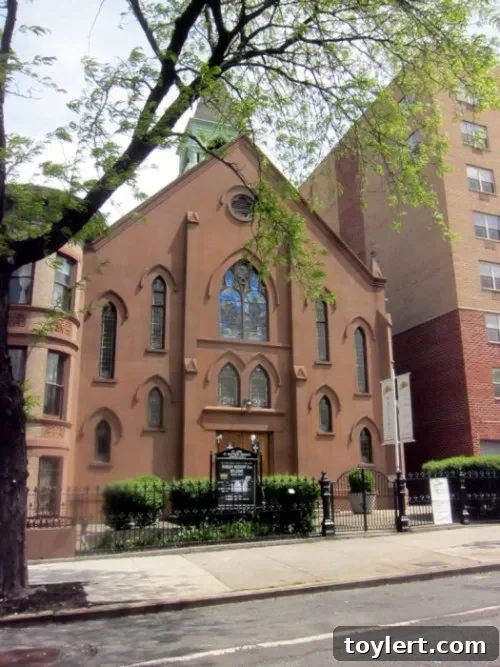
St. John – St. Matthew – Emanuel Lutheran Church: A Beacon of History at 283 Prospect Avenue, Brooklyn
Brooklyn, a borough renowned for its rich tapestry of history, culture, and architecture, is a treasure trove for anyone eager to explore the stories embedded within its very foundations. Each building tells a tale, contributing to the vibrant narrative of this iconic city. Among these venerable structures stands a particularly significant landmark: the church initially built as The Evangelical Lutheran St. John’s Congregation of Brooklyn, now known as the St. John – St. Matthew – Emanuel Lutheran Church, proudly situated at 283 Prospect Avenue.
This magnificent edifice is more than just a place of worship; it is a living testament to faith, community resilience, and architectural endurance. Nestled between the historic neighborhoods of Park Slope and Gowanus, this church has served generations, adapting and evolving while maintaining its core identity as a spiritual and social hub. Its history is a microcosm of Brooklyn’s own development, reflecting periods of growth, change, and the enduring spirit of its residents.
A Legacy Unveiled: The Early History of St. John’s Lutheran Church
The story of this cherished Brooklyn institution begins with its founding as The Evangelical Lutheran St. John’s Congregation. Established in the late 19th or early 20th century, a period of significant immigration and urban expansion in Brooklyn, St. John’s quickly became a vital center for its German-Lutheran community. Immigrants seeking new lives in America often found solace and familiarity in churches that echoed their traditions and language, and St. John’s provided just that.
The decision to build a substantial church at 283 Prospect Avenue reflected the growing strength and commitment of its congregation. Early members poured their efforts and resources into creating a lasting spiritual home, envisioning a place that would nurture faith for decades to come. The construction of such a grand structure was a profound statement of hope and permanence, demonstrating a deep dedication to establishing a spiritual anchor in a rapidly developing urban landscape. The church served not only as a place for Sunday services but also as a cultural nexus, hosting community events, educational programs, and social gatherings that strengthened the bonds among its members and integrated them into the broader Brooklyn fabric.
Architectural Grandeur at 283 Prospect Avenue
The architecture of the church at 283 Prospect Avenue is a compelling study in the styles prevalent during its construction era. While specific architectural documents would provide precise details, many churches from this period in Brooklyn often feature robust and evocative designs. It likely incorporates elements of Neo-Romanesque or Gothic Revival architecture, characterized by solid masonry, impressive stained-glass windows, and intricate detailing that speaks to both artistic craftsmanship and spiritual symbolism.
Upon viewing the building, one is often struck by its commanding presence. Its facade, possibly constructed from durable materials like brick, stone, or a combination, would typically feature arched entrances, ornate window frames, and possibly a prominent bell tower or steeple reaching towards the sky. These architectural choices were not merely aesthetic; they were designed to inspire reverence and provide a sense of enduring strength. The interior, though unseen from the street, would undoubtedly continue this theme with high ceilings, potentially a nave lined with pews, and an altar that serves as the focal point for worship. The careful preservation of these architectural details over the years ensures that the church remains a magnificent example of historical ecclesiastical design in Brooklyn, a testament to the artisans and visionaries who brought it to life.
A United Path: St. John – St. Matthew – Emanuel Lutheran Church Today
The name St. John – St. Matthew – Emanuel Lutheran Church tells a story of unity and adaptation in the face of changing demographics and community needs. Over the decades, many urban congregations have faced challenges, leading some to merge their resources and ministries to better serve their communities. This church is a powerful example of such strategic consolidation, bringing together the legacies of three distinct Lutheran congregations: St. John’s, St. Matthew’s, and Emanuel. While the exact timeline of these mergers would be detailed in congregational records, such unions typically occur to strengthen membership, pool financial resources, and expand outreach programs, ensuring the continued viability and impact of the church’s mission.
The consolidated church now stands as a vibrant, inclusive community, carrying forward the rich heritage of all three founding congregations. It continues to play a pivotal role in the lives of its members and the wider neighborhood. Beyond regular worship services, the St. John – St. Matthew – Emanuel Lutheran Church is often involved in various community initiatives, such as food drives, social justice advocacy, educational programs for children and adults, and providing space for local groups. It serves as a meeting point, a sanctuary, and a source of support for residents of Park Slope, Gowanus, and beyond, truly embodying the spirit of Christian service and community engagement.
Preserving Brooklyn’s Heritage, One Building at a Time
The phrase “Brooklyn, one building at a time” beautifully encapsulates the essence of urban heritage preservation. Each historic structure, like the St. John – St. Matthew – Emanuel Lutheran Church, contributes immeasurably to the borough’s unique character and historical narrative. In a city constantly evolving and facing pressures of development, the conscious effort to maintain and celebrate these architectural and cultural landmarks is crucial.
Buildings like this church are not merely old structures; they are repositories of collective memory. They bear witness to generations of Brooklynites, to countless personal stories, and to the evolution of the city itself. They remind us of the craftsmanship of bygone eras, the social dynamics of past communities, and the enduring human need for spiritual and communal gathering places. Preserving these sites ensures that future generations can physically connect with their past, understanding the foundations upon which their present is built. The St. John – St. Matthew – Emanuel Lutheran Church stands as a proud emblem of this ongoing commitment to heritage, offering a tangible link to Brooklyn’s rich and multifaceted past.
A Timeless Landmark in a Modern Brooklyn
The St. John – St. Matthew – Emanuel Lutheran Church at 283 Prospect Avenue is a profound symbol of continuity and change in Brooklyn. From its origins as St. John’s, serving a specific immigrant community, to its current identity as a merged congregation embracing a diverse modern Brooklyn, the church has consistently remained a bedrock of faith and community. Its imposing architecture, steeped in history, offers a visual anchor in a rapidly modernizing urban landscape, inviting residents and visitors alike to pause and appreciate the beauty and endurance of its legacy.
As Brooklyn continues to redefine itself, landmarks like this church serve as vital reminders of its enduring spirit and the collective stories that shape its identity. They underscore the importance of looking back to understand where we come from, even as we move forward. The St. John – St. Matthew – Emanuel Lutheran Church is not just a building; it is a testament to the power of faith, community, and the timeless beauty of Brooklyn’s architectural heritage, truly a cornerstone of the borough’s illustrious past and vibrant present.