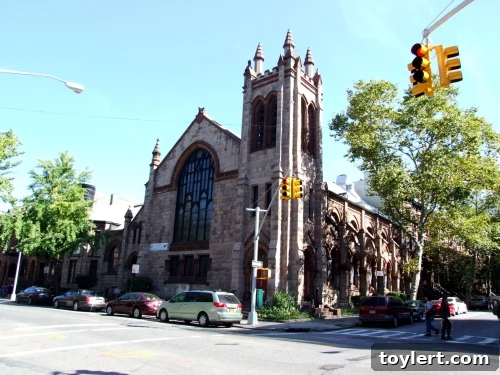
Grace United Methodist Church: A Timeless Architectural Gem in Brooklyn’s Park Slope
Nestled amidst the tree-lined streets and historic brownstones of Park Slope, Brooklyn, stands the majestic Grace United Methodist Church, an enduring symbol of faith, community, and exquisite architecture. Originally known as the Grace Methodist Episcopal Church, this magnificent edifice at 33 7th Avenue is far more than just a place of worship; it is a vital part of Brooklyn’s rich historical tapestry, a silent testament to the borough’s enduring legacy and its profound architectural heritage. Its imposing presence and intricate details tell a story spanning over a century, inviting passersby to pause and appreciate the artistry and devotion embedded within its very foundation.
The story of Grace United Methodist Church begins in a rapidly expanding Brooklyn during the late 19th century. As the borough flourished, so did the need for spiritual and community centers. The Methodist Episcopal Church, a prominent denomination at the time, recognized this growing need, leading to the vision for a new church that would serve the burgeoning population of what would become the esteemed Park Slope neighborhood. This period was characterized by significant urban development, with new communities forming and demanding structures that reflected their aspirations and values. The construction of Grace Church was a direct response to this dynamic growth, aiming to provide a spiritual home and a focal point for the blossoming local community.
Architectural Grandeur and Distinctive Style
The architectural style of Grace United Methodist Church is a captivating blend, showcasing the aesthetic preferences and craftsmanship of its era. While specific architectural attribution often requires deeper historical research, the building’s design typically reflects a robust Romanesque Revival influence, characterized by its sturdy masonry, rounded arches, and a sense of enduring solidity. Alternatively, elements of Gothic Revival might also be subtly incorporated, particularly in the soaring lines and potentially intricate window tracery. These architectural choices were not merely stylistic; they conveyed strength, permanence, and spiritual upliftment, qualities highly valued in ecclesiastical architecture of the period.
Upon closer inspection, the church’s facade is a study in meticulously crafted detail. The use of robust materials, likely local stone or brick, speaks to a commitment to quality and longevity. Arched entryways, often deeply recessed, create a welcoming yet imposing approach, drawing the eye upwards towards the higher elements of the structure. Intricate carving, subtle decorative patterns, and carefully placed fenestration contribute to a rich visual texture that commands attention without overwhelming the senses. The grand bell tower, a common feature in churches of this magnitude, would have originally served as a beacon, both literally and figuratively, for the community, its height symbolizing the aspiration towards the divine and acting as a local landmark visible from various points within the neighborhood.
Inside, one can imagine a sanctuary designed to inspire awe and reverence. High ceilings, supported by robust columns, would create a sense of expansive space, while stained-glass windows, filtering natural light, would cast vibrant hues across the interior, depicting biblical narratives or abstract patterns. The careful arrangement of pews, the altar, and the pulpit would emphasize the liturgical experience, designed to draw the congregation into a sacred space conducive to worship and reflection. While specific interior details may evolve over time with renovations and changes in liturgical practice, the fundamental architectural principles aimed at creating an environment of spiritual contemplation and community gathering remain central to its design.
A Pillar of the Park Slope Community
From its inception, Grace United Methodist Church has been more than just a place for Sunday services; it has functioned as a central pillar of the Park Slope community. In an era before pervasive civic organizations, churches often served as hubs for social welfare, education, and cultural activities. Grace Church would have hosted a myriad of events, from Sunday school classes and youth groups to community outreach programs, charity drives, and musical concerts. Its doors would have been open not just to its congregants but to the wider neighborhood, offering a space for gathering, support, and shared experience.
The transition from “Methodist Episcopal” to “United Methodist” reflects broader historical shifts within Protestantism in America, particularly the merger of various Methodist denominations in the mid-20th century. This evolution signifies the church’s adaptability and its continuous effort to remain relevant and responsive to the changing needs of its parishioners and the surrounding community. Such denominational changes often bring about renewed focus on social justice, community engagement, and inclusive practices, ensuring the church’s continued role as a progressive and welcoming institution within Park Slope.
Preserving Brooklyn’s Architectural Legacy
The preservation of structures like Grace United Methodist Church is paramount for maintaining Brooklyn’s unique character and understanding its historical development. As Brooklyn continues to evolve and modernize, these architectural landmarks serve as vital connections to the past, reminding residents and visitors alike of the craftsmanship, values, and community spirit of bygone eras. Historic churches, in particular, often represent the pinnacle of architectural design and engineering for their time, demanding respect and careful stewardship.
Efforts to maintain and restore Grace Church ensure that its beauty and structural integrity are preserved for future generations. These endeavors often involve meticulous restoration of masonry, stained glass, and interior elements, guided by historical accuracy and modern preservation techniques. Such projects are not merely about aesthetics; they are about safeguarding a piece of collective memory and ensuring that the stories embedded within the building continue to inspire and educate.
Grace United Methodist Church in the Modern Era
Today, Grace United Methodist Church remains an active and vibrant part of the Park Slope community. It continues its mission of spiritual guidance, community service, and fostering a sense of belonging. In an increasingly fast-paced world, places like Grace Church offer a sanctuary of peace and reflection, a reminder of enduring values, and a testament to the power of collective faith.
Its historical significance extends beyond its religious function; it is a notable example of Brooklyn’s rich architectural tapestry, standing proudly alongside other magnificent structures that define the borough’s landscape. For architecture enthusiasts, historians, and local residents, Grace United Methodist Church at 33 7th Avenue is a mandatory point of interest, offering insights into Brooklyn’s past and its ongoing commitment to preserving its unique heritage. It stands as a beacon, not just of faith, but of enduring beauty and community spirit in the heart of one of Brooklyn’s most cherished neighborhoods. Its presence enriches the streetscape, adds depth to the urban fabric, and contributes immeasurably to the distinct identity of Park Slope, making it a truly timeless architectural gem.
Visiting the area to appreciate Grace United Methodist Church provides an opportunity to connect with Brooklyn’s profound history. Whether admiring its stately exterior, reflecting on its historical context, or participating in its community activities, the church offers a meaningful experience. It embodies the resilience and spirit of Brooklyn, a constant amidst the changing tides of urban life, ensuring its legacy continues to shape and inspire the generations to come.