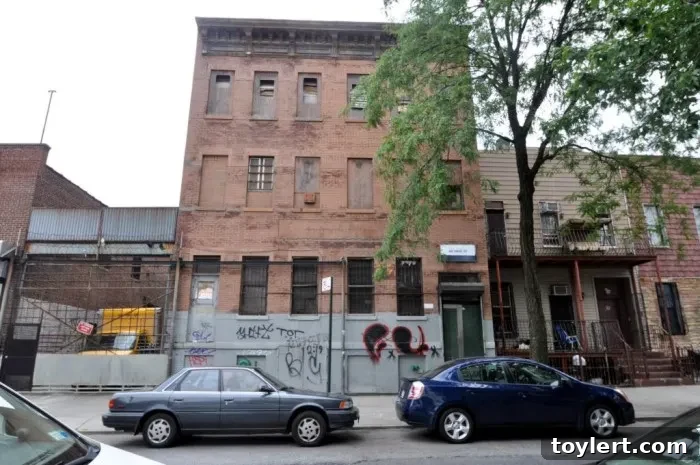
Unveiling Brooklyn’s Past: The Enduring Legacy of the Former Minck Brothers & Co. Bottling Company at 38-40 Park Street
Brooklyn, a borough synonymous with vibrant history and architectural diversity, tells its story one building at a time. Each structure, whether grand or modest, holds a unique narrative, a testament to the lives and industries that shaped this iconic New York City district. Among these silent storytellers stands the former Minck Brothers & Co. Bottling Company building located at 38-40 Park Street, Brooklyn. This impressive brick edifice, with its distinct industrial charm, offers a fascinating glimpse into Brooklyn’s rich commercial and manufacturing heritage, embodying an era when local businesses were the heartbeat of the community. Join us as we explore the history, architecture, and enduring significance of this remarkable piece of Brooklyn’s past.
The Legacy of Minck Brothers & Co.: A Chapter in Brooklyn’s Industrial History
The name Minck Brothers & Co. resonates with the industrious spirit that characterized Brooklyn in the late 19th and early 20th centuries. While specific details about the Minck brothers themselves and the exact origins of their bottling enterprise may be found in archival records, the existence of such a substantial building at 38-40 Park Street speaks volumes about their success and importance within the local economy. In an age before widespread national brands dominated every market, local bottling companies played a crucial role, providing beverages – from sodas and seltzers to possibly even beer or other spirits – to thirsty Brooklynites. These companies were often deeply integrated into their neighborhoods, serving as employers and suppliers for a growing urban population.
The Minck Brothers & Co. Bottling Company would have been a hub of activity. Imagine horse-drawn carriages and later, early motor trucks, arriving to deliver raw materials such and departing with crates of bottled goods. The clinking of bottles, the hum of machinery, and the bustling energy of workers would have filled the air, contributing to the vibrant industrial symphony of Park Street. These bottling operations were vital for public health and enjoyment, offering refreshing drinks at a time when access to clean, potable water could sometimes be a concern. The success of Minck Brothers & Co. likely stemmed from a combination of quality products, efficient distribution, and a strong connection to the community they served, establishing a solid reputation that warranted the construction of such a prominent building.
Architectural Grandeur: A Glimpse into Brooklyn’s Industrial Past
The building at 38-40 Park Street, Brooklyn, home to the former Minck Brothers & Co. Bottling Company, is a superb example of early 20th-century industrial architecture. Typically constructed with sturdy brick and featuring robust window frames, these structures were designed for functionality, durability, and often, a certain level of utilitarian elegance. The image reveals a multi-story brick building, likely Romanesque Revival or a simplified industrial variant, characterized by its substantial brickwork, arched windows, and a commanding presence on the street. The choice of brick, a ubiquitous material in Brooklyn, provided excellent insulation and fire resistance, crucial for industrial operations.
Key architectural features often found in buildings of this type include large, multi-pane windows designed to maximize natural light within the factory floors, essential for workers and reducing the need for artificial lighting during daylight hours. Loading docks, robust ground-floor entrances, and perhaps even a freight elevator shaft would have been integral to the building’s design, facilitating the movement of heavy machinery and large quantities of bottles and ingredients. The sturdy construction not only accommodated heavy loads and vibrations from machinery but also projected an image of stability and reliability for the Minck Brothers & Co. brand. While devoid of ornate decorative flourishes found in contemporaneous residential or public buildings, its strength and functional beauty are undeniable, making it a proud sentinel of Brooklyn’s industrial heritage.
38-40 Park Street: A Landmark in the Neighborhood’s Evolution
The location of the former Minck Brothers & Co. Bottling Company at 38-40 Park Street places it within a dynamic and historically significant part of Brooklyn. Park Street, like many streets in the borough, has witnessed countless transformations, from agrarian beginnings to dense urban development, fueled by immigration, industrialization, and evolving commercial needs. Buildings like the Minck Brothers facility were not merely isolated structures; they were anchors within their communities, contributing to the streetscape, providing employment, and often spurring the development of surrounding residential and commercial establishments. A bottling plant would require a steady stream of workers, which in turn would necessitate local housing, shops, and services, creating a micro-economy around it.
Over the decades, as industries shifted and Brooklyn continued to evolve, many of these industrial buildings faced uncertain futures. Some were demolished to make way for new developments, while others stood vacant, testaments to forgotten eras. However, a significant number, like the Minck Brothers building, have been recognized for their inherent value – their solid construction, generous interior spaces, and irreplaceable historical character. These buildings often undergo adaptive reuse, transforming into residential lofts, art studios, offices, or new commercial ventures, breathing new life into old structures while preserving their architectural integrity and historical echoes. The continued presence of 38-40 Park Street ensures that the memory of Minck Brothers & Co. and the industrious spirit of old Brooklyn remain a tangible part of the modern urban fabric.
From Bottles to Bricks: The Building’s Enduring Story and Adaptive Reuse
The journey of historic industrial buildings, particularly in a rapidly developing urban environment like Brooklyn, is often one of transformation. While the active bottling operations of Minck Brothers & Co. have long ceased, the building at 38-40 Park Street likely continues to serve new purposes, adapting to the contemporary needs of the borough. This adaptive reuse is a cornerstone of urban sustainability and preservation, allowing communities to honor their past while embracing their future. The large open floor plans, high ceilings, and sturdy construction characteristic of old factories make them ideal candidates for conversion into spacious apartments, creative workspaces, or modern retail establishments.
Imagine the transformation: what was once a noisy factory floor filled with machinery might now be a light-filled loft apartment, its industrial windows offering views of a bustling Brooklyn street. The robust brick walls that once contained the sounds of bottling operations now provide a unique aesthetic backdrop for contemporary living or innovative businesses. This process of transformation is not just about functionality; it’s about storytelling. Each repurposed beam, every preserved brick, and the overall silhouette of the building speak to its former life, creating a layered history that enriches the present. The former Minck Brothers & Co. Bottling Company building thus stands as a vibrant example of how Brooklyn cherishes its industrial heritage, integrating it seamlessly into its dynamic present and future.
Preserving Brooklyn’s Industrial Heritage: Why Buildings Like 38-40 Park Street Matter
The preservation of industrial buildings like the former Minck Brothers & Co. Bottling Company is critically important for several reasons. Firstly, these structures are invaluable physical records of Brooklyn’s economic and social development. They illustrate the ingenuity, hard work, and entrepreneurial spirit that built the borough, offering tangible connections to a bygone era of manufacturing and local commerce. Without these buildings, much of the visual evidence of Brooklyn’s industrial past would be lost, replaced by homogenous modern constructions that lack character and historical depth.
Secondly, these buildings often possess significant architectural merit. Their sturdy construction, unique design elements, and the craftsmanship of their original builders contribute to the rich tapestry of Brooklyn’s architectural landscape. Preserving them means safeguarding architectural diversity and ensuring that future generations can appreciate the evolution of building styles and construction techniques. Furthermore, the adaptive reuse of industrial buildings is an environmentally sustainable practice. It reduces the demand for new construction materials and minimizes waste, while also revitalizing neighborhoods and retaining the unique character that makes Brooklyn so appealing. The former Minck Brothers & Co. Bottling Company at 38-40 Park Street serves as a powerful reminder that history is not just found in museums, but in the very bricks and mortar of our urban environment.
Conclusion: A Testament to Time on Park Street
The former Minck Brothers & Co. Bottling Company building at 38-40 Park Street, Brooklyn, is more than just an old factory; it is a monument to Brooklyn’s enduring spirit of innovation, industry, and community. From its origins as a bustling bottling plant to its likely contemporary role, the building has adapted and evolved, reflecting the dynamic changes of its surroundings. It stands as a powerful reminder that every structure in Brooklyn has a story to tell, contributing to the borough’s unique identity. By appreciating and preserving these architectural gems, we ensure that the rich tapestry of Brooklyn’s past continues to inspire and inform its vibrant future, one historic building at a time.
Frequently Asked Questions about Brooklyn’s Historic Industrial Buildings
Q1: What is adaptive reuse, and why is it important for historic industrial buildings in Brooklyn?
A1: Adaptive reuse is the process of repurposing an old building for a new use, often one vastly different from its original purpose. For historic industrial buildings in Brooklyn, this is crucial because it preserves architectural heritage, prevents demolition, and is environmentally sustainable. It allows structures like the Minck Brothers Bottling Company to find new life as residences, offices, or commercial spaces, maintaining their historical character while serving contemporary needs.
Q2: How can I learn more about the history of specific buildings in Brooklyn?
A2: Researching Brooklyn’s historic buildings can be a fascinating journey! You can often find information through local historical societies, public libraries, university archives, and online resources focusing on New York City’s architectural history. Websites like Brownstoner (the original source for this article’s inspiration) and city planning department archives often have valuable records and photographs.
Q3: Are there any specific architectural styles common in Brooklyn’s industrial buildings?
A3: Yes, Brooklyn’s industrial buildings often showcase a range of styles adapted for utilitarian purposes. Common styles include Romanesque Revival, characterized by heavy masonry and arched windows, as well as various forms of industrial vernacular architecture that prioritize functionality and sturdy construction. Many feature extensive brickwork, large windows, and robust structural elements designed to withstand heavy use.
Q4: What role did local bottling companies like Minck Brothers & Co. play in early 20th-century Brooklyn?
A4: Local bottling companies were integral to daily life in early 20th-century Brooklyn. They supplied beverages such as soda, seltzer, and sometimes beer or other spirits, directly to local residents and businesses. These companies were significant employers and contributed to the local economy, often becoming neighborhood landmarks. They represented a crucial part of the city’s manufacturing base before large-scale national distribution became dominant.