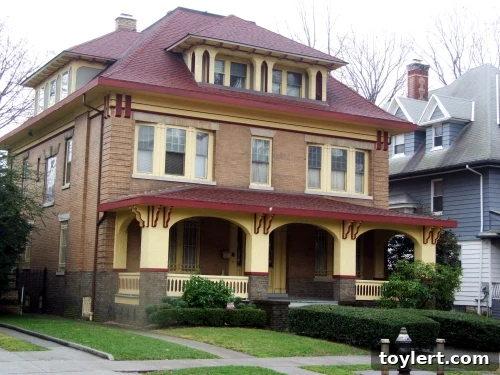
Discovering Brooklyn’s Architectural Heritage: The Grandeur of the Rene Dumarest Home at 417 East 19th Street
Brooklyn is a borough steeped in history, its vibrant narrative etched into every street, park, and most notably, its breathtaking architecture. From the iconic brownstones of Park Slope to the elegant Victorians of Ditmas Park, each building tells a story, a testament to the city’s enduring legacy. Our journey into Brooklyn’s past and present often begins with a single, remarkable structure, offering a unique window into a bygone era. Today, we turn our gaze to one such masterpiece, the venerable Rene Dumarest home, located at 417 East 19th Street, a true jewel in Brooklyn’s crown, embodying the spirit of “Brooklyn, one building at a time.”
A Glimpse into History: The Legacy of Rene Dumarest
Nestled within one of Brooklyn’s most coveted historic districts, 417 East 19th Street stands as a testament to turn-of-the-century elegance and architectural ambition. Originally known as the Rene Dumarest home, this residence is more than just a house; it’s a historical artifact, a tangible link to the pioneers and visionaries who shaped Brooklyn into the iconic borough we know today. While precise historical records regarding Rene Dumarest himself are often found in local archives and property deeds, the very fact that the home bears his name suggests a significant connection to the neighborhood’s early development or a prominent family of the era.
Constructed during a period of rapid expansion and architectural experimentation in Brooklyn, likely in the late 19th or early 20th century, the Rene Dumarest home emerged amidst a burgeoning desire for suburban-style living within an urban context. As Brooklyn transformed from a collection of independent towns into a consolidated borough of New York City, areas like the one housing 417 East 19th Street became prime locations for affluent residents seeking spacious homes with distinctive character. The architects and builders of these homes often drew inspiration from a myriad of styles, creating a unique architectural tapestry that defines many of Brooklyn’s historic residential areas.
Architectural Grandeur: A Masterpiece of Victorian Charm
The Rene Dumarest home is a quintessential example of the opulent and eclectic architectural styles that flourished in Brooklyn during its golden age. While individual houses vary, many homes of this era in Brooklyn, particularly in neighborhoods like Ditmas Park or Prospect Park South, showcase a strong Queen Anne Victorian influence, characterized by their asymmetrical facades, dominant front-facing gables, and whimsical turrets or bay windows. This particular residence, with its commanding presence on East 19th Street, likely exhibits many of these captivating features.
Imagine a facade adorned with a rich palette of materials: perhaps a sturdy brick base giving way to intricate wooden shingles or clapboard on upper levels. Details like decorative spindle work, patterned shingle siding, and carved bargeboards along the gables would have created a visual feast, reflecting the homeowner’s status and the era’s appreciation for craftsmanship. The roofline itself would likely be complex, featuring multiple gables, dormers, and possibly a prominent conical or polygonal turret rising majestically, offering panoramic views of the tree-lined street.
Windows are often a defining feature of such homes, frequently featuring varied shapes and sizes, sometimes with stained glass transoms or delicate leaded panes that filter sunlight into the expansive interiors. A grand front porch, perhaps wrapping around a corner, would serve as a welcoming entryway, complete with ornate columns, balusters, and a comfortable space for leisurely afternoons. Every element, from the patterned brickwork of the chimney to the detailed ornamentation beneath the eaves, contributes to a cohesive and visually stunning architectural narrative that speaks of elegance and meticulous attention to detail.
Inside the Walls: Imagining a Life of Distinction
Stepping beyond the impressive exterior, one can only imagine the interiors of the Rene Dumarest home during its heyday. These Victorian-era mansions were designed for both grand entertaining and comfortable family living, often featuring generous floor plans, high ceilings, and an abundance of natural light. The entrance would likely open into a spacious foyer, revealing an imposing staircase with finely carved newel posts and balustrades, a central artery connecting the various levels of the home.
Throughout the ground floor, one would expect to find a series of well-appointed rooms: a formal living room or parlor for receiving guests, a stately dining room for lavish dinners, and perhaps a cozy library or study. Original details like hardwood floors, often in intricate parquet patterns, elaborate crown moldings, and wainscoting would have added layers of sophistication. Multiple fireplaces, each with unique mantelpieces crafted from marble, wood, or tile, would have provided warmth and a focal point for gatherings. Pocket doors, a common feature of the time, would have allowed for flexible open-plan living or intimate separation of spaces.
The upper floors would house numerous bedrooms, each distinct in size and character, offering comfort and privacy. Master suites might include dressing rooms or even private sitting areas, while bathrooms would have featured classic claw-foot tubs and period fixtures, albeit updated for modern convenience over the decades. The entire residence would have been a canvas for intricate design, reflecting the tastes and aspirations of the Dumarest family and serving as a hub for social life in the neighborhood.
The Neighborhood Tapestry: 417 East 19th Street’s Place
The location of 417 East 19th Street is as significant as the house itself. Many of Brooklyn’s East-West streets in the teens and twenties are found in historic residential enclaves like Ditmas Park, Flatbush, or Prospect Park South. These neighborhoods are renowned for their stunning, tree-lined streets and an unparalleled collection of freestanding Victorian homes, a rarity in an urban environment like New York City. The development of these areas in the late 19th and early 20th centuries was a conscious effort to create suburban-like retreats, easily accessible by trolley lines and later by subway, for a growing middle and upper class.
These districts were carefully planned, often by visionary developers who commissioned a diverse array of architectural styles, leading to charmingly eclectic streetscapes. The Rene Dumarest home, therefore, is not an isolated marvel but rather an integral thread in a rich tapestry of historic architecture that defines its surroundings. Its neighbors, while distinct in their individual designs, collectively contribute to the area’s unique charm and cohesive historical identity. Walking through these streets is akin to stepping back in time, offering a peaceful escape from the bustling city while remaining firmly rooted in its vibrant culture.
Preserving the Legacy: Challenges and Rewards of Historic Homeownership
Owning and maintaining a historic home like 417 East 19th Street comes with both profound challenges and immense rewards. Preservation efforts are crucial to ensuring that these architectural gems endure for future generations. Owners often face the delicate balance of updating the home for modern living – integrating new technologies, improving energy efficiency, and modernizing kitchens and bathrooms – while meticulously preserving its original character and historical integrity.
This commitment often involves working with skilled craftspeople specializing in historical restoration, from woodworking and plaster repair to window restoration and period-appropriate landscaping. Adhering to local landmark regulations, which safeguard the architectural heritage of these districts, requires careful planning and a deep appreciation for the building’s past. However, the reward is immeasurable: living in a home with a soul, a story, and an undeniable connection to history. It’s about being a custodian of a piece of Brooklyn’s heritage, contributing to the ongoing narrative of the borough’s architectural evolution.
Conclusion: A Building That Speaks Volumes
The Rene Dumarest home at 417 East 19th Street stands as a magnificent example of Brooklyn’s rich architectural landscape. It is a structure that transcends mere bricks and mortar, embodying the aspirations, craftsmanship, and historical currents of its time. By focusing on individual buildings such as this, we gain a deeper appreciation for the intricate layers that compose Brooklyn’s identity, celebrating not just its grand avenues but also its quiet, residential streets where history unfolds one beautifully preserved facade at a time.
Its existence reminds us that Brooklyn is a living museum, and each building, whether a grand mansion or a modest row house, holds a piece of its extraordinary past. The Rene Dumarest home is an invitation to explore, to imagine, and to connect with the timeless elegance that continues to define Brooklyn’s architectural soul.