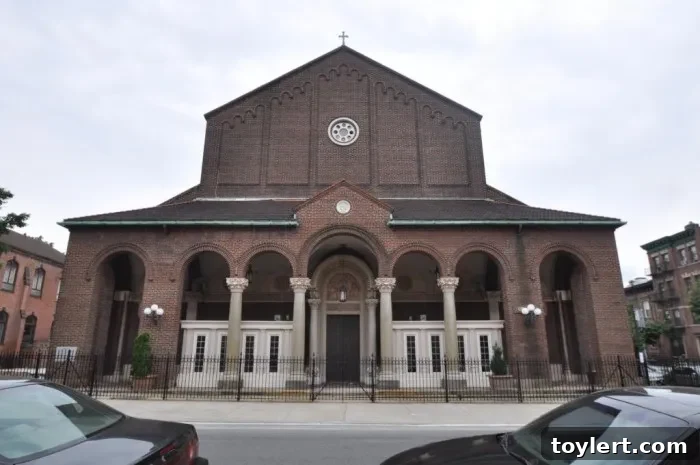
Brooklyn’s Enduring Legacy: The Story of 495-513 Classon Avenue, Now Elim Gospel Tabernacle
Brooklyn, a borough renowned for its rich history, diverse communities, and distinctive architecture, is a tapestry woven with stories of resilience and transformation. Each building contributes a unique thread to this narrative, offering glimpses into the past while serving the present. Among these architectural treasures stands the magnificent structure at 495-513 Classon Avenue, originally known as the Church of the Nativity of Our Blessed Lord and now proudly serving as the Elim Gospel Tabernacle. This edifice is not merely a collection of bricks and mortar; it is a vibrant cornerstone of its community, an architectural marvel, and a testament to Brooklyn’s evolving religious and social landscape.
A Glimpse into History: The Church of the Nativity of Our Blessed Lord
Constructed during a pivotal era of growth and development in Brooklyn, the building at 495-513 Classon Avenue first opened its doors as the Church of the Nativity of Our Blessed Lord. While exact construction dates may vary based on specific historical records, architectural analysis suggests its origins lie in the late 19th or early 20th century—a period characterized by burgeoning populations and a strong emphasis on grand religious structures designed to inspire awe and devotion. This era saw many churches built across Brooklyn, reflecting the diverse spiritual needs of its rapidly expanding neighborhoods.
The original congregation likely played a significant role in the cultural and social fabric of its surrounding community, offering spiritual guidance, educational programs, and a gathering place for its members. Churches of this period were often more than just places of worship; they were community centers, places for social outreach, and symbols of collective identity. The Church of the Nativity would have undoubtedly been a hub of activity, witnessing countless baptisms, weddings, and communal celebrations, marking the milestones in the lives of generations of Brooklynites. Its presence would have contributed immensely to the sense of stability and continuity in the neighborhood, acting as a beacon of faith and fellowship.
Architecturally, the Church of the Nativity of Our Blessed Lord would have showcased the prevailing styles of its time, possibly blending elements of Gothic Revival, Romanesque Revival, or other eclectic styles popular during that architectural flourishing. Such designs often featured intricate stonework, lofty spires or towers reaching towards the heavens, and stunning stained-glass windows depicting biblical scenes or abstract patterns that filled the interior with an ethereal glow. These details were not merely decorative; they were integral to the spiritual experience, designed to elevate the worshipper’s spirit and convey a sense of the divine.
Architectural Grandeur: A Detailed Look at 495-513 Classon Avenue
The building at 495-513 Classon Avenue stands as a magnificent example of historic Brooklyn architecture. Its facade, likely crafted from robust brickwork complemented by decorative stone or terracotta accents, commands attention along Classon Avenue. The choice of materials not only speaks to the durability required for such a substantial structure but also reflects the aesthetic preferences of its construction era. Imagine high, arched windows, possibly adorned with intricate tracery, allowing natural light to flood the expansive interior, illuminating sacred spaces and congregational halls.
Key architectural features would typically include a dominant central entrance, often recessed or framed by impressive columns or pilasters, inviting parishioners into its hallowed halls. The roofline might feature a steeply pitched design, possibly with slate or terra cotta tiles, adding to its visual appeal and structural integrity. Towers or steeples, characteristic of many historic churches, would have once punctuated the skyline, serving as directional landmarks and housing bells whose chimes echoed through the streets of Brooklyn, marking the passage of time and calling the faithful to worship.
Inside, the structure would have originally boasted a spacious nave, lined with rows of wooden pews, leading towards a raised chancel and altar. The ceilings might be high and vaulted, creating an acoustically rich environment ideal for sermons, hymns, and musical performances. Details like wooden paneling, carved pulpits, and ornate altarpieces would have further enhanced the interior’s grandeur and spiritual atmosphere. Every element, from the smallest decorative motif to the overall structural design, would have been meticulously planned to create an environment conducive to worship and reflection, emphasizing the profound connection between architecture and spirituality.
The Transformation: From Church of the Nativity to Elim Gospel Tabernacle
Over the decades, as Brooklyn continued its dynamic evolution, many neighborhoods experienced demographic shifts and changing community needs. These shifts often led to the adaptive reuse or transition of historic buildings, including religious edifices. The Church of the Nativity of Our Blessed Lord eventually underwent such a transformation, becoming the Elim Gospel Tabernacle. This change signifies a new chapter in the building’s long and illustrious history, marking its continued relevance and service to a contemporary congregation.
The transition to Elim Gospel Tabernacle reflects a broader trend of revitalization and adaptation seen in many urban centers. New congregations often breathe fresh life into older structures, preserving their architectural heritage while updating their functions to meet modern needs. While specific details of the acquisition and renovation process are part of the local history, it is evident that the Elim Gospel Tabernacle has embraced its role as a spiritual and community anchor in the Classon Avenue area. This adaptive reuse ensures that the building continues to contribute to the neighborhood’s identity and vitality, rather than falling into disuse or disrepair.
Under its new stewardship, the Elim Gospel Tabernacle likely undertook careful renovations to accommodate its practices and congregational size while striving to honor the building’s original architectural integrity. This balance between preservation and modernization is crucial for historic buildings, allowing them to remain functional and relevant for future generations. The transition illustrates the enduring spirit of Brooklyn’s communities, which continually find ways to reinvent themselves while cherishing their past.
Elim Gospel Tabernacle: A Community Cornerstone Today
Today, the Elim Gospel Tabernacle stands as a vibrant and active religious institution, continuing the building’s legacy of community service and spiritual guidance. While its name and congregation have changed, its fundamental role as a place of worship and gathering remains steadfast. The Tabernacle serves its members through regular services, religious education, and various community outreach programs, reinforcing its position as an invaluable asset to the Classon Avenue neighborhood and beyond.
Churches like Elim Gospel Tabernacle are often more than just spiritual centers; they are places where individuals find support, foster connections, and engage in collective action for the betterment of society. They might host food drives, offer counseling services, provide youth programs, or serve as venues for local events, thereby enriching the lives of both their congregants and the wider community. The continuous operation of such a significant historic building as a vibrant religious center speaks volumes about the dedication of its current congregation and its leadership.
The building at 495-513 Classon Avenue, with its impressive architecture and rich history, contributes significantly to the visual character and historical narrative of Brooklyn. It stands as a powerful reminder of the borough’s layered past and its dynamic present, showcasing how architectural landmarks can adapt and evolve while maintaining their profound connection to the community. Its story is a microcosm of Brooklyn itself—a story of continuity, transformation, and enduring purpose, making it a truly remarkable and cherished part of the borough’s heritage. As Brooklyn continues to grow and redefine itself, structures like Elim Gospel Tabernacle remain vital links to its past, providing spiritual nourishment and community strength for decades to come.