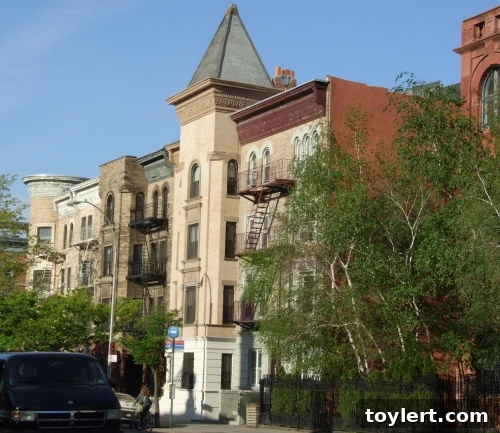
A Glimpse into Brooklyn’s Architectural Heritage: The Flats Buildings of Vanderbilt Avenue
Brooklyn is a tapestry woven from countless stories, each brick and beam contributing to its unique narrative. Among the most compelling chapters are those etched into its historic streetscapes, showcasing the ingenuity and aspirations of past generations. The borough’s architectural landscape is a testament to its vibrant evolution, meticulously preserved one building at a time. Today, we turn our attention to a remarkable example of Brooklyn’s residential architectural legacy: the flats buildings nestled at 673-679 Vanderbilt Avenue.
These distinguished structures, often referred to simply as “flats buildings,” represent a pivotal moment in New York City’s urban development. Emerging in the late 19th and early 20th centuries, they offered a practical and often elegant solution to the burgeoning demand for housing in rapidly growing neighborhoods. Unlike the grand, single-family brownstones that characterize some of Brooklyn’s most opulent blocks, flats buildings were designed as multi-unit dwellings, providing comfortable and stylish homes for a burgeoning middle class, professionals, and families seeking the conveniences of urban living without the expense of a sprawling private residence.
The Essence of Brooklyn’s Flats Architecture
The term “flats buildings” broadly encompasses a variety of multi-family residential structures, but those found on Vanderbilt Avenue often share common characteristics that define their appeal. Typically, these are three to five-story buildings, constructed with robust materials such as brick, often adorned with brownstone or terra cotta trim, reflecting popular architectural styles of their era. Their facades are usually articulated with a sense of classical order, incorporating elements like cornices, decorative lintels, and bay windows that break up the street-facing plane, adding visual interest and allowing for ample natural light within the residences.
What makes the flats at 673-679 Vanderbilt Avenue particularly noteworthy is their integration into the fabric of the Prospect Heights neighborhood. This area, known for its tree-lined streets, historic brownstones, and proximity to cultural landmarks like Prospect Park and the Brooklyn Museum, offers a quintessential Brooklyn experience. The flats buildings here embody a charming blend of practicality and aesthetic ambition, contributing significantly to the neighborhood’s distinctive character and architectural harmony.
A Journey Through Time: Historical Context of Vanderbilt Avenue
Vanderbilt Avenue itself has a rich history, evolving from a pastoral route into a bustling thoroughfare. In the late 19th century, as Brooklyn experienced exponential growth following the construction of the Brooklyn Bridge and expanded transportation networks, areas like Prospect Heights became prime locations for residential development. Developers and architects responded to the influx of new residents by constructing a diverse array of housing, from grand mansions to more accessible multi-family dwellings like the flats buildings. These structures often featured advanced amenities for their time, including indoor plumbing, central heating, and gas lighting, appealing to a demographic seeking modern conveniences.
The design principles behind these flats were often influenced by prevailing architectural movements. While some might display Romanesque Revival robustness with heavy stone detailing, others might lean towards the more delicate ornamentation of Queen Anne style, or the refined classicism of Beaux-Arts influences. Regardless of the specific style, a common thread was the emphasis on creating durable, attractive, and functional living spaces that maximized light and air, crucial considerations in dense urban environments.
Architectural Details and Enduring Charm
Stepping back to admire 673-679 Vanderbilt Avenue, one can appreciate the meticulous craftsmanship of a bygone era. The uniformity in scale and material often creates a cohesive street wall, yet subtle variations in decorative elements distinguish each building within the row. Intricate brickwork patterns, often in contrasting colors, might highlight window frames or form decorative friezes. Ornate cornices, sometimes featuring pressed metal or terra cotta, crown the structures, adding a sophisticated finishing touch.
The ground floors often feature grand entrances, sometimes recessed, adorned with decorative doorways and transoms that once welcomed residents and guests into common lobbies. These details are not merely decorative; they speak to a time when architectural beauty was seen as integral to urban living, contributing to the overall quality of life for its inhabitants. The bay windows, a hallmark of many Brooklyn flats, not only add architectural depth to the facade but also provide residents with expansive views of the street and increased interior light, creating more open and inviting living spaces.
Preserving Brooklyn’s Living History
Today, the flats buildings at 673-679 Vanderbilt Avenue continue to serve their original purpose, providing homes for a new generation of Brooklynites. Their enduring presence is a testament to the quality of their original construction and the ongoing efforts of residents and preservationists. These buildings are more than just structures; they are living artifacts, offering a tangible link to Brooklyn’s past and showcasing its continuous evolution.
The charm of these buildings lies not only in their historical significance but also in their adaptability. Many have undergone careful renovations, updating interiors to meet contemporary standards while preserving the exterior’s historical integrity. This balance of modernization and preservation ensures that the architectural heritage of Vanderbilt Avenue remains vibrant and relevant, continuing to contribute to the unique identity of Prospect Heights.
Exploring these flats buildings allows us to appreciate the intricate layers of Brooklyn’s architectural history. Each building tells a story of urban growth, design innovation, and the enduring human desire for comfortable and beautiful homes. The flats at 673-679 Vanderbilt Avenue stand as proud sentinels of this legacy, inviting us to pause and reflect on the rich tapestry of Brooklyn, one meticulously crafted building at a time.