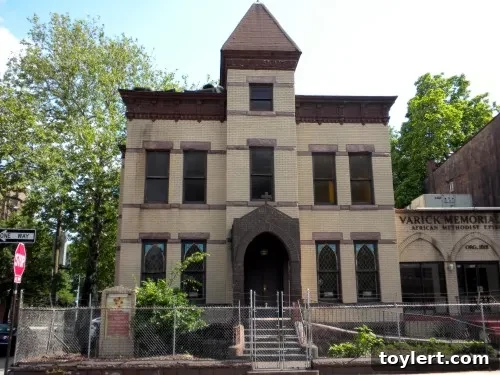
806 Quincy Street: A Brooklyn Landmark Transformed – From Private Residence to Varick Memorial AME Zion Church
Brooklyn is a borough rich with stories, each etched into the very fabric of its architecture. From stately brownstones to grand public edifices, every building holds a narrative of change, adaptation, and enduring community spirit. Among these architectural treasures stands 806 Quincy Street, a distinctive structure that encapsulates Brooklyn’s evolving identity. What began its life as a distinguished private residence has, over the decades, transitioned into a vital spiritual hub: the Varick Memorial AME Zion Church. This transformation is not merely a change of ownership or function; it represents a deeper narrative of urban development, community growth, and the remarkable adaptability of historic architecture in the heart of one of New York City’s most vibrant neighborhoods.
The journey of 806 Quincy Street offers a fascinating microcosm of Brooklyn’s broader history. It speaks to the architectural grandeur of a bygone era, the dynamic social shifts that shaped the borough, and the powerful role of community institutions in preserving heritage while forging new paths. As we delve into the history of this particular address, we uncover layers of meaning – from its original purpose as a private dwelling to its current status as a beacon of faith and fellowship, demonstrating how buildings can embody the very soul of a city.
The Historical Canvas of 806 Quincy Street: A Glimpse into Brooklyn’s Past
Nestled within the historic streetscapes of Brooklyn, specifically in the vibrant neighborhood of Bedford-Stuyvesant, 806 Quincy Street offers a fascinating look into the borough’s architectural heritage. Built likely in the late 19th or early 20th century, this period marked a significant era of expansion and prosperity for Brooklyn, then a separate city before its consolidation into Greater New York. Private homes constructed during this time were often testaments to the aspirations and social standing of their first owners, reflecting popular architectural styles of the day.
The prevailing architectural trends of late 19th-century Brooklyn included a mix of styles such as Neo-Grec, Romanesque Revival, Queen Anne, and Renaissance Revival. These styles were characterized by ornate detailing, robust materials like brownstone, brick, and terra cotta, and an emphasis on grandeur and permanence. Homes were typically multi-story, often featuring prominent stoops leading to the main entrance, bay windows that provided ample light and street views, intricate cornices, and decorative lintels and sills above windows and doors. These elements were not just ornamental; they contributed to the elegant streetscapes that continue to define much of historic Brooklyn today, creating a harmonious yet unique urban fabric.
Architectural Characteristics of a Bygone Era
While specific architectural blueprints for 806 Quincy Street might require deeper archival research, its location and probable construction period suggest it would have shared many characteristics with its distinguished neighbors. Imagine a façade crafted from rich brownstone or high-quality brick, possibly with carved decorative motifs that speak to the craftsmanship of the era. The presence of a classic Brooklyn stoop would have been an inviting feature, a common social hub where neighbors interacted. Inside, the original layout would have been designed for spacious living, with distinct parlors, dining rooms, and multiple bedrooms spread across several floors, reflecting the typical domestic life of a prosperous urban family.
The transition from a private dwelling to a public institution often means that while the core structure remains, certain modifications are made to accommodate new functions. However, a respectful adaptive reuse project strives to preserve the original architectural integrity. The exterior of 806 Quincy Street likely retains much of its initial character, allowing passersby to appreciate the aesthetic preferences and building traditions of its time, while simultaneously serving its new, vital community role. This layered history adds immense value to the building, making it a tangible link to Brooklyn’s rich and complex past.
The Genesis of Varick Memorial AME Zion Church: A Spiritual Journey
The story of 806 Quincy Street takes a profound and transformative turn with its establishment as the Varick Memorial AME Zion Church. The African Methodist Episcopal (AME) Zion Church is a historically significant Protestant denomination, founded in the late 18th century by African Americans seeking spiritual autonomy and freedom from racial discrimination within the predominantly white Methodist Episcopal Church. Originating in New York City in 1796 with James Varick as its first bishop, the denomination rapidly grew into a powerful voice for social justice, civil rights, and community empowerment, playing a crucial role in the spiritual and social lives of African Americans across the United States.
A Legacy of Faith and Community Building
The Varick Memorial AME Zion Church, like countless congregations of its kind, represents more than just a place of worship. It embodies a legacy of faith, resilience, and community building that has shaped generations. For over a century, such churches have served as vital centers for social gathering, education, activism, and cultural preservation within their neighborhoods. They provided spaces for collective action, emotional support, and the articulation of a distinct cultural and spiritual identity in the face of societal challenges.
The decision by the Varick Memorial congregation to acquire a former private residence like 806 Quincy Street would have been both a practical and symbolic act. In many growing urban areas, congregations often found existing buildings more accessible and cost-effective than constructing new ones. This allowed them to establish a permanent home, transforming a space once dedicated to a single family into a sanctuary and community hub for an entire collective. This act of adaptive reuse speaks volumes about the resourcefulness, dedication, and visionary spirit of the church’s founders and its members, who saw potential for sacred purpose within a secular structure.
While specific founding dates and early details for the Varick Memorial AME Zion Church at this address would provide richer context, the general trajectory for such institutions involves significant fundraising efforts, community organizing, and a shared vision for spiritual growth and outreach. Once established at 806 Quincy Street, the church would have begun its mission to serve the spiritual, educational, and social needs of its parishioners and the broader neighborhood. Over time, it would evolve into a cornerstone of the local community, contributing profoundly to the fabric of Bedford-Stuyvesant and exemplifying the enduring strength of faith-based organizations.
Adaptive Reuse and Architectural Evolution: A Building’s New Purpose
The transformation of 806 Quincy Street from a private residence to a church beautifully illustrates the concept of adaptive reuse—a sustainable practice that breathes new life into existing structures. Rather than succumbing to demolition and subsequent new construction, adaptive reuse champions the preservation of a building’s historical and architectural integrity while repurposing it for contemporary needs. This approach is particularly valuable in historic districts like those found throughout Brooklyn, where a rich inventory of well-built structures offers opportunities for creative reimagining.
For a church taking over a residential building, this adaptation typically involves subtle yet significant internal modifications. Large living rooms or parlors might be converted into the main sanctuary space, dining areas could be reconfigured into administrative offices or meeting rooms, and former bedrooms might serve as Sunday school classrooms, pastoral studies, or community outreach centers. The goal is to optimize the interior layout for congregational worship, fellowship, and administrative functions, ensuring the space is both functional and spiritually inspiring. Crucially, the exterior often retains much of its original character, acting as a historical marker within a changing urban landscape and maintaining the street’s historical aesthetic.
Preserving History While Embracing the Future
At 806 Quincy Street, the exterior of the building likely continues to reveal hints of its residential past—perhaps a grand entrance, specific window arrangements, or decorative elements that were common in private homes of its era. These original features, such as intricate stonework around windows, decorative corbels beneath the roofline, or the design of the original front door, are invaluable. When carefully maintained, they contribute significantly to the aesthetic appeal of the neighborhood and provide a tangible sense of historical continuity. Inside, however, the layout would have been thoughtfully reconfigured to accommodate the needs of a thriving church community, demonstrating a harmonious blend of preservation and practical adaptation.
This careful balance is essential not only for architectural integrity but also for community identity. The building continues to tell its original story, offering a connection to Brooklyn’s residential development, while simultaneously serving its contemporary purpose effectively. Such transformations are common in Brooklyn, where a rich stock of historic buildings provides myriad opportunities for various institutions to find homes that resonate with their missions. For the Varick Memorial AME Zion Church, these architectural details are not merely aesthetic; they are part of the historical canvas upon which its spiritual and community narrative has been painted, offering a profound link to the past for its current and future members.
The Varick Memorial AME Zion Church and its Community Role
Beyond its architectural transformation, the Varick Memorial AME Zion Church at 806 Quincy Street has played an indispensable role in the social and spiritual life of its Brooklyn neighborhood. Churches like Varick Memorial often serve as much more than just places of worship; they are fundamental community anchors, providing a comprehensive range of services and support that extend far beyond Sunday sermons. These services frequently include vital programs such as food pantries for those in need, engaging youth programs, adult education initiatives, counseling services, and platforms for civic engagement and social justice advocacy.
A Pillar of Strength and Support
In many urban communities, especially those with rich cultural histories and facing diverse challenges, churches have been central to fostering a strong sense of belonging and collective identity. The Varick Memorial AME Zion Church, drawing on the foundational principles of its denomination – which prioritize social action and community upliftment – would have actively participated in addressing the spiritual, emotional, and material needs of its congregants and the wider neighborhood. During times of social upheaval, economic hardship, or cultural celebration, the church would have stood as a beacon of hope, offering guidance, solace, and a safe space for dialogue, organizing, and collective action.
Its enduring presence at 806 Quincy Street solidifies its role as a vital institution within the local landscape. The influence of such a church can be seen in the generations of families who have found spiritual nourishment, social connection, and educational opportunities within its walls. It’s a sacred space where significant rites of passage—baptisms, weddings, funerals—are observed, binding individuals to a shared history and a collective future. Furthermore, the church’s programming and outreach initiatives would have contributed significantly to the cultural vibrancy and social cohesion of the area around Quincy Street, making it an invaluable asset to Brooklyn’s complex tapestry of neighborhoods. The building, in its church form, is not just a structure; it is a living monument to faith, fellowship, and enduring community commitment.
Quincy Street and Brooklyn’s Enduring Legacy: A Narrative of Urban Evolution
Quincy Street itself, like many thoroughfares in Brooklyn, is a testament to the borough’s continuous evolution. Lined with buildings that narrate different periods of development, it forms part of a larger historical mosaic that defines Bedford-Stuyvesant and Brooklyn at large. The story of 806 Quincy Street—from a single-family dwelling to a community church—is emblematic of Brooklyn’s broader urban narrative, characterized by cycles of residential development, significant demographic shifts, and the resourceful repurposing of its built environment to meet changing needs.
Architectural Resilience in a Changing City
The remarkable ability of buildings like 806 Quincy Street to adapt and remain relevant across different eras speaks volumes about the inherent quality of their original construction and the visionary leadership of subsequent owners and communities. These structures are not static relics of the past; they are dynamic participants in the city’s ongoing story, continually absorbing new histories and purposes. As Brooklyn continues to experience rapid growth, gentrification, and redefine its identity in the 21st century, preserving and understanding these architectural landmarks becomes increasingly vital. They provide tangible links to the past, reminding current residents and visitors of the layered histories that contribute to Brooklyn’s unique character and cultural richness.
The Varick Memorial AME Zion Church, housed within the walls of 806 Quincy Street, therefore stands as a dual symbol: a symbol of architectural resilience and a symbol of spiritual and communal perseverance. It represents the successful integration of historical preservation with contemporary purpose, demonstrating how the past can inform, enrich, and sustain the present. Its presence on Quincy Street ensures that the streetscape maintains a connection to its residential roots while celebrating the profound and lasting impact of community-led institutions. This particular building, “one building at a time,” tells a much larger story about Brooklyn itself—a story of transformation, enduring spirit, and continuous reinvention that defines one of the world’s most dynamic urban landscapes.
Conclusion: A Beacon of History and Hope
The journey of 806 Quincy Street, from a distinguished private family home to the revered Varick Memorial AME Zion Church, offers a compelling and inspiring insight into the heart of Brooklyn. It is a profound testament to the borough’s architectural richness, its dynamic social evolution, and the inherent power of adaptive reuse to breathe new life and purpose into historic structures. This building, with its many layers of history, serves not only as a cherished place of worship but also as a powerful symbol of community resilience, spiritual steadfastness, and the enduring ability of Brooklynites to shape their environment to meet evolving needs and aspirations.
As we look at 806 Quincy Street today, we don’t just see bricks and mortar; we perceive a living legacy. We see a beacon of history that connects us to the residential grandeur of the late 19th century, and a beacon of hope that illuminates the continuing strength and vibrant spirit of the Varick Memorial AME Zion Church community. It is a structure that beautifully bridges eras, providing solace, fostering fellowship, and actively serving its neighborhood. This remarkable edifice truly embodies the spirit of Brooklyn, telling its grand narrative, one unique and meaningful building at a time.