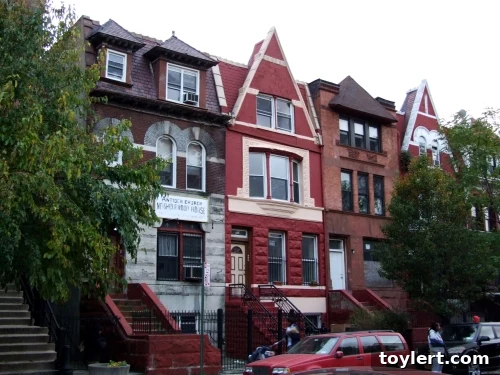
Brooklyn’s Enduring Charm: Exploring the Iconic Row Houses
Brooklyn, a borough celebrated for its vibrant culture, diverse communities, and unmistakable character, owes much of its iconic visual identity to its magnificent row houses. These architectural gems stand as a testament to the borough’s rich history, offering a unique blend of timeless elegance and urban functionality. Often referred to collectively as “brownstones,” a nod to their most popular building material, these residences are more than just buildings; they are the very fabric of Brooklyn, telling stories of generations, architectural evolution, and the enduring appeal of communal city living.
Every street lined with these cohesive yet distinct structures paints a picture of Brooklyn, one building at a time. From the tree-lined avenues of Park Slope to the historic blocks of Brooklyn Heights, and through the revitalized streets of Bushwick and Bedford-Stuyvesant, row houses define the residential landscape. They invite residents and visitors alike to step back in time while simultaneously embracing the dynamic energy of modern Brooklyn life. This exploration delves into what makes Brooklyn’s row houses so special, examining their history, architectural diversity, and their profound impact on the borough’s cultural and social tapestry.
The Architectural Signature of Brooklyn: What Defines a Row House?
At its core, a row house is a type of urban dwelling that shares one or more common walls with adjacent houses, forming a continuous row along a street. This design optimizes land use in densely populated areas, making it a highly efficient and popular housing solution during periods of rapid urban expansion. In Brooklyn, however, row houses evolved into something far more sophisticated than mere functional units. They became canvases for intricate architectural styles, each contributing to a streetscape that is both harmonious and visually engaging.
Typically, Brooklyn row houses are narrow, multi-story structures (often three to four stories) with front stoops leading up to the main entrance. These stoops are not just entryways; they serve as semi-public spaces, fostering neighborly interactions and providing a quintessential urban perch for observation. The materials used vary, but the famous brownstone, a reddish-brown sandstone, gave many of these homes their characteristic warmth and rich texture. Other materials include brick, limestone, and even wood, reflecting the availability of resources and popular styles of different eras.
The interior layouts of row houses often follow a classic pattern, with living and dining areas on the main floor (parlor floor), kitchens sometimes in the rear or garden level, and bedrooms on the upper floors. These homes were designed for both grandeur and practicality, often featuring high ceilings, ornate fireplaces, decorative moldings, and large windows that flood the interiors with natural light. The deep lots often include private back gardens, offering a tranquil escape from the bustling city streets—a highly coveted amenity in urban environments.
A Journey Through Time: The History of Brooklyn’s Row Houses
The story of Brooklyn’s row houses is intrinsically linked to the borough’s explosive growth in the 19th and early 20th centuries. As New York City expanded and transportation improved (with the advent of streetcars and, eventually, the subway), Brooklyn transformed from a collection of rural towns into a thriving urban center. Developers and builders sought efficient and attractive housing solutions to accommodate the influx of new residents, leading to the proliferation of row houses.
The earliest row houses, emerging in the late 18th and early 19th centuries, often reflected the Federal and then the Greek Revival styles. These were characterized by elegant simplicity, symmetrical facades, and classical details. As the century progressed, architectural tastes shifted, embracing the more elaborate and picturesque styles of the Victorian era. The mid-19th century saw the rise of the Italianate style, popular for its ornate cornices, hooded windows, and decorative ironwork. These homes often featured high stoops and grand entrances, projecting an air of prosperity and sophistication.
Towards the latter half of the 19th century, the Neo-Grec style, with its geometric patterns and incised lines, became prominent, followed by the Romanesque Revival, identifiable by its rough-faced stone, round arches, and often massive, imposing presence. The late Victorian era also brought the Queen Anne and Renaissance Revival styles, introducing turrets, varied textures, and more eclectic ornamentation. Each style contributed a distinct flavor to Brooklyn’s streetscapes, creating a rich tapestry of historical design that continues to captivate today.
These buildings were not just homes; they were symbols of a burgeoning middle class, a testament to Brooklyn’s aspiration and growth. Many were built speculatively by developers who understood the growing demand for elegant and well-appointed urban housing. The consistency of their design along blocks created a strong sense of place and community, defining neighborhoods that would become famous for their architectural beauty.
Diverse Styles and Enduring Beauty
The architectural diversity within Brooklyn’s row houses is truly remarkable. While “brownstone” often serves as a blanket term, a closer look reveals a fascinating array of styles, each with its own unique characteristics and historical context:
- Federal Style (c. 1790-1830): Characterized by understated elegance, simple facades, and often dormer windows. These early homes reflect a more restrained aesthetic.
- Greek Revival (c. 1830-1860): Drawing inspiration from ancient Greek temples, these houses feature strong classical elements, such as stately columns or pilasters flanking the entrance, and intricate door surrounds.
- Italianate (c. 1850-1880): Known for their elaborate cornices with heavy brackets, tall arched or hooded windows, and ornamental ironwork. These homes often exude a sense of grandeur and romanticism.
- Neo-Grec (c. 1870-1890): A more rigid and geometric interpretation of classical forms, featuring incised ornamentation, strong horizontal and vertical lines, and a less flamboyant facade than Italianate homes.
- Romanesque Revival (c. 1880-1900): Influenced by medieval European architecture, these homes showcase rough-faced stone (often sandstone), rounded arches over windows and doorways, and a robust, sometimes monumental, appearance.
- Queen Anne (c. 1880-1910): More playful and eclectic, Queen Anne row houses often feature varied textures, projecting bays, turrets, and intricate woodwork, breaking away from the strict symmetry of earlier styles.
- Renaissance Revival (c. 1890-1920): Marked by a return to classical Italian Renaissance principles, these homes often have rusticated lower levels, smooth upper stories, and classical motifs, imparting a sense of dignified elegance.
This rich architectural tapestry makes a stroll through Brooklyn’s historic districts a continuous lesson in urban design and period aesthetics. Each block tells a different story, revealing the shifting preferences and craftsmanship of bygone eras, yet all contribute to a cohesive and distinctly Brooklyn identity.
The Enduring Appeal: Why Brooklyn Row Houses Remain Highly Coveted
Despite the passage of time and ever-evolving urban landscapes, Brooklyn’s row houses continue to be among the most desirable properties in New York City. Their enduring appeal stems from a combination of factors that resonate deeply with modern urban dwellers seeking character, community, and connection.
Firstly, the sheer aesthetic beauty and historical authenticity are unmatched. Owning a piece of history, a home with intricate details and a story embedded in its very walls, offers a unique sense of place that contemporary buildings often struggle to replicate. The craftsmanship, the quality of materials, and the thoughtful design of these homes stand in stark contrast to the mass-produced housing of newer developments.
Secondly, row houses foster a distinct sense of community. The shared walls, the front stoops where neighbors gather, and the compact, walkable streetscapes encourage interaction and a feeling of belonging. Unlike more isolated suburban homes or impersonal high-rise apartments, row house living often means knowing your neighbors, participating in block parties, and experiencing a vibrant local culture right outside your door. This human-scale urbanism is a precious commodity in a large metropolis.
Moreover, the internal layouts of these homes often provide a generous amount of living space compared to many modern apartments, spread across multiple floors, allowing for privacy and distinct living zones. The presence of private gardens offers a personal green oasis, a rare luxury in the city. For many, these homes represent the ideal balance between urban convenience and a touch of suburban tranquility.
Finally, row houses are considered sound investments. Their historical significance, prime locations in desirable neighborhoods, and limited supply ensure their value tends to appreciate steadily. They are not just homes; they are tangible assets deeply woven into the fabric of one of the world’s most dynamic cities, offering both a unique lifestyle and a secure financial future.
Preserving the Legacy: Challenges and Modern Adaptations
While the allure of Brooklyn’s row houses is undeniable, preserving these historic structures for future generations comes with its own set of challenges. Aging infrastructure, the need for modern amenities, and the high cost of maintenance and restoration require careful consideration and significant investment. Many row houses are located within historic districts, meaning renovations must adhere to strict guidelines to maintain their architectural integrity, adding another layer of complexity.
However, the dedication to preserving these homes is strong. Owners, local historical societies, and community organizations work tirelessly to restore facades, meticulously repair original details, and ensure that new additions or alterations are in harmony with the building’s historical character. This commitment ensures that the streetscapes retain their timeless charm while adapting to contemporary needs.
Modern adaptations often involve sensitive interior renovations that blend historical elements with contemporary design and functionality. Updating kitchens and bathrooms, improving energy efficiency, and creating open-plan living spaces while respecting original details are common practices. Many row houses have also been divided into multi-family units over time, offering flexible living arrangements or rental income opportunities, further enhancing their adaptability.
The continuous efforts to preserve and thoughtfully modernize these homes highlight their enduring value, not just as structures but as living pieces of Brooklyn’s heritage. They represent a successful symbiosis of past and present, maintaining their historical soul while offering comfortable, stylish, and sustainable urban living for today’s residents.
Conclusion: The Soul of Brooklyn, Brick by Brick
Brooklyn’s row houses are far more than just buildings; they are the architectural soul of the borough, embodying its history, its aspirations, and its enduring appeal. Each stoop, each ornate detail, each shared wall tells a story of community, resilience, and architectural artistry. From the diverse styles that chronicle a century of urban growth to the vibrant neighborhoods they anchor, these homes offer a unique and highly coveted way of life.
They remind us that true beauty often lies in history and craftsmanship, and that urban living can be rich with character, connection, and charm. As Brooklyn continues to evolve, its iconic row houses remain a constant, a beautiful testament to a timeless architectural legacy, standing proudly, one building at a time, to define the very essence of this beloved New York City borough.