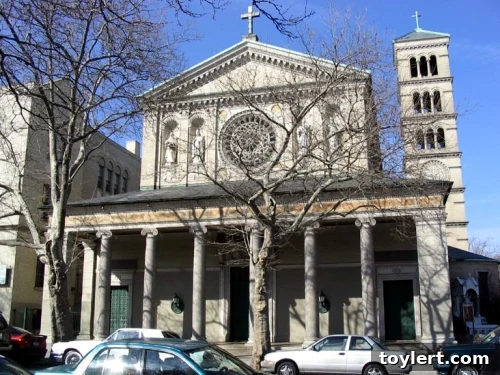
(Photo: Bridge and Tunnel Club)
St. Gregory the Great R.C. Church: A Crown Heights Architectural Gem
Brooklyn, New York, is a borough rich in history and architectural marvels, and among its most prominent examples stands St. Gregory the Great Roman Catholic Church. Located majestically at 999 St. John’s Place in the vibrant Crown Heights neighborhood, this edifice is more than just a place of worship; it is a significant historical landmark, a testament to enduring faith, and a pivotal piece of the area’s urban fabric. Its distinctive design and storied past make it a captivating subject for both architectural enthusiasts and those interested in Brooklyn’s cultural heritage.
A Beacon of Faith: The Genesis of St. Gregory the Great
The story of St. Gregory the Great R.C. Church begins in the early 20th century, a period of rapid growth and transformation for Brooklyn. As immigrants, particularly Irish Catholics, flocked to the burgeoning neighborhoods of Crown Heights, the need for spiritual centers became increasingly apparent. To meet the demands of a growing congregation, the Diocese of Brooklyn established St. Gregory the Great Parish in 1906. Initially, services were held in temporary locations, but the vision for a grand, permanent church building quickly took shape, reflecting the community’s prosperity and devotion.
Before the iconic church structure we see today, the parish first constructed a rectory in 1913 and then a parochial school in 1909, demonstrating a holistic approach to serving the community’s spiritual and educational needs. These early developments laid the groundwork for what would become a formidable religious and social complex, deeply embedded within the community life of Crown Heights. The decision to invest in such substantial infrastructure signaled a long-term commitment to the neighborhood and its residents.
Raymond F. Almirall: The Visionary Architect
The architectural genius behind St. Gregory the Great R.C. Church was Raymond F. Almirall, a distinguished American architect known for his diverse portfolio across New York City. Almirall’s work often combined classical grandeur with practical functionality, and St. Gregory’s stands as one of his most celebrated ecclesiastical designs. His choice of the Lombard Romanesque Revival style for the church was a deliberate one, evoking the ancient ecclesiastical architecture of northern Italy, characterized by its robust brickwork, round arches, and often twin-towered facades. This style offered a sense of permanence and tradition, perfectly suited for a burgeoning Catholic parish.
Construction of the main church building commenced in 1916, with the cornerstone laid amidst great ceremony. The dedication followed swiftly in 1917, marking the official opening of this magnificent structure. Almirall’s design was not merely about aesthetic appeal; it was about creating a space that inspired awe and reverence, capable of accommodating a large and growing congregation while reflecting the dignity and spiritual importance of its purpose. His mastery is evident in every detail, from the grand scale to the intricate ornamentation.
An Architectural Masterpiece: Exploring Its Distinctive Features
St. Gregory the Great R.C. Church is a stunning example of Lombard Romanesque Revival architecture, instantly recognizable by its striking exterior. The church is predominantly constructed of reddish-brown brick, meticulously laid to create intricate patterns and textures that add depth and character to its facade. The most prominent features are its symmetrical twin towers, which rise majestically above the streetscape, crowned with elegant tiled roofs. These towers serve as both a visual landmark and a symbolic representation of the church’s enduring presence in Crown Heights.
Upon closer inspection, visitors are treated to an array of elaborate details that speak to Almirall’s design prowess. Terracotta ornamentation adorns various parts of the exterior, including decorative cornices, capitals, and relief panels, adding a layer of sophisticated artistry. The main entrance is framed by a grand, arched portal, featuring rich detailing and robust columns. Above the entrance, a magnificent rose window bathes the narthex in kaleidoscopic light, a common feature in Romanesque and Gothic cathedrals designed to inspire spiritual contemplation.
The interior of St. Gregory the Great is equally breathtaking. The expansive nave is supported by impressive arches and columns, guiding the eye towards the main altar. The ceiling, often featuring intricate patterns or barrel vaulting, contributes to the grand scale of the space. Perhaps one of the most celebrated interior features is its collection of stained-glass windows. Many of these exquisite pieces were crafted by Charles J. Connick, a renowned American stained-glass artist whose work graces some of the most prestigious churches and cathedrals across the United States, including St. Patrick’s Cathedral in Manhattan. These windows depict various biblical scenes and saints, filling the interior with vibrant, ethereal light that changes with the time of day, creating an ever-evolving spiritual atmosphere.
Further enhancing the interior’s beauty are the marble altars, meticulously carved and adorned, serving as focal points for worship and ceremony. Mosaics, often depicting religious symbols or figures, add another dimension of artistry, reflecting traditional ecclesiastical decoration. Every element within the church, from the pews to the Stations of the Cross, has been thoughtfully designed to create an environment conducive to prayer, reflection, and community gathering.
A Cornerstone of the Crown Heights Community
Beyond its architectural significance, St. Gregory the Great R.C. Church has always been a vital social and spiritual hub for the Crown Heights neighborhood. For over a century, it has served as a place of solace, celebration, and community outreach. Initially established to cater to the Irish Catholic population, the parish has evolved with the changing demographics of Crown Heights, embracing diverse cultures and ethnicities while maintaining its core mission of faith and service.
The church’s influence extends far beyond weekly services. Its parochial school has educated generations of local children, instilling values and providing a solid academic foundation. Through various ministries and outreach programs, St. Gregory the Great has consistently supported its community, offering assistance to those in need, fostering social connections, and providing a stable anchor in a dynamic urban environment. It has witnessed countless baptisms, weddings, and funerals, marking the significant milestones in the lives of thousands of Brooklynites.
Preserving a Legacy: St. Gregory the Great Today
Today, St. Gregory the Great R.C. Church remains an active and vibrant parish, continuing its legacy of spiritual guidance and community engagement. Its architectural grandeur and historical importance have earned it a rightful place within the National Register of Historic Places, as part of the broader Crown Heights North Historic District. This designation helps ensure its preservation for future generations, recognizing its immense cultural and architectural value.
Efforts to maintain and restore this historic edifice are ongoing, reflecting the community’s commitment to protecting its heritage. The church stands as a testament to the vision of its founders, the skill of its architect, and the enduring faith of its parishioners. It serves as a reminder of Brooklyn’s rich past and its vibrant present, inviting all who pass by to admire its beauty and reflect on its profound impact.
For visitors and residents alike, St. Gregory the Great R.C. Church at 999 St. John’s Place offers a compelling glimpse into Brooklyn’s architectural splendor and a profound sense of its historical narrative. It is a true gem, anchoring the Crown Heights landscape and continuing to inspire those who step through its hallowed doors.