905-907 Broadway: A Historic Mixed-Use Marvel by Architect Theobald Engelhardt in Bushwick, Brooklyn
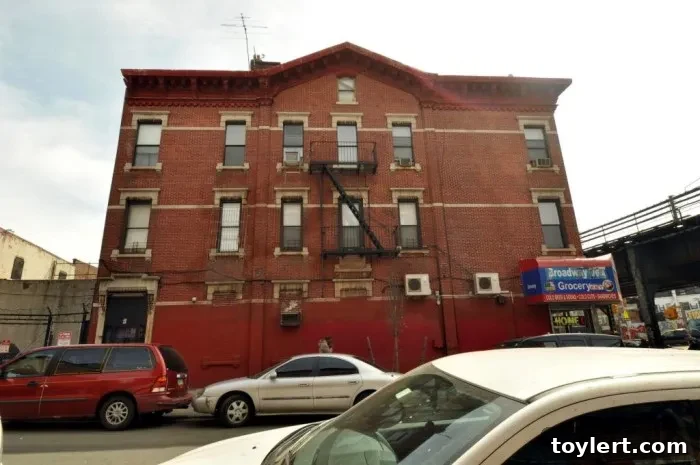
Brooklyn, a borough celebrated for its rich tapestry of history and diverse architectural styles, presents countless opportunities for discovery, one magnificent building at a time. Among its many treasures, the address 905-907 Broadway in the vibrant neighborhood of Bushwick stands as a compelling testament to the borough’s late 19th-century development. This mixed-use commercial and residential edifice is not merely a structure of bricks and mortar; it is a living piece of Brooklyn’s past, meticulously crafted by one of the era’s most influential architects, Theobald Engelhardt.
This article delves into the significance of 905-907 Broadway, exploring its architectural brilliance, its historical context within Bushwick, and the enduring legacy of its visionary designer. It offers a glimpse into how such buildings were conceived to cater to the burgeoning urban landscape, blending practicality with a distinctive aesthetic that continues to captivate onlookers today.
The Architectural Vision Behind 905-907 Broadway
Constructed during a pivotal period of growth in Brooklyn, 905-907 Broadway exemplifies the intelligent urban planning strategies of its time. Designed to house both commercial enterprises at street level and residential units above, it perfectly encapsulated the spirit of self-sufficient urban living. This multi-functional approach ensured that communities had access to local services and shops within walking distance, fostering a cohesive neighborhood environment where life and commerce intertwined seamlessly.
The architectural style of 905-907 Broadway, characteristic of Engelhardt’s work, likely incorporates robust and decorative elements popular in the late 19th and early 20th centuries. While specific details may vary, one can often find influences of the Romanesque Revival or Neo-Renaissance styles, characterized by sturdy brickwork, ornate cornices, distinctively arched windows, and possibly decorative stone carvings. These features were not merely ornamental; they conveyed a sense of permanence and grandeur, reflecting the aspirations of the rapidly developing city. Engelhardt’s skill lay in his ability to imbue everyday commercial and residential buildings with a dignified aesthetic, making them integral to the visual identity of their respective neighborhoods.
The careful consideration of materials and craftsmanship is evident in structures of this vintage. High-quality brick, often laid in intricate patterns, along with durable stone accents, ensured longevity and structural integrity. The fenestration, or arrangement of windows, would have been designed to maximize natural light for both the commercial spaces below and the residential apartments above, a crucial aspect of urban design long before modern climate control systems.
The Enduring Legacy of Theobald Engelhardt, Master Architect of Brooklyn
The name Theobald Engelhardt is etched into the very fabric of Brooklyn’s architectural history. A German immigrant, Engelhardt established his architectural practice in Brooklyn and became an exceptionally prolific designer, credited with hundreds of buildings across the borough. His portfolio spanned a wide array of structures, including schools, churches, stately commercial blocks, and numerous residential buildings, each bearing his hallmark of quality and thoughtful design.
Engelhardt’s influence was particularly profound in neighborhoods like Bushwick, Williamsburg, and Greenpoint, where his designs shaped entire streetscapes. He possessed a remarkable ability to blend classical architectural principles with practical urban requirements, creating buildings that were both visually appealing and highly functional. His work is characterized by its solid construction, meticulous detailing, and a timeless elegance that transcends passing trends. This commitment to enduring quality is precisely why many of his buildings, including 905-907 Broadway, continue to stand as cherished landmarks today, contributing significantly to Brooklyn’s unique architectural narrative.
His designs often reflect a keen understanding of scale and context, ensuring that his buildings complemented their surroundings while simultaneously making a distinct statement. This mastery allowed him to produce a coherent yet diverse body of work that collectively tells the story of Brooklyn’s growth from a collection of distinct towns into a bustling metropolis. Engelhardt was more than an architect; he was a city builder, whose vision helped lay the groundwork for the Brooklyn we know and admire.
Bushwick’s Historical Pulse: The Neighborhood Context
To fully appreciate the significance of 905-907 Broadway, one must contextualize it within the historical evolution of Bushwick. In the late 19th and early 20th centuries, Bushwick was a thriving industrial and residential powerhouse, a vibrant melting pot of cultures, notably influenced by its large German immigrant population. The neighborhood hummed with activity, powered by its numerous breweries, factories, and a dense network of local businesses.
Broadway, then as now, served as a primary commercial artery, a bustling conduit connecting residents to essential services, employment opportunities, and burgeoning social hubs. Buildings like 905-907 Broadway were central to this dynamic urban ecosystem. They embodied the economic vitality and social cohesion of Bushwick, reflecting the aspirations of a community undergoing rapid expansion and modernization. The presence of such prominent mixed-use structures along Broadway underscored the neighborhood’s self-sufficiency and its robust commercial life.
The ground-floor commercial spaces would have housed a diverse array of businesses: from tailors and apothecaries to groceries and professional offices, all catering to the immediate needs of the local populace. Above these bustling shops, families and individuals found convenient and often spacious living quarters, creating a lively vertical community. This proximity fostered strong local bonds, where residents frequently interacted with the shopkeepers and entrepreneurs who formed the backbone of their daily lives.
Daily Life and Commerce: A Century Ago at 905-907 Broadway
One can imagine the daily rhythms that once animated 905-907 Broadway. In the early mornings, residents would emerge from their apartments, perhaps stopping at a bakery on the ground floor for fresh bread before embarking on their day. Throughout the day, the commercial spaces would have been alive with transactions, conversations, and the continuous flow of customers and goods. Deliveries would arrive, storefronts would display their wares, and the street outside would bustle with horse-drawn carriages and, later, early automobiles.
Evenings would usher in a different ambiance, as families returned to their homes, the aromas of cooking filling the stairwells, and the gas lamps—eventually electric lights—illuminating the grand facade. The design of the building itself facilitated this seamless integration of living and working. Residential units were typically designed with practicality and comfort in mind, often featuring high ceilings, generous windows for natural light and ventilation, and functional layouts suitable for urban families. The commercial units, conversely, were equipped with large display windows and easily accessible entrances, designed to attract and welcome patrons. This thoughtful integration of functions was not merely an architectural trend; it was a foundational principle of urban planning aimed at creating vibrant, walkable, and self-sustaining communities.
Preserving the Past: 905-907 Broadway in Contemporary Bushwick
Today, Bushwick has undergone significant revitalization, transforming into one of Brooklyn’s most sought-after and culturally rich neighborhoods. Yet, amidst the new developments and evolving urban landscape, buildings like 905-907 Broadway serve as indispensable links to its past. They ground the contemporary scene with historical depth, offering a tangible connection to the generations that shaped the area. While the specific businesses and demographics of residents may have shifted over the decades, the fundamental mixed-use character of the building often endures, adapting to meet the modern needs of the community.
The preservation of such historic structures is paramount to safeguarding Brooklyn’s unique identity. These buildings are not just inert constructions; they are eloquent storytellers, reminding us of the exceptional craftsmanship of bygone eras, the foresight of architects like Theobald Engelhardt, and the continuous narrative of our urban spaces. They are repositories of collective memory, contributing profoundly to the rich cultural tapestry of a borough that continually reinvents itself while steadfastly honoring its foundational roots. Protecting and appreciating architectural treasures such as 905-907 Broadway ensures that future generations will have the opportunity to experience and learn from the tangible history that makes Brooklyn so utterly compelling.
Conclusion: An Enduring Architectural Gem and Neighborhood Anchor
905-907 Broadway stands as a powerful testament to the enduring impact of thoughtful architecture and strategic urban planning. From its prime location on a bustling Bushwick thoroughfare to its elegant and practical design by the master architect Theobald Engelhardt, every element of this mixed-use building tells a compelling story of Brooklyn’s growth, resilience, and adaptability. It represents far more than a mere structure; it embodies the spirit of a community, a dynamic commercial hub, and a comfortable home for countless individuals and families across multiple generations.
As our urban environments continue their ceaseless evolution, buildings like 905-907 Broadway serve as invaluable reminders of our shared heritage and the profound importance of architectural preservation. They highlight how historic structures contribute immeasurably to the unique character, charm, and authenticity of our neighborhoods. Its continued presence in Bushwick enriches the streetscape, inspires a deeper appreciation for the architectural legacy that defines Brooklyn, and reminds us that the borough’s incredible story is indeed built, one magnificent building at a time.