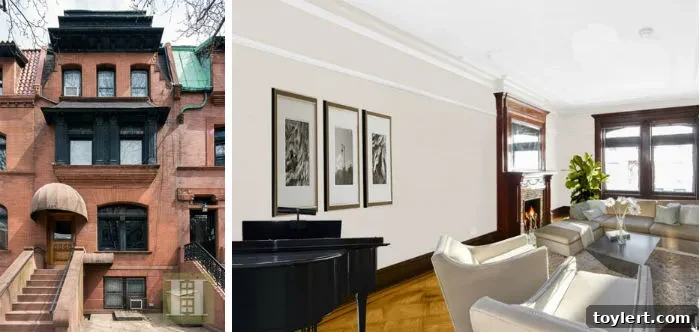
Historic Grandeur Unveiled: 495 4th Street – A Brooklyn Architectural Gem
Step Inside a Landmarked Masterpiece by Allen Brothers
Nestled within a distinguished row of homes designed by the celebrated architect-owners Allen Brothers in 1891, 495 4th Street stands as a testament to late 19th-century architectural prowess and enduring elegance. This landmarked brick house is not merely a residence; it is a piece of Brooklyn’s rich history, meticulously preserved and offering a rare glimpse into a bygone era of craftsmanship and design. With its broad Romanesque Revival style, characteristic of the entire block, this particular property distinguishes itself with an array of compelling features, both exterior and interior, that command attention and admiration.
The exterior of 495 4th Street immediately captures the eye, embodying the robust and stately characteristics of the Romanesque Revival movement. Yet, it goes beyond typical revivalism, showcasing an intriguing blend of influences. Its roof details, in particular, are remarkably unusual, presenting elements that subtly evoke a vaguely Japanese aesthetic over a dramatic stepped gable and a prominent rectangular oriel window. This unexpected fusion of styles speaks to a period of architectural experimentation and a desire for individuality, making this residence a truly unique specimen within its historic context. It’s a property that effortlessly marries historical significance with distinctive charm, promising an unparalleled living experience for the discerning buyer.
The Allen Brothers’ Legacy and Romanesque Revival Splendor
The year 1891 marked a period of significant urban development and architectural innovation in Brooklyn. The Allen Brothers, renowned for their contributions to the city’s streetscapes, left an indelible mark with their thoughtful and high-quality designs. At 495 4th Street, their vision for Romanesque Revival architecture is fully realized. This style, popular in the United States from the 1870s to the 1900s, drew inspiration from 11th and 12th-century Romanesque architecture, characterized by its substantial, often rusticated masonry, round arches, squat columns, and a sense of imposing solidity. However, American interpretations, often spearheaded by architects like H.H. Richardson, evolved to incorporate more ornate detailing and unique flourishes, a trend perfectly exemplified by this home.
The brickwork of 495 4th Street is exemplary, showcasing the rich texture and enduring quality that defines Romanesque Revival. The structural integrity is evident in its sturdy form, conveying a sense of permanence and grandeur. The focal point of its facade, beyond the robust brick, lies in the aforementioned roofline. The stepped gable, a feature that provides dynamic verticality and visual interest, is beautifully complemented by the rectangular oriel window. This cantilevered window not only adds an architectural flourish but also serves to expand interior space and provide enhanced views, a practical yet elegant design choice.
What truly sets this house apart, however, are those “vaguely Japanese” roof details. This subtle eclecticism, perhaps a nod to the growing global awareness and appreciation for diverse architectural traditions in the late 19th century, adds an exotic and sophisticated layer to the building’s otherwise traditional Romanesque Revival aesthetic. It suggests a progressive design sensibility, where architects were beginning to experiment with incorporating non-Western influences into their work, long before such fusion became commonplace. This particular detail is a quiet yet powerful statement of individuality and artistic vision.
A Journey Through Exquisite Interiors: Renaissance Revival and Neoclassical Harmony
Stepping inside 495 4th Street is like entering a meticulously preserved museum of period elegance. The interior design ethos gracefully transitions from the exterior’s Romanesque Revival might to a more refined and intricate blend of Renaissance Revival and Neoclassical styles. This combination speaks to the prevailing tastes of the era, where homeowners sought to infuse their residences with a sense of historical gravitas, classical beauty, and understated luxury. Every detail, from the grand fireplaces to the delicate inlaid floors, contributes to an atmosphere of timeless sophistication.
The house boasts a profusion of exquisitely detailed fireplaces, each serving as a stunning focal point in its respective room. These aren’t merely sources of warmth but works of art, often adorned with intricate carvings, mantels, and decorative elements, most notably the recurring motif of garlands. These garlands, a classic symbol in both Renaissance and Neoclassical art, represent triumph, honor, and festive abundance, meticulously carved into the wood or stone, adding a layer of sophisticated ornamentation. The craftsmanship displayed here speaks volumes about the original quality and investment made in this home.
Beyond the fireplaces, the woodwork throughout the house is exceptional, showcasing the richness and artistry synonymous with the Renaissance Revival period. From grand staircases to wainscoting and doorframes, the wood elements are not merely functional but integral to the aesthetic. The grain and finish of the timbers (likely oak or mahogany, popular choices for their durability and beauty) enhance the luxurious feel, often featuring the same delicate garland motifs or other classical carvings that unify the design language. This level of detail in woodwork is increasingly rare and highly prized in modern homes.
Underfoot, the beauty continues with stunning inlaid floors. These intricate parquetry patterns, often featuring contrasting woods arranged in geometric designs, demonstrate a high level of artisanal skill. Inlaid floors are not only beautiful but also incredibly durable, designed to withstand generations of use while retaining their visual appeal. They add depth, character, and a luxurious foundation to each room, reflecting the owner’s status and appreciation for fine details.
Adding to the period charm and functionality are the home’s distinctive doors. The presence of six-paneled doors is a hallmark of late 19th-century architecture, offering a classic and robust appearance. Furthermore, the inclusion of pocket doors speaks to an intelligent and flexible design approach. These doors, which slide seamlessly into wall cavities, allow for dynamic spatial configurations, enabling rooms to be opened up for grand entertaining or closed off for intimate privacy, all without encroaching on valuable floor space. Their smooth operation is a testament to the quality of their original installation and maintenance.
Versatility and Vision: A Home Designed for Modern Living and Investment
Currently configured as a double duplex, 495 4th Street offers immediate flexibility and significant income potential. A double duplex typically implies two independent duplex units, allowing for either multi-generational living, an owner-occupant with a substantial rental income, or even converting one unit for professional use. This setup is highly desirable in today’s urban real estate market, providing both spacious living arrangements and financial benefits.
However, the property’s immense potential extends beyond its current layout. The listing thoughtfully suggests an alternative, proposing that a buyer might consider transforming the home into a triplex over a garden floor rental. This configuration would maximize the property’s income-generating capabilities while providing a magnificent primary residence spanning multiple floors, potentially with direct access to a private garden oasis. The inclusion of an “alternate floor plan” in the listing is a proactive and valuable offering, demonstrating the property’s adaptability and inviting prospective owners to envision its full potential. Such a conversion would appeal to buyers seeking a blend of grand personal living space and a consistent, robust rental income from a separate, private unit.
Beyond these specific layouts, the very structure and historical significance of 495 4th Street present a unique opportunity for customization. Whether one dreams of restoring it to a majestic single-family mansion, maintaining its current income-producing setup, or embarking on the suggested triplex conversion, the bones of this home are exceptional. Its landmarked status ensures its architectural integrity will be preserved, adding to its long-term value and desirability as an investment in one of Brooklyn’s most coveted neighborhoods. The scale of the property, combined with its flexible floor plans, means it can cater to a diverse range of lifestyle needs, from a sprawling family home to a sophisticated residence with multiple income streams.
Embracing the Neighborhood: Life on 4th Street, Brooklyn
Located on 4th Street, this landmarked property enjoys the prestige and convenience of a truly prime Brooklyn location. While specific neighborhood boundaries can sometimes blur, a home of this caliber and vintage on 4th Street is ideally situated to benefit from the vibrancy and desirability of areas like Park Slope. Known for its picturesque brownstone-lined streets, leafy avenues, and a strong sense of community, Park Slope consistently ranks among New York City’s most sought-after neighborhoods.
Residents of 495 4th Street would find themselves mere moments away from an unparalleled array of amenities. Prospect Park, Brooklyn’s sprawling urban oasis designed by Olmsted and Vaux, offers acres of green space for recreation, relaxation, and cultural events. The neighborhood boasts an eclectic mix of independent boutiques, gourmet food shops, world-class restaurants, and charming cafes, catering to every taste and need. Excellent public and private schools, vibrant cultural institutions, and convenient access to multiple subway lines ensure that every aspect of urban living is easily accessible.
Living in such a historic and architecturally rich area means becoming part of a community that values its heritage and fosters a lively, engaging atmosphere. The tree-lined streets invite leisurely strolls, and the presence of landmarked homes like 495 4th Street contributes to the neighborhood’s enduring charm and stable property values. For those seeking an immersive Brooklyn experience, combining historic elegance with modern urban convenience, this address offers an exceptional lifestyle choice and a sound investment in a perpetually appreciating market.
A Timeless Investment in Brooklyn’s Enduring Legacy
In summation, 495 4th Street is more than just a house; it is a meticulously preserved piece of Brooklyn’s architectural narrative. From the striking Romanesque Revival facade with its unique, subtly Japanese-influenced roof details, a testament to the Allen Brothers’ innovative spirit, to the opulent Renaissance Revival and Neoclassical interiors featuring garland-adorned fireplaces, intricate woodwork, and bespoke inlaid floors, every element speaks of grandeur and historical significance. Its current double duplex configuration, coupled with the potential for conversion into a triplex over a garden rental, offers unparalleled versatility and investment potential. Situated in a highly desirable Brooklyn neighborhood, likely Park Slope, this landmarked property represents a rare opportunity to own a piece of history, an architectural gem that promises both an extraordinary lifestyle and enduring value.