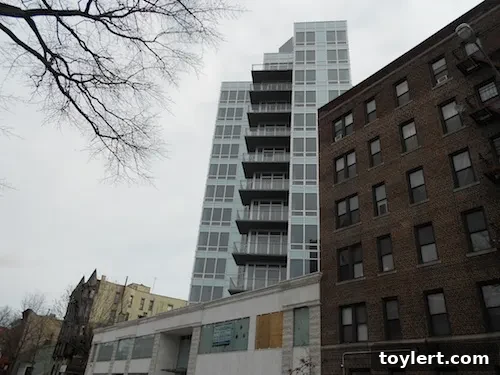
525 Clinton Avenue: A New Dawn for Clinton Hill’s Long-Stalled Development
The highly anticipated and long-stalled development at 525 Clinton Avenue in Clinton Hill, Brooklyn, is finally poised for a grand revival. After years of dormancy, marked by financial setbacks and community uncertainty, this prominent project has recently seen a dramatic shift in its fortunes. In a significant move in late February, an undisclosed buyer acquired the property, breathing new life into a site that had become a symbol of unrealized potential in one of Brooklyn’s most desirable neighborhoods.
Sources indicate that the building, a residential project envisioned to add valuable housing stock to the area, is reportedly already 80 percent complete. This critical stage of development suggests that the new owners are inheriting a structure largely formed, requiring primarily interior finishes, landscaping, and final inspections. The commitment to accelerate progress was further solidified last week when the developers successfully renewed the necessary building permits. This essential administrative step clears the path for construction workers to return to the site, and the expectation is that activity will soon resume in full force, transforming the once quiet site into a bustling hub of construction.
The Tumultuous History of 525 Clinton Avenue
The journey of 525 Clinton Avenue has been anything but smooth, earning it a reputation as one of Clinton Hill’s most talked-about and, at times, most frustrating developments. What began as an ambitious vision for modern living in a historic district quickly encountered significant hurdles, mirroring the broader challenges faced by the real estate market in the wake of economic downturns.
Over the years, the property has been mired in a series of financial and legal entanglements. It has been the subject of multiple foreclosure auctions, a clear indicator of the severe financial distress experienced by its previous developers. Each auction brought a flicker of hope that new ownership would stabilize the project, only for it to fall short repeatedly. The community, watching with bated breath, witnessed stop-work orders issued, effectively halting any progress and leaving the skeleton of a building to stand as a stark reminder of unfulfilled promises.
Media outlets, including Brownstoner, meticulously documented this ongoing saga, highlighting not only the financial woes but also the broader questions surrounding the project. There were discussions about whether 525 Clinton Avenue would genuinely contribute to affordable housing options in the area, a pressing concern in rapidly gentrifying Brooklyn neighborhoods. The property even gained an almost legendary status, referred to evocatively as “The Ghosts of 525 Clinton,” embodying the lingering questions and unresolved fate of the site.
These past challenges, from the initial foreclosure auctions (Brownstoner, Dec 2011; Brownstoner, Sep 2011) to stop-work orders (Brownstoner, Aug 2011) and debates over its affordability (Brownstoner, Nov 2009), have deeply ingrained 525 Clinton Avenue into the collective memory of the neighborhood. Each new update, however minor, was met with intense interest, underscoring the community’s desire to see this prominent site finally reach completion and fulfill its potential.
A New Vision and Renewed Momentum
The entry of the new, albeit anonymous, buyer marks a pivotal turning point for 525 Clinton Avenue. Their swift action in renewing building permits signals a clear intention to move forward decisively and complete the project. This move is particularly significant given the building’s advanced stage of completion. With 80 percent of the structure already in place, the remaining work will likely focus on interior finishes, systems installation, and exterior detailing—stages that can be completed relatively quickly once construction is fully underway.
The identity of the buyer, while currently undisclosed, is a subject of much speculation within Brooklyn real estate circles. Regardless of who they are, their acquisition signifies a renewed confidence in the Clinton Hill market and the inherent value of this particular site. The fresh capital and management are expected to inject the necessary momentum to push the development across the finish line, transforming the long-standing eyesore into a vibrant, contributing part of the neighborhood fabric. The renewal of permits, verifiable through official channels like the NYC Department of Buildings (NYC BISWeb), provides concrete evidence that this revival is not just a rumor but an official mandate.
Clinton Hill: A Coveted Brooklyn Enclave
The location of 525 Clinton Avenue is a key factor in its enduring appeal and the community’s keen interest. Clinton Hill stands as one of Brooklyn’s most picturesque and historically rich neighborhoods. Known for its stunning rows of meticulously preserved brownstones, tree-lined streets, and a distinctive architectural character that blends grandeur with a cozy, residential feel, Clinton Hill offers an unparalleled quality of life.
Residents enjoy a vibrant local scene with an eclectic mix of independent boutiques, charming cafes, and critically acclaimed restaurants along Myrtle Avenue and DeKalb Avenue. The neighborhood boasts a strong sense of community, evident in its numerous local events, farmers’ markets, and active block associations. Proximity to cultural institutions, academic centers like Pratt Institute, and expansive green spaces such as the iconic Fort Greene Park, further enhances its desirability.
Furthermore, Clinton Hill provides excellent connectivity to Manhattan and other parts of Brooklyn through various subway lines, making it an attractive location for commuters seeking a more serene residential environment without sacrificing urban convenience. The consistent demand for housing in this area underscores the immense potential of the 525 Clinton Avenue project. Its completion is expected to contribute to the continued vitality and growth of this already thriving community.
The Future Impact on the Local Real Estate Landscape
The successful completion and eventual occupancy of 525 Clinton Avenue will undoubtedly have a notable impact on the Clinton Hill real estate market. The addition of new, likely high-end, residential units will provide more options for prospective buyers or renters looking to move into this competitive neighborhood. Depending on the final design and marketing strategy, these units could range from luxury condominiums to upscale rental apartments, catering to the diverse and discerning demographic drawn to Brooklyn.
The project’s revival also signals a broader confidence in the Brooklyn real estate market, especially for areas with strong foundational appeal like Clinton Hill. It demonstrates that even projects with complex histories can find new life with the right investment and vision. This could inspire further development or revitalization efforts in the surrounding areas, reinforcing Clinton Hill’s status as a premium residential destination.
Beyond property values, the completion of 525 Clinton Avenue will contribute positively to the neighborhood’s aesthetics and economic activity. A fully occupied building means increased foot traffic, which benefits local businesses, shops, and restaurants, fostering a more robust local economy. It also signifies the removal of a long-standing construction site, enhancing the visual appeal of Clinton Avenue itself.
Looking Ahead: The Road to Completion
With permits renewed and a new owner at the helm, the path forward for 525 Clinton Avenue seems clearer than it has been in years. The immediate future will likely involve a flurry of activity as contractors mobilize and construction crews return to work. The community will be eagerly watching for signs of progress, anticipating the day when the building sheds its ‘stalled’ label and officially opens its doors.
The final product is expected to be a testament to the resilience of urban development and the enduring allure of Brooklyn. It will be fascinating to see how the new owners articulate their vision for the remaining 20% and the overall aesthetic and functional elements of the finished building. Will it integrate seamlessly with Clinton Hill’s historic charm, or will it stand as a modern counterpoint? These questions will soon be answered as construction accelerates.
The saga of 525 Clinton Avenue has been a long and winding one, but the recent developments signal a hopeful new chapter. What was once “The Song That Never Ends” (Brownstoner, Feb 2012) is now moving towards its much-anticipated crescendo, promising a significant addition to the vibrant fabric of Clinton Hill. This revival is not just about a building; it’s about the continued growth and evolution of one of Brooklyn’s most cherished neighborhoods. GMAP