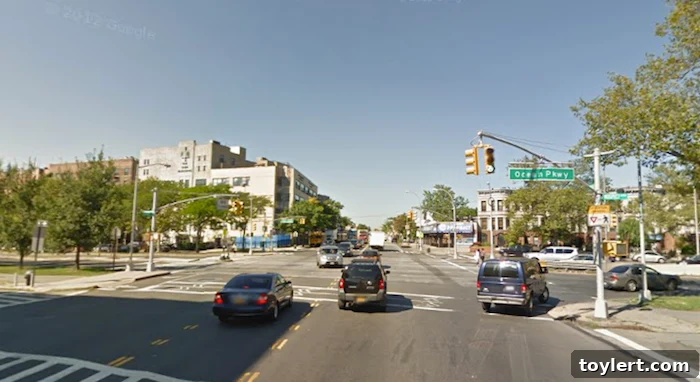
Transformative Safety Upgrades Greenlit for Brooklyn’s Dangerous Ocean Parkway Intersection
Following an impassioned and persistent community campaign, the New York State Department of Transportation (NYSDOT) has officially approved a comprehensive package of safety enhancements for the notoriously hazardous intersection of Ocean Parkway and Church Avenue in Brooklyn. This crucial decision comes in the wake of a tragic incident last June, where a 73-year-old woman lost her life after being struck by a semi-truck at this very corner, igniting a fervent push for change from local residents and advocacy groups.
The community’s unwavering commitment to making their streets safer was clearly demonstrated during last year’s Participatory Budgeting process. Residents collectively voted to allocate a significant $200,000 towards critical safety upgrades at this perilous intersection. Spearheaded by City Council Member Brad Lander, local leaders and concerned citizens subsequently rallied, submitting a powerful petition to the NYSDOT. Their demands were clear: implement a dedicated pedestrian safety island and undertake vital repairs to the damaged sidewalks and crosswalks spanning the wide, six-lane thoroughfare that is Ocean Parkway.
A Victory for Pedestrian Safety: Details of the Approved Measures
The NYSDOT’s recent approval marks a significant victory for pedestrian safety advocates. According to an email blast from Council Member Lander, the forthcoming safety measures are designed to drastically improve conditions for pedestrians and motorists alike. These include:
- A New Pedestrian Island: This central feature will serve as a crucial refuge for pedestrians, allowing them to cross the expansive roadway in two safer stages. The island will be equipped with new, synchronized traffic signals, specifically designed to give pedestrians adequate time to cross, and robust protective barriers to shield those waiting from active traffic lanes.
- High-Visibility Crosswalk Markings: Enhanced, brightly colored crosswalk markings will be installed to significantly increase their visibility to drivers, especially during adverse weather conditions, low light, or peak traffic hours, thereby reducing the risk of collisions.
- New Speed Limit Signs on Ocean Parkway: Clearer and more prominent speed limit signage along Ocean Parkway will reinforce appropriate driving speeds, which is a critical factor in reducing the severity of accidents and improving pedestrian survival rates in the event of a collision.
- “Traffic Signal Ahead” Signs along Prospect Expressway: These preemptive warning signs will be strategically placed to alert drivers approaching the intersection from the Prospect Expressway, allowing them ample time to adjust their speed and prepare for the upcoming traffic signal, minimizing abrupt braking and potential rear-end collisions.
Addressing Brooklyn’s Most Dangerous Intersections
This intersection, tragically highlighted by recent events, has long been identified as one of Brooklyn’s most dangerous hotspots. Data underscores the urgent need for these interventions: between 2009 and 2011 alone, Ocean Parkway witnessed six pedestrian fatalities – a grim statistic that surpassed any other road in the entire borough. This alarming fact was prominently featured in the Tri-State Transportation Campaign’s eye-opening “Most Dangerous Roads for Walking” report, which brought critical attention to the systemic issues plaguing urban infrastructure in the tri-state area.
The inherent design of Ocean Parkway, a wide, multi-lane arterial road, presents unique challenges for pedestrian safety. Its extensive width often encourages higher vehicle speeds, and the sheer volume of traffic, combined with the presence of commercial vehicles like semi-trucks, significantly increases the risk for vulnerable road users. Damaged sidewalks and faded crosswalks further exacerbate these dangers, creating an environment where pedestrians are frequently exposed to hazardous conditions. The approved upgrades aim to directly counteract these long-standing design flaws, transforming a segment of the parkway from a danger zone into a safer passage.
The Broader Context: Vision Zero and Safer Street Design
These localized improvements at Ocean Parkway and Church Avenue are not isolated incidents; they represent a tangible step forward within New York City’s broader Vision Zero initiative. Launched in 2014, Vision Zero is a commitment to eliminate all traffic fatalities and serious injuries, recognizing that traffic collisions are preventable and not inevitable accidents. The principles of Vision Zero advocate for a systemic approach to street safety, focusing on engineering, enforcement, education, and evaluation.
The addition of a pedestrian island, improved signage, and high-visibility markings directly aligns with Vision Zero’s core tenets of safe street design. Pedestrian islands, for instance, are a proven traffic calming measure. They not only reduce the distance pedestrians must traverse in live traffic but also compel drivers to slow down and be more aware of their surroundings. Coupled with updated signals, these islands create predictable and protected crossing opportunities. Similarly, clearer speed limit signs and advance warning signals contribute to a safer environment by managing driver behavior and reducing the potential for high-impact collisions, where even a small reduction in speed can dramatically increase a pedestrian’s chance of survival.
This project also echoes calls for “complete streets” – an urban planning and design approach that enables safe access for all users, including pedestrians, bicyclists, motorists, and transit riders of all ages and abilities. By focusing on creating infrastructure that prioritizes the most vulnerable road users, cities can foster healthier, more livable communities. The upgrades at this intersection serve as a model for how targeted interventions, fueled by community advocacy, can bring about meaningful change in even the most challenging urban environments.
Looking Ahead: Construction and Continued Vigilance
The approval from the NYSDOT sets the stage for rapid implementation, with construction anticipated to commence as early as this fall. While the exact timeline will depend on various logistical factors, the swift progression from community advocacy to official approval and imminent construction speaks volumes about the urgency and recognized need for these vital safety measures. Residents and commuters can look forward to a significant transformation of this critical intersection in the coming months.
However, the work does not end with construction. The success of these improvements will require ongoing monitoring and evaluation to ensure their effectiveness. It will be crucial for community leaders, transportation officials, and local residents to continue collaborating, observing the changes, and advocating for any further adjustments or complementary measures that may be necessary. This project is a testament to the power of collective action and serves as a hopeful precedent for other communities striving to enhance safety on their streets.
A Beacon of Hope for Safer Streets in Brooklyn
The tragic loss of life at Ocean Parkway and Church Avenue galvanized a community to demand change, and their collective voice has been heard. The NYSDOT’s approval of these extensive safety upgrades is more than just a bureaucratic decision; it is a reaffirmation of the value of human life and the importance of responsive governance. This victory for pedestrian safety represents a significant step towards a future where Brooklyn’s streets are safer, more accessible, and truly designed for all who use them.
This initiative will not only mitigate immediate dangers but also instill a renewed sense of security for pedestrians, cyclists, and drivers traversing one of Brooklyn’s most vital, yet historically perilous, corridors. It stands as a powerful example of how grassroots efforts, combined with strategic leadership, can transform challenging urban landscapes into spaces where safety and community well-being are paramount. The enhancements at this intersection embody hope for a future where such tragedies become a relic of the past, replaced by infrastructure that truly protects its citizens.