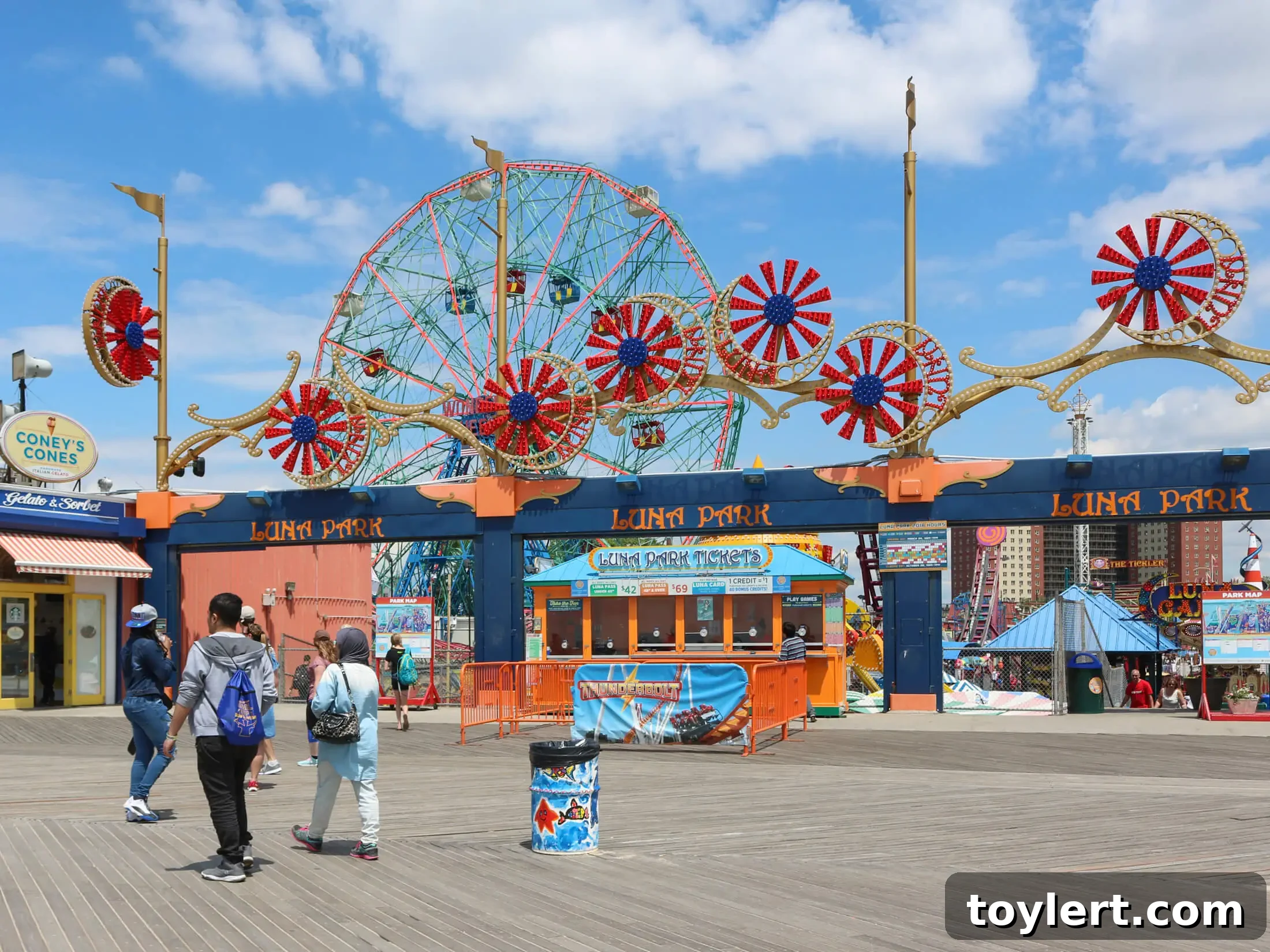
Coney Island’s Luna Park: Navigating Unprecedented Challenges and Charting a Path Forward
Coney Island, often hailed as the “People’s Playground,” holds a cherished place in the hearts of New Yorkers and tourists alike. Its vibrant boardwalk, iconic rides, and rich history make it a cornerstone of Brooklyn’s cultural landscape. However, even legendary destinations face their share of trials. In the wake of the severe economic downturn of the late 2000s, the city recognized the urgent need for a robust revitalization effort to breathe new life into this historic amusement district. It was at this critical juncture that the esteemed Zamperla family, renowned globally for their expertise in the amusement park industry, was chosen to spearhead the ambitious project of rebuilding Coney Island’s amusement park infrastructure.
Under the stewardship of the Zamperla family’s company, Central Amusement International (CAI), Luna Park was reborn, opening its gates to enthusiastic crowds and quickly re-establishing Coney Island as a premier entertainment destination. For a decade, Luna Park thrived, becoming a symbol of resilience and successful urban rejuvenation. It attracted millions of visitors annually, generated significant revenue, and provided countless jobs, injecting much-needed vitality into the local economy. The park’s success transformed the area, drawing in new businesses and restoring the vibrant energy that had defined Coney Island for generations.
A Decade of Triumph: The Rebirth of Luna Park
The selection of the Zamperla family to manage and develop a significant portion of Coney Island’s amusement district was a strategic move by New York City. Facing a landscape that had seen better days, the city sought a partner with both a deep understanding of the amusement industry and a vision for long-term growth. The Zamperlas, with their Italian heritage and a legacy of creating world-class attractions, brought precisely that expertise. Their commitment to preserving the nostalgic charm of Coney Island while introducing modern, thrilling rides was evident from day one.
The transformation was remarkable. Luna Park, named after the historic amusement park that captivated audiences in the early 20th century, quickly became the beating heart of Coney Island once again. It wasn’t just about installing new rides; it was about recreating an experience. CAI invested heavily in state-of-the-art attractions, meticulous landscaping, and improved guest services, all while honoring the unique spirit of the boardwalk. This decade saw a consistent upward trajectory in visitor numbers, critical acclaim, and positive economic impact for the surrounding Brooklyn community. The park’s diverse offerings, from exhilarating roller coasters to family-friendly carousels, ensured that there was something for everyone, cementing its status as a must-visit destination in New York City.
The Unforeseen Storm: COVID-19’s Devastating Impact
However, the decade of growth and prosperity came to an abrupt and unforeseen halt in 2020. The arrival of the COVID-19 pandemic unleashed an unprecedented global crisis, leading to widespread shutdowns, travel restrictions, and profound shifts in public health protocols. For seasonal businesses heavily reliant on large gatherings and close proximity, like amusement parks, the implications were catastrophic. Luna Park, along with the rest of Coney Island’s attractions, was forced to remain closed for the entire summer season, a period that traditionally accounts for the vast majority of its annual revenue.
The financial ramifications of this closure were immense and immediate. Central Amusement International (CAI), the operator of Luna Park, found itself grappling with millions of dollars in losses. These weren’t merely theoretical figures; they represented lost ticket sales, concession revenue, merchandise profits, and the significant operational costs associated with maintaining a large park even when it’s not open. The closure also had a cascading effect on hundreds of seasonal employees who rely on the park for their livelihoods, as well as on countless small businesses along the Coney Island boardwalk that depend on the foot traffic generated by Luna Park’s visitors.
A Crisis Beyond Compare: COVID-19 vs. Hurricane Sandy
Tracee Zamperla, a prominent figure within the family business, encapsulated the gravity of the situation in an interview with Brooklyn Paper. Her words underscored the unparalleled nature of the pandemic’s blow:
“Unfortunately, Hurricane Sandy was pretty bad, but this is on a different level.”
This statement highlights a crucial distinction. While Hurricane Sandy in 2012 inflicted severe physical damage and led to significant rebuilding efforts, its impact, though devastating, was primarily a challenge of physical repair and a temporary disruption. The park could assess the damage, plan for reconstruction, and anticipate a eventual reopening. The COVID-19 crisis, by contrast, presented a far more insidious and prolonged threat. It wasn’t just about structural damage; it was about an invisible virus, ever-evolving public health mandates, and a profound change in consumer behavior and confidence. The uncertainty surrounding reopening dates, capacity restrictions, and the public’s willingness to return to crowded venues created a complex web of challenges that extended far beyond a typical natural disaster.
The prolonged closure meant not only immediate revenue loss but also a loss of momentum, the erosion of seasonal employment opportunities, and a deep sense of instability for an industry built on bringing people together. The comparison underscores the unique and profound nature of the pandemic’s financial and operational strain on Luna Park and the broader amusement sector.
Broader Implications for Coney Island and NYC Tourism
The financial struggles of Luna Park reverberated throughout the entire Coney Island ecosystem and had significant implications for New York City’s vital tourism industry. Coney Island is not just an amusement park; it’s a vibrant destination comprising dozens of independent businesses, from iconic eateries like Nathan’s Famous to various souvenir shops, arcade games, and other attractions. When Luna Park remains closed, the ripple effect is immediate and detrimental. Fewer visitors mean less foot traffic, leading to plummeting sales for these local businesses, many of which are small, family-owned enterprises struggling to stay afloat.
Furthermore, Coney Island acts as a powerful magnet for tourism in Brooklyn and, by extension, for New York City. It attracts visitors from across the globe, contributing significantly to the city’s overall economic health. The closure of its flagship attraction represented a significant void in the city’s tourism offerings, impacting travel agencies, hotels, and transportation services. The absence of its summer vibrancy meant a loss of tax revenue for the city and state, compounding the economic challenges faced at every level of governance.
Resilience and the Road Ahead: Strategies for Recovery
Despite the immense difficulties, the spirit of Coney Island and the resolve of the Zamperla family remain unbroken. The history of Coney Island itself is a testament to its enduring resilience, having overcome numerous challenges, fires, economic downturns, and storms throughout its existence. The path to recovery for Luna Park and the broader amusement industry will undoubtedly be complex, requiring innovative strategies, adaptive operations, and strong community and governmental support.
Adapting to a New Reality
As the world slowly emerges from the pandemic, amusement parks like Luna Park are faced with the challenge of adapting to a “new normal.” This includes implementing stringent health and safety protocols, such as enhanced cleaning regimes, social distancing measures, capacity limits, and potentially new technologies for ticketing and crowd management. The focus will be on ensuring guest confidence and providing an environment where visitors feel safe and comfortable enjoying the thrills and joys of the park.
Community Support and Government Aid
The long-term viability of Luna Park and its neighboring businesses will also depend heavily on ongoing support from the local community and various levels of government. Financial aid packages, recovery grants, and favorable lease extensions can provide a critical lifeline during this rebuilding phase. Collaborative efforts between park operators, city officials, and local business associations will be essential to coordinate marketing campaigns that encourage visitors to return and to ensure that Coney Island remains an attractive and accessible destination for all.
The Enduring Spirit of Coney Island
Coney Island is more than just a collection of rides and attractions; it is a symbol of American entertainment, a place where generations have created cherished memories, and a vibrant cultural hub. The Zamperla family’s commitment to its revitalization over the past decade has been instrumental in preserving this legacy. While the challenges posed by the COVID-19 pandemic have been unprecedented, the inherent resilience of Coney Island, coupled with dedicated efforts from its operators and community, offers a strong promise for its future.
The return of laughter, the roar of the roller coasters, and the vibrant glow of the lights along the boardwalk are eagerly anticipated. Luna Park’s journey through this crisis serves as a powerful narrative of survival, adaptation, and the enduring human desire for joy and communal experience. As the world heals, Coney Island stands ready to reclaim its title as the ultimate “People’s Playground,” a beacon of hope and happiness in the heart of Brooklyn.