The Battle for Sunset Park: Unpacking the Industry City Rezoning Controversy
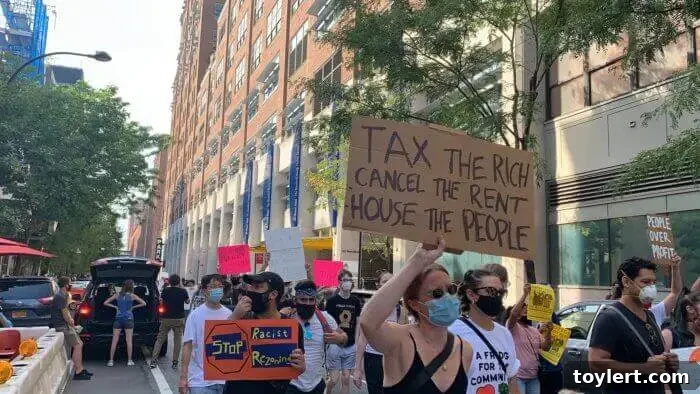
The vibrant, historically working-class neighborhood of Sunset Park, Brooklyn, finds itself at the epicenter of a heated urban development debate. More than a hundred determined protesters recently converged outside the residence of City Council Speaker Corey Johnson, sending a clear, unequivocal message: shut down the controversial Industry City rezoning proposal. This powerful demonstration, held just a week before the City Council’s crucial public hearing, underscored the deep-seated anxieties and demands for self-determination within the community.
Organized by local community groups, including the vigilant Protect Sunset Park, the protest highlighted widespread fears that the proposed redevelopment would accelerate gentrification, displace long-time residents and businesses, and irrevocably alter the character of this diverse Brooklyn enclave. Jorge Muniz-Reyes, a key organizer from Protect Sunset Park, articulated the collective sentiment: “People shared why they felt that these rezonings are racist, what they’ve seen happen in different parts of the city. People want people like Corey Johnson to say no to this private plan, and people want to know what kind of public plan could be put on the table.” His words encapsulate the core of the opposition: a rejection of a developer-driven vision and a call for a community-centric alternative.
Understanding the Industry City Proposal: A Billion-Dollar Transformation
At the heart of this dispute is Industry City, a sprawling 35-acre industrial complex situated along the Sunset Park waterfront. This historic site, once a bustling hub of manufacturing and maritime activity, is currently owned by a powerful consortium including Jamestown Properties, Belvedere Capital, and Angelo Gordon & Co. These owners are seeking a fundamental change to the property’s zoning classification to enable a colossal $1 billion redevelopment project.
The proposed transformation envisions a dramatic shift from industrial use to a mixed-use campus. The plans include the addition of modern hotels, extensive retail outlets, and significant new office spaces. Proponents argue that this redevelopment would unlock the economic potential of the waterfront, create thousands of new jobs, and generate substantial tax revenue for the city. They often highlight the potential for Industry City to become a dynamic innovation hub, attracting cutting-edge businesses and contributing to Brooklyn’s growing tech and creative sectors.
The Developers’ Vision vs. Community Reality
The developers paint a picture of revitalization and economic prosperity, arguing that their investment will breathe new life into an underutilized industrial site. They emphasize job creation, often citing projections of thousands of new positions in the retail, hospitality, and office sectors. They also point to the potential for public amenities and increased accessibility to the waterfront.
However, the community’s perspective offers a stark contrast. While the promise of jobs sounds appealing, residents and activists question the nature of these jobs. They fear that the new retail and hospitality positions will largely be low-wage service jobs, not adequately replacing the higher-paying, unionized industrial jobs that have historically sustained families in Sunset Park. Furthermore, they express concern that these new jobs will primarily benefit newcomers rather than the existing, predominantly immigrant and working-class population.
The Roots of Resistance: Why Sunset Park Says No
The opposition to the Industry City rezoning is multifaceted, rooted in a deep understanding of the historical impact of unchecked development on similar neighborhoods throughout New York City. The community’s concerns extend far beyond the immediate construction, touching upon profound issues of social justice, economic equity, and cultural preservation.
- Gentrification and Displacement: This is arguably the most pressing fear. Residents worry that a massive influx of upscale retail, hotels, and offices will inevitably lead to skyrocketing property values and rents. This, in turn, would force out long-time residents, small businesses, and cultural institutions that define Sunset Park’s unique character. The notion of “economic cleansing” is not just a theoretical concern but a lived experience for many in neighborhoods that have undergone similar rezonings.
- Loss of Affordable Housing: The proposal does not include significant commitments to truly affordable housing units, a critical need in a city grappling with a severe housing crisis. Opponents argue that any development of this scale must prioritize housing that is accessible to the current income levels of the community, not just market-rate luxury units.
- Erosion of Industrial Identity and Jobs: Sunset Park has a rich industrial heritage, and Industry City itself is a testament to this past. Critics contend that replacing viable industrial space with retail and office will lead to a net loss of good-paying manufacturing and industrial jobs, which are often a lifeline for immigrant communities. They advocate for preserving and enhancing the industrial sector, not dismantling it.
- Strained Infrastructure: A development of this magnitude would place immense pressure on existing infrastructure, including public transportation, schools, and sanitation services. Residents question whether the city has adequately planned for the increased demands on these vital resources.
- Environmental Impact: Situated on the waterfront, any large-scale development raises concerns about environmental sustainability, especially in an era of climate change and rising sea levels. The community demands careful consideration of ecological impacts and robust mitigation strategies.
- Racial Equity Concerns: As Jorge Muniz-Reyes stated, the rezonings are seen as “racist” because they often disproportionately affect communities of color. The argument is that these projects prioritize developer profits over the well-being and stability of marginalized populations, leading to cultural displacement and economic disenfranchisement.
Corey Johnson’s Pivotal Role: A Speaker Under Pressure
City Council Speaker Corey Johnson holds immense sway over the fate of the Industry City rezoning. As Speaker, he plays a critical role in guiding legislation through the Council, and his decision will largely determine whether the proposal moves forward or is effectively halted. The protest outside his home was a deliberate strategy to exert direct pressure on a figure who represents the final hurdle in the city’s Uniform Land Use Review Procedure (ULURP) process.
Johnson is caught between powerful developer interests advocating for economic growth and a vocal, organized community fighting for its preservation. His stance on such major land use decisions is closely watched, as it often sets a precedent for how the City Council will approach future development projects. The community’s demand for a “public plan” over a “private plan” is a direct challenge to Johnson to use his power to negotiate significant concessions or reject the proposal outright, in favor of community-led development initiatives.
The Upcoming Public Hearing: A Crucial Juncture
The scheduled public hearing before the City Council represents a critical juncture. It is an opportunity for both proponents and opponents to formally present their arguments, provide data, and share personal testimonies. While the hearing serves as a procedural step, it also offers a vital platform for public discourse and for community voices to be heard directly by the decision-makers. The pressure on Speaker Johnson and other Council members to listen to and respect the will of the community will be immense.
A Broader Context: NYC’s Ongoing Development Debates
The Industry City controversy is not an isolated incident but rather a microcosm of larger battles playing out across New York City. From Inwood to Bushwick, communities are increasingly mobilizing against large-scale rezonings that they perceive as threats to their stability and affordability. These debates highlight a fundamental tension in urban planning: balancing the desire for economic growth and modernization with the imperative to protect existing communities, preserve cultural diversity, and ensure equitable access to resources.
The outcome of the Industry City rezoning will have far-reaching implications, not only for Sunset Park but for the precedent it sets for future development in other vulnerable neighborhoods. It will test the commitment of city leaders to truly engage with and empower communities in land-use decisions, moving beyond a top-down, developer-driven approach.
Moving Forward: The Call for a Public-Led Vision
The call for a “public plan” by groups like Protect Sunset Park is more than just a rejection of the current proposal; it’s an assertion of a different vision for urban development. This vision often includes community land trusts, genuinely affordable housing mandates, preservation of industrial jobs through investment rather than displacement, and development that respects the existing social and economic fabric of a neighborhood. It represents a paradigm shift from profit-driven growth to community-driven sustainability and equity.
As the City Council’s public hearing approaches, all eyes will be on Speaker Corey Johnson. His decision will not only shape the future of Industry City and Sunset Park but will also send a powerful message about who truly benefits from development in New York City. The community, through its unwavering protests and clear demands, has made its voice heard, challenging the status quo and fighting for a future where development serves the people, not just private interests.