TD Bank Poised to Transform Prominent Bed-Stuy Corner at Marcy and Fulton
A significant shift is underway at a highly visible intersection in Brooklyn’s dynamic Bedford-Stuyvesant neighborhood. Plans for a new financial institution, TD Bank, are progressing rapidly at the prominent corner of Marcy Avenue and Fulton Street. Recent observations confirmed that demolition of the former Burger King establishment at 957 Marcy Avenue was well advanced, signaling the imminent arrival of this major retail bank branch. This transformation marks a new chapter for a key commercial node within one of Brooklyn’s most rapidly evolving communities.
The Evolving Landscape of Bed-Stuy: A Neighborhood in Transition
Bedford-Stuyvesant, affectionately known as Bed-Stuy, has long been celebrated for its rich history, distinct brownstone architecture, and vibrant cultural heritage. In recent decades, it has experienced a profound period of revitalization and growth, attracting new residents and businesses while striving to maintain its unique character. The intersection of Marcy Avenue and Fulton Street serves as a vital artery, connecting residential blocks with bustling commercial strips and offering essential services to a diverse population. Developments like the incoming TD Bank are not merely isolated construction projects but significant indicators of the neighborhood’s ongoing economic and social transformation.
The replacement of a fast-food staple with a modern bank branch reflects broader trends in urban development, where traditional retail spaces are giving way to financial services, healthcare facilities, or increasingly, mixed-use residential and commercial complexes. As Bed-Stuy continues to attract investment and its population density increases, every new construction project becomes a point of interest and, often, a subject of community discussion regarding its long-term impact on the area’s fabric and future trajectory.
Project Details: From Fast Food to Financial Hub
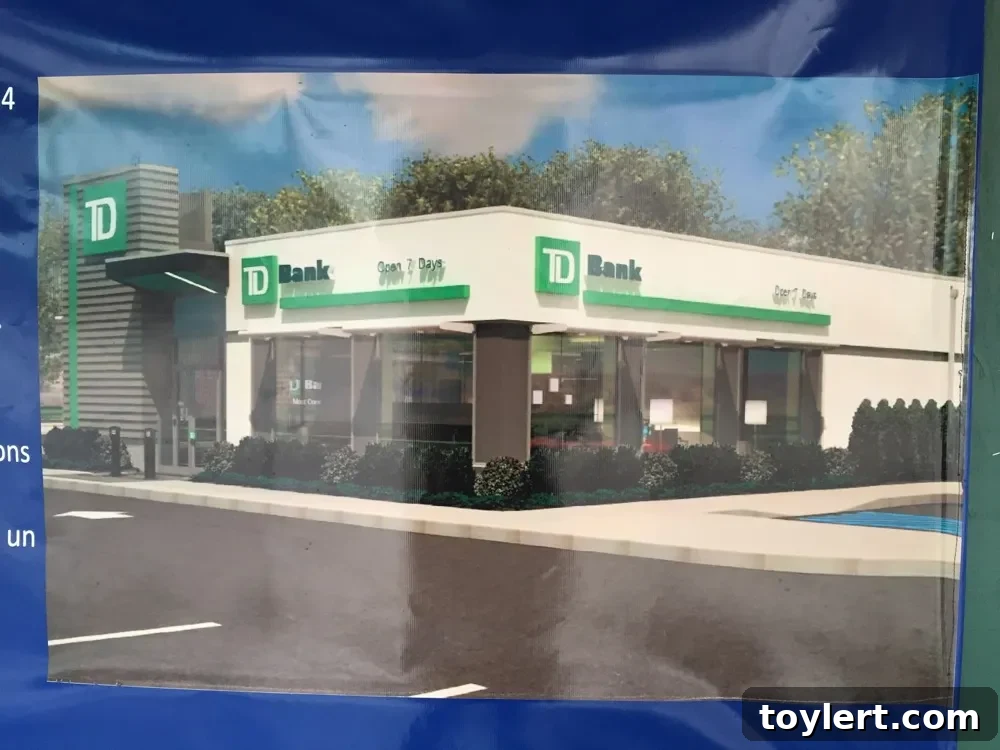
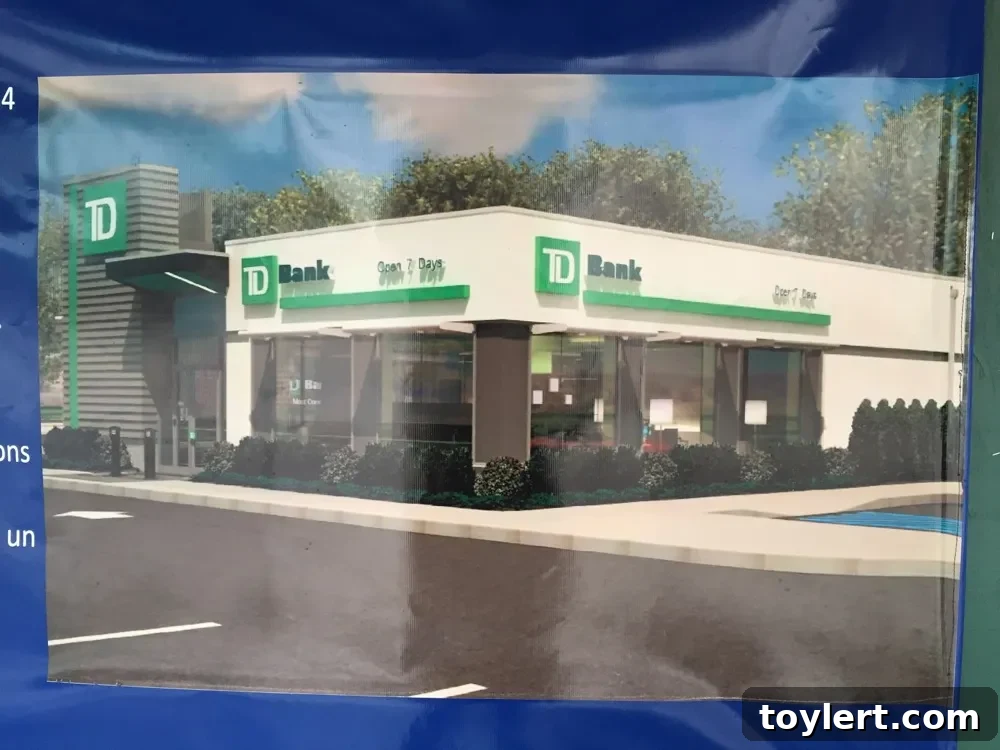
The site at 957 Marcy Avenue, formerly home to a Burger King, is being completely redeveloped to accommodate the new TD Bank branch. The demolition phase, which was notably underway, signifies the complete removal of the existing structure to pave the way for a brand-new building. According to renderings displayed on the construction fence, the plan involves constructing a modern, one-story banking facility, characteristic of many suburban and urban TD Bank locations. This design typically includes drive-thru services and ample surface parking, catering to both pedestrian and vehicular traffic.
For residents and local businesses, the presence of a new bank branch can bring both convenience and concerns. On one hand, it offers accessible financial services, potentially creating local job opportunities and contributing to the economic infrastructure of the area. On the other, the design choices for such developments often spark debates about efficient land use and the aesthetic integration into a dense urban environment like Bed-Stuy. The transition from a recognizable fast-food landmark to a prominent financial institution represents a clear shift in the commercial offerings available at this key corner.
The Urban Planning Debate: Single-Story Retail vs. Mixed-Use Development
The proposed design for the TD Bank at 957 Marcy Avenue brings to the forefront a persistent debate in contemporary urban planning: the optimal use of valuable city land. While the rendering clearly depicts a standard one-story building surrounded by a parking lot, many urbanists and community advocates argue that a more efficient and beneficial approach for a location like this would be a taller, mixed-use structure. This sentiment is not unique to Bed-Stuy but resonates across many evolving urban centers where space is a premium.
Arguments for Mixed-Use Buildings:
- Efficient Land Use: In dense urban environments, single-story buildings with large surface parking lots are often seen as underutilizing prime real estate. A mixed-use development, combining ground-floor retail (like the bank) with residential units or office spaces above, maximizes the site’s potential.
- Enhanced Urban Vibrancy: Taller buildings with varied uses contribute to a more dynamic and active streetscape, encouraging pedestrian activity throughout the day and evening. This fosters a stronger sense of community and supports local businesses.
- Addressing Housing Needs: Brooklyn, like much of New York City, faces a significant housing crisis. Incorporating residential units into new developments, especially along commercial corridors, can help meet the demand for diverse housing options without sprawling into less developed areas.
- Environmental Sustainability: Dense, mixed-use developments reduce reliance on cars by placing amenities and homes within walking or cycling distance. This aligns with broader goals of reducing carbon footprints and promoting sustainable urban living.
- Architectural Integration: A taller building would likely integrate more seamlessly with the existing scale and architectural character of Bed-Stuy, which features many multi-story brownstones and apartment buildings, rather than a standalone, low-rise structure that might feel out of place.
Why Single-Story Often Prevails:
Despite the compelling arguments for mixed-use, single-story retail developments with dedicated parking lots continue to be built for several reasons:
- Zoning Regulations: Existing zoning codes may favor or permit such developments without requiring additional height or mixed uses, making it simpler and faster for developers to gain approval.
- Developer Preference: Constructing a single-story building is often less complex and less expensive than a multi-story, mixed-use project, leading to quicker returns on investment.
- Tenant Requirements: Certain large-format retailers or banks may specifically request a design that prioritizes ease of access, high visibility, and ample dedicated parking for their customers, aligning with their operational models.
- Perceived Convenience: For many customers, particularly those arriving by car, the convenience of direct parking access is a significant draw, even if it comes at the expense of urban density.
In the case of 957 Marcy Avenue, the decision to replace “like with like” – a single-story commercial building with another single-story commercial building – appears to prioritize straightforward development over what many consider a more optimal urban design strategy. This choice represents a missed opportunity to contribute multi-fold to the community’s needs, beyond just financial services, by adding housing or additional commercial space.
The Impact of a Major Financial Institution in Bed-Stuy
The arrival of TD Bank, a prominent financial institution, signifies more than just a new building; it represents an evolving economic landscape for Bed-Stuy. Banks are essential components of any neighborhood, providing vital services such as checking accounts, loans, mortgages, and investment opportunities. For both residents and small businesses in the vicinity of Marcy and Fulton, having a major bank branch within easy reach can enhance financial accessibility and convenience.
However, the presence of large corporate entities also invites scrutiny regarding their integration into existing local economies. Will TD Bank engage with the community through local partnerships or initiatives? How will it impact smaller, independent financial service providers? These are questions that often arise as neighborhoods like Bed-Stuy experience continued commercial development and gentrification. The bank’s physical presence, its staffing, and its engagement with the local populace will be key factors in defining its role beyond its architectural footprint.
Looking Ahead: The Evolving Streetscape of Marcy and Fulton
The transformation of 957 Marcy Avenue into a TD Bank branch is just one piece of the larger puzzle that is the evolving Bed-Stuy streetscape. As demolition concludes and construction commences, the neighborhood will witness a significant change at this busy intersection. While some may lament the lost opportunity for a more ambitious, dense development, the new bank will undoubtedly serve a functional purpose for the community.
Ultimately, the impact of this development will be multifaceted, affecting daily commutes, local commerce, and the overall aesthetic of Marcy Avenue and Fulton Street. As Bed-Stuy continues its trajectory of growth and change, each new building contributes to the ongoing narrative of a neighborhood balancing its rich past with its vibrant future. The arrival of TD Bank is a clear signal of sustained commercial interest and a further solidification of this Brooklyn locale as a prime destination for residents and businesses alike.