Far Rockaway, Queens: Unveiling a Coastal Gem Beyond the Beach
On the sweltering embrace of the hottest summer day, when the city’s asphalt shimmered with heat, the desire to escape the urban cauldron became an undeniable urge. Yet, for some explorers, the journey isn’t merely about finding respite on a sandy shore. It’s about delving into the untold narratives of a place, peeling back layers of history and community that lie just beyond the well-trodden path. This was precisely the spirit that guided a recent exploration of Far Rockaway, Queens – a neighborhood often synonymous with its expansive beaches, but which harbors a fascinating world of historical architecture and vibrant local life.
For many, the mention of Far Rockaway conjures images of surfers catching waves, families enjoying the boardwalk, and the invigorating scent of the ocean breeze. And while these aspects are undeniably central to its identity, Far Rockaway is also a destination rich in heritage, boasting structures that whisper tales from centuries past. This particular journey ventured away from the immediate allure of the waves, opting instead for a deep dive into the historical heart of the district, revealing architectural marvels that stand as testaments to the area’s enduring legacy.
The mode of transport itself tells a story of evolving urban connection. Gone were the days of a daring teenage bicycle ride across the formidable Marine Parkway-Gil Hodges Memorial Bridge, a feat of youthful exuberance and determination from the mid-’70s. This time, the comfortable hum of the A train provided a more contemplative passage, offering a chance to witness the landscape transform from dense city blocks to the unique coastal sprawl of the Rockaway Peninsula. The journey by subway underscores how deeply Far Rockaway is woven into the fabric of New York City, a direct link connecting this distant outpost to the bustling core of Manhattan, yet retaining a distinct identity all its own.
A Glimpse into Far Rockaway’s Storied Past
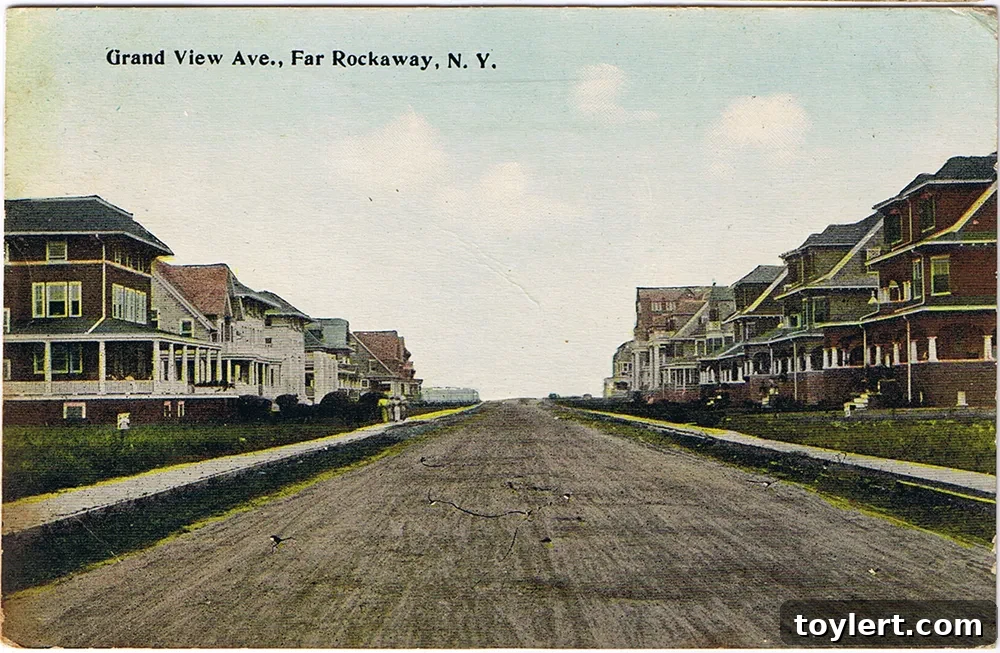
Far Rockaway’s history is as layered and intriguing as its architecture. Initially a rural expanse, it began its transformation into a sought-after resort town in the 19th century. Wealthy New Yorkers, eager to escape the summer heat, flocked to its pristine shores, leading to the development of grand hotels and opulent Victorian homes. The arrival of the Long Island Rail Road (LIRR) in the mid-1800s cemented its status as an accessible summer retreat, fundamentally altering its development trajectory. This era laid the foundation for the community we see today, blending resort-town charm with suburban practicality and urban grit.
As the 20th century progressed, Far Rockaway evolved. The grand hotels eventually gave way to more permanent residential structures, including a significant number of apartment buildings that accommodated a growing and diverse population. Despite these changes, the echoes of its past remain visibly etched into the streetscape, particularly in the older sections away from the immediate beachfront. These historical layers are what make a deliberate exploration so rewarding, offering insights into the architectural trends and societal shifts that have shaped this unique corner of Queens.
Architectural Jewels: Landmarks of Enduring Grace
The true essence of Far Rockaway’s historical core lies in its preserved buildings, each telling a piece of the neighborhood’s grand narrative. Among these, two particular structures stand out as beacons of architectural and historical significance, demonstrating the diverse influences that have shaped the area.
The 1858 Church: A Testament to Enduring Faith and Transformation
One of the most remarkable findings in Far Rockaway’s historical hub is a building constructed in 1858 that originally served as a church. This venerable edifice, now beautifully repurposed as a temple, is a striking example of the area’s deep-rooted past and its capacity for evolution. Its architecture, likely reflecting the popular styles of the mid-19th century such as Gothic Revival or Romanesque Revival, speaks to an era of craftsmanship and civic pride. Imagine the original parishioners, gathering within its walls, their lives unfolding against the backdrop of a burgeoning resort town.
The transformation of this historical church into a temple is particularly poignant. It symbolizes not only the architectural preservation efforts within Far Rockaway but also the dynamic demographic shifts and the embracing of new communities that have made this neighborhood so vibrant. The building stands as a living monument, bridging centuries and cultures, continuing its role as a place of gathering, reflection, and spiritual solace for a new generation. Its intricate details, perhaps stained-glass windows, sturdy stone or brickwork, and classic steeple design, offer a tangible link to the architectural heritage of Queens.
The Colonial Revival Post Office: A Pillar of Civic Life
Equally compelling is the Colonial Revival-style post office. This architectural choice for a public building is significant, reflecting a national trend in the early 20th century to evoke a sense of American heritage and stability. The Colonial Revival style, characterized by its symmetry, classical detailing, and often imposing yet inviting facades, aimed to convey dignity and permanence. Far Rockaway’s post office, with its stately presence, likely features elements such as a grand entrance, classical columns or pilasters, and perhaps a prominent clock tower or cupola, all contributing to its authoritative yet welcoming appearance.
Beyond its aesthetic appeal, a post office serves as a vital civic anchor, a place where community members connect with essential services and each other. The enduring presence of such a well-preserved Colonial Revival structure in Far Rockaway highlights the area’s historical importance as a thriving community hub. It speaks to a time when post offices were not just transactional spaces but social centers, focal points of local identity and communication, and their architecture was designed to reflect this crucial role.
Beyond the Main Landmarks: A Tapestry of Styles
While the church-turned-temple and the Colonial Revival post office stand out, a deeper exploration of Far Rockaway’s streets reveals an eclectic mix of other historical buildings. There are pockets of charming Victorian homes, their ornate details a reminder of the area’s resort heyday. Interspersed are early 20th-century apartment buildings, often with distinctive brickwork and art deco influences, showcasing the period of rapid residential expansion. Each block offers a glimpse into different eras of development, making a walk through Far Rockaway’s central avenues a fascinating architectural journey. These diverse styles collectively paint a comprehensive picture of Far Rockaway’s evolution, from an exclusive retreat to a diverse and bustling urban neighborhood.
The Beach and Beyond: A Balanced Perspective
It is impossible to discuss Far Rockaway without acknowledging the profound influence of its proximity to the Atlantic Ocean. The expansive stretches of Rockaway Beach and its iconic boardwalk are indeed a major draw, offering a beloved escape for New Yorkers seeking sun, sand, and surf. The ocean has shaped the very character of the peninsula, from its climate to its recreational opportunities.
However, the beauty of Far Rockaway lies in this duality: the natural grandeur of the coastline existing harmoniously with a rich, developed urban core. The exploration of its historical buildings serves to remind us that Far Rockaway is more than just a summer playground. It is a year-round community with a history and identity that extends far beyond the shoreline. The sound of waves might be a constant backdrop, but the rhythm of daily life, the local businesses, and the residential streets tell a different, equally compelling story.
A Community Forged by Resilience and Diversity
Far Rockaway is defined not only by its geography and architecture but, more importantly, by its people. It is a vibrant, diverse community, a melting pot of cultures, backgrounds, and stories. Generations of families have called this place home, alongside newcomers drawn by its unique coastal charm and relative affordability within New York City. This blend creates a dynamic social fabric, where different traditions and perspectives converge.
The spirit of Far Rockaway is particularly marked by its resilience. The neighborhood has faced significant challenges over the years, perhaps most notably the devastating impact of Hurricane Sandy in 2012. Yet, through hardship, the community has consistently demonstrated an extraordinary capacity for recovery, rebuilding, and mutual support. This fortitude has only strengthened the bonds among residents, fostering a sense of pride and collective identity. Local initiatives, community gardens, and burgeoning small businesses all contribute to a palpable sense of revitalization and forward momentum.
Connectivity: The Arteries of Far Rockaway
The journey to Far Rockaway itself highlights its unique position within the vast expanse of New York City. The A train, an elevated artery, provides a breathtaking, panoramic view of the changing landscape, connecting the peninsula directly to Manhattan and other boroughs. This lifeline ensures that Far Rockaway, despite its “far” designation, remains an integral, accessible part of the metropolitan area. The subway ride is not just transport; it’s an experience, a transition from the urban canyon to the open skies of the coast.
Then there is the majestic Marine Parkway-Gil Hodges Memorial Bridge, a feat of engineering that has linked the Rockaway Peninsula to mainland Queens since its opening. For decades, it has served as a crucial conduit for vehicular traffic, offering a different, equally scenic route to and from the area. Whether by car or, as in the youthful escapades of the past, by bicycle, the bridge symbolizes connection, overcoming geographical separation, and integrating Far Rockaway into the broader regional network. These transportation links are essential to the neighborhood’s character, blending its insular, coastal feel with its urban accessibility.
Conclusion: Far Rockaway’s Enduring Allure
To truly understand Far Rockaway is to look beyond the immediate lure of its famous beaches. It is to appreciate the enduring beauty of an 1858 church now serving as a temple, reflecting spiritual continuity and community evolution. It is to admire the sturdy elegance of a Colonial Revival post office, a testament to civic pride and historical design. It is to recognize the mosaic of architectural styles that tell the story of its growth from a Victorian resort to a diverse modern community.
Far Rockaway, Queens, is a destination of compelling contrasts: the wild beauty of the ocean juxtaposed with a rich historical urban core, a sense of tranquil escape balanced by the vibrant energy of a resilient community. On that hot summer day, the journey by A train revealed not just a destination, but a multifaceted experience – a reminder that some of New York City’s most compelling stories are found in the places that initially seem “far away,” waiting patiently to be discovered and appreciated for their profound depth and unique charm. Far Rockaway invites visitors to delve deeper, to explore its streets, engage with its history, and truly uncover the hidden gems that make this coastal Queens neighborhood an unforgettable part of the city’s rich tapestry.