Saving Brooklyn’s Soul: The Fight for the Church of the Redeemer
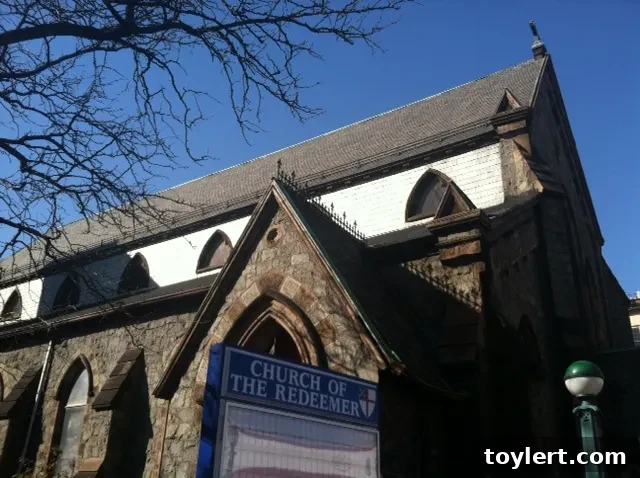
In the vibrant, ever-evolving landscape of Brooklyn, historic structures often find themselves at the crossroads of preservation and progress. One such pivotal battle centers on the venerable Church of the Redeemer, a magnificent Gothic Revival edifice nestled at 24 4th Avenue, near the bustling intersection of Pacific Street. This grand building, on the cusp of its 160th anniversary, represents more than just a place of worship; it embodies a significant piece of local heritage, a architectural landmark, and a potential hub for future community life. Its proposed demolition, initially announced in 2012, sparked a fierce and ongoing community protest, drawing a clear line in the sand between development ambitions and the deep-seated desire to safeguard Brooklyn’s unique character.
The initial revelation that the Church of the Redeemer intended to dismantle its historic structure sent ripples of concern throughout the neighborhood. This was not merely the loss of a building, but the potential erasure of a tangible link to the past, a visual anchor in a rapidly gentrifying area. The community’s immediate and impassioned response highlighted a growing awareness of the irreplaceable value that historic architecture brings to urban environments. Residents quickly mobilized, transforming their collective worry into organized action, determined to find a viable alternative to the wrecking ball.
The Heart of the Controversy: Demolition vs. Adaptive Reuse
The Church of the Redeemer’s proposal was to demolish the existing Gothic Revival structure to make way for a mixed-use development. This new complex would include a modern church facility alongside residential units, a common strategy employed by religious institutions facing declining congregations and rising maintenance costs. From the church’s perspective, this plan offered a pathway to financial sustainability and updated facilities better suited to contemporary needs. They argued that the existing building, while historic, was a significant financial burden, requiring extensive and costly repairs to bring it up to modern standards and safety codes.
However, for the local community, led by figures like Carolynn DiFiore Balmelle of the East Pacific Street Block Association, the decision to demolish felt short-sighted and detrimental to the neighborhood’s identity. Gothic Revival architecture, characterized by its pointed arches, ribbed vaults, and ornate detailing, is a testament to a bygone era of craftsmanship and design. Such buildings often serve as visual landmarks, offering aesthetic pleasure and a sense of continuity in an urban fabric constantly in flux. The community’s vision transcended mere preservation; they advocated for adaptive reuse, a sustainable approach that transforms historic buildings for new purposes while retaining their architectural integrity.
A Community Rises: Fighting for a Future
Since the initial protests in July, the East Pacific Street Block Association has been at the forefront of efforts to save the Church of the Redeemer. Their campaign has been multifaceted, encompassing grassroots organizing, public awareness, and the active pursuit of viable alternative uses for the building. One promising avenue explored was repurposing the structure for educational purposes, harkening back to its history as a school in the 1970s. DiFiore Balmelle reached out to several area preschools, gauging their interest in relocating to the spacious and uniquely characterful building. The response was encouraging; two schools expressed serious interest and were provided with detailed tours of the premises, exploring its potential as a vibrant learning environment.
The concept of adaptive reuse is not only environmentally conscious, by preventing demolition waste and conserving embodied energy, but also economically intelligent. It allows a building to continue generating value and serving the community in a new capacity. For the Church of the Redeemer, this presented a tangible opportunity for annual income. Community organizers estimated that the space could command an annual rent of approximately $400,000, a significant revenue stream that could alleviate financial pressures and contribute to the building’s upkeep.
The Repair Conundrum: A Battle of Estimates
Despite the potential for substantial rental income and the enthusiastic community support for adaptive reuse, resistance from the church has persisted. A major point of contention revolves around the estimated cost of repairs needed to make the building suitable for reoccupation. The church has asserted that it would require an exorbitant $4 million to bring the building “back up to snuff,” citing the extensive work required for a structure of its age and condition.
However, the community presents a starkly different financial picture. Carolynn DiFiore Balmelle estimates that the existing structure, primarily needing replacements for its roof, electrical system, and plumbing – common issues for aging buildings – could be rehabilitated for a more manageable $2 million. This significant discrepancy in cost estimates highlights a crucial hurdle in preservation battles. Often, developers or owners seeking to demolish a property may inflate repair costs to justify their plans, while preservationists seek more cost-effective solutions and potential grant funding.
The gap between these figures is more than just a financial debate; it underscores differing perspectives on the building’s future. The church’s initial plan for a mixed-use development, featuring new residential units alongside a new church, suggests a vision focused on maximizing the land’s development potential in a burgeoning real estate market. The community, on the other hand, envisions a future where historical integrity and community utility are prioritized, demonstrating that with creative solutions and collective will, beloved landmarks can find new life.
The Elusive Hope of Landmark Designation
Another avenue often explored by communities seeking to save historic buildings is official landmark designation. Such a designation by a city’s Landmarks Preservation Commission provides legal protection against demolition or significant alteration, ensuring the building’s historical and architectural significance is recognized and preserved. However, for the Church of the Redeemer, this path appears to offer little hope.
Despite its venerable age – soon to be 160 years old – and its distinctive Gothic Revival style, the building has not garnered the necessary support or met the specific criteria for landmark status. This could be due to various factors, including the commission’s backlog, political considerations, or the property owner’s active opposition, which often complicates the designation process. The lack of landmark protection leaves the Church of the Redeemer vulnerable, placing the full weight of its preservation on the shoulders of dedicated community activists and the goodwill of its owners.
The Broader Implications: Community Identity and Urban Development
The struggle over the Church of the Redeemer is emblematic of a larger narrative playing out in many rapidly developing urban centers like Brooklyn. As neighborhoods undergo intense gentrification and property values soar, the pressure to develop new, modern structures often clashes with efforts to preserve historical fabric. The loss of historic buildings, especially those with such architectural grandeur and community ties, can erode the unique character of a neighborhood, replacing distinctiveness with a more homogenous urban landscape.
Such battles are not just about bricks and mortar; they are about community identity, cultural memory, and the tension between economic growth and heritage preservation. A historic church like the Church of the Redeemer serves as a physical reminder of the community’s past, a gathering place, and a symbol of continuity. Its preservation, through adaptive reuse, offers a model for sustainable urban development that honors history while embracing the future. It demonstrates that meeting contemporary needs does not necessarily require sacrificing the invaluable assets of the past.
Organizing for the Future: A Call to Action
The fight for the Church of the Redeemer is far from over. In the face of ongoing resistance and the looming threat of demolition, the community remains resolute. Recognizing the need for continued strategic planning and heightened public awareness, the East Pacific Street Block Association and its allies are organizing another critical meeting.
This upcoming gathering, scheduled for Tuesday, April 30th, will be held at the YWCA at 30 3rd Avenue, commencing at 7 pm. The agenda is clear: to discuss strategy, organize further protest actions, and galvanize more widespread support from residents, local businesses, and public officials. This meeting represents a vital opportunity for community members to lend their voices, share their ideas, and actively participate in shaping the future of their neighborhood. The future of the Church of the Redeemer, and perhaps a piece of Brooklyn’s soul, hangs in the balance, underscoring the enduring power of community activism in the face of urban change.