Why Jersey City Is Not the Next Brooklyn, But You Might See Your Favorite Shops in Both Places
In the dynamic landscape of urban development along the Hudson River, few comparisons are as frequently drawn, yet as fiercely debated, as that between Jersey City and Brooklyn. It seems almost weekly, a new article or social media discussion surfaces, pitting these two vibrant urban centers against each other. For many Brooklynites, the notion that a city in New Jersey could ever truly mirror the iconic borough is often met with a dismissive scoff. Brooklyn, with its unparalleled cultural cachet, historic brownstones, and diverse neighborhoods, has cemented its status as a global benchmark for urban cool. However, this sentiment flows both ways, perhaps even more strongly from the Jersey City perspective. Many proud Jersey City locals firmly believe their city possesses a unique and undeniable energy, a distinct character that prevents it from being merely a “Brooklyn knockoff” or a shadow of its larger, more famous neighbor. While the narrative of similarity, especially in terms of gentrification and demographic shifts, is undeniable, it is ultimately a disservice to both cities to label any burgeoning urban area as simply “the next Brooklyn.” Jersey City is evolving on its own terms, building an identity forged from its rich history, strategic location, and a diverse, forward-thinking community.
The allure of Brooklyn in recent decades has been multifaceted, transforming it from Manhattan’s overlooked neighbor into a global cultural phenomenon. It became a beacon for artists, innovators, foodies, and families seeking a vibrant urban experience with a slightly slower pace and more accessible living costs than Manhattan. Neighborhoods like Williamsburg, Bushwick, Park Slope, and Dumbo cultivated distinct identities, fostering an explosion of independent businesses, world-class culinary scenes, and a thriving arts community. Its tree-lined streets, historic architecture, and strong sense of community made it the quintessential example of urban revitalization done right – a model that many other cities, consciously or unconsciously, began to emulate. This transformation set a high bar, creating a template for what a desirable, modern urban environment could look like.
However, to understand why Jersey City stands apart, one must appreciate its own unique identity and growth trajectory. Strategically positioned on the west bank of the Hudson River, directly opposite Lower Manhattan, Jersey City has always possessed an inherent advantage. Historically an industrial powerhouse and a melting pot of cultures, it has undergone a dramatic metamorphosis in the last twenty years. What was once primarily a commuter hub is now a destination in its own right, boasting an impressive skyline, revitalized historic districts, and a burgeoning cultural scene. Neighborhoods like the Paulus Hook, Hamilton Park, and Van Vorst Park areas offer charming brownstones and a leafy, community-centric feel reminiscent of some Brooklyn enclaves. Meanwhile, the towering glass structures of the waterfront and Exchange Place reflect a different, decidedly modern urban aesthetic, attracting financial institutions and a diverse, professional demographic. Areas like Journal Square and The Heights are undergoing their own vibrant renaissances, celebrating their historic roots while embracing new development and an influx of diverse businesses and residents. Jersey City’s strength lies in this blend of old and new, local and international, offering a tapestry of experiences that is uniquely its own.

Despite their distinct identities, the similarities between Jersey City and Brooklyn are not entirely coincidental, especially when viewed through the lens of broader urban trends. Both cities have experienced a significant influx of residents seeking urban amenities, cultural richness, and relative affordability compared to Manhattan. This demographic shift often leads to what some call the “Brooklyn effect” in urban development: a pattern of revitalized industrial spaces repurposed into residential lofts or creative hubs, the emergence of pedestrian-friendly main streets, and a general emphasis on quality of life. Migration patterns often play a role, with individuals and families initially drawn to Brooklyn for its lifestyle now finding themselves priced out, looking across the river for similar vibes and more space for their dollar. This spillover effect is a natural consequence of economic pressures and the continuous search for desirable urban living.
Furthermore, the culinary and retail landscapes in both areas show striking resemblances. The demand for independent coffee shops, craft breweries, farm-to-table restaurants, and unique boutiques is driven by similar demographics. These businesses thrive in environments where residents value local craftsmanship, sustainable practices, and authentic experiences over generic chain stores. Entrepreneurs, many of whom might have honed their skills or even started businesses in Brooklyn, recognize the fertile ground Jersey City offers. Its growing population of discerning consumers, coupled with lower rents and a supportive business environment, makes it an attractive location for expansion. The arts and culture scene also mirrors this trend, with a growing number of galleries, performance spaces, and artist communities flourishing, reflecting a shared appreciation for creative expression and community engagement.
Key Differences: Why Jersey City Stands Apart
However, beneath these surface-level similarities lie fundamental differences that solidify Jersey City’s unique position. The most apparent distinction is one of scale and political identity. Brooklyn is a borough of New York City, part of a massive metropolitan entity, with its identity intricately linked to the greater NYC narrative. Jersey City, by contrast, is an independent municipality within New Jersey, with its own distinct governance, tax structure, and civic identity. This autonomy allows Jersey City to chart its own course, tailoring development and policy to its specific needs and aspirations, rather than being part of a larger administrative whole.
Architecturally, while both boast historic districts with charming row houses, Jersey City’s urban fabric often presents a more dramatic blend of old and new. Its waterfront is dominated by modern high-rises, offering breathtaking views of the Manhattan skyline – a characteristic feature less prevalent in Brooklyn. Transportation, too, offers a different experience. While Brooklyn relies on an extensive subway network that weaves through its myriad neighborhoods, Jersey City’s primary transit link to Manhattan is the PATH train, providing swift and efficient access but with a different local connectivity profile. These elements contribute to a distinct spatial experience and flow of daily life that sets Jersey City apart.
The Rise of “Third Places”: Favorite Shops Find New Homes
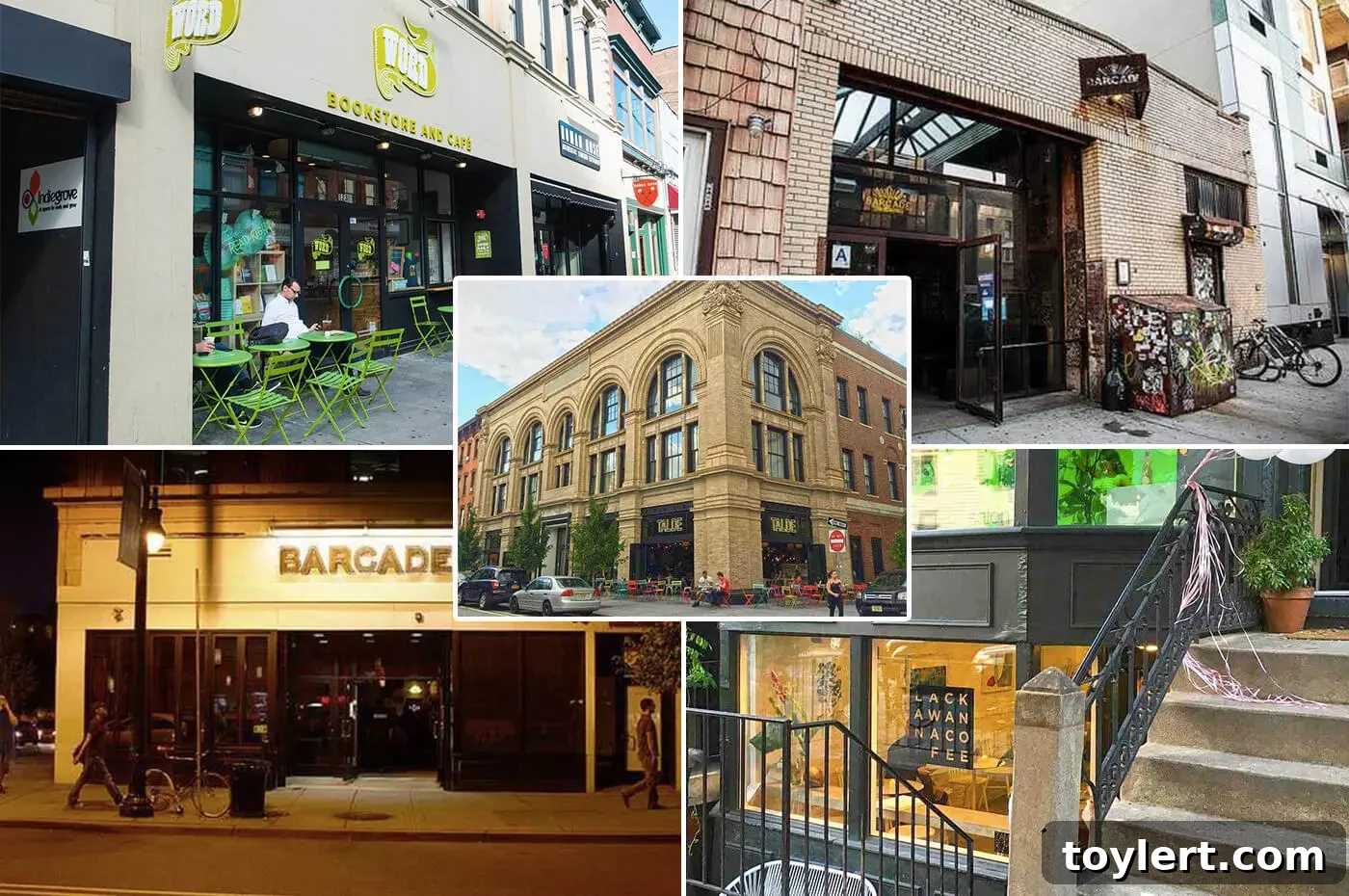
The phenomenon of seeing your “favorite shops” in both Brooklyn and Jersey City is not an indication of one city replicating the other, but rather a testament to the success of “third places” and smart market expansion. “Third places” – independent coffee shops, cozy bookstores, lively bars, and artisanal bakeries – are crucial to fostering community and enhancing urban life. When a business model proves successful in one vibrant, amenity-seeking urban demographic, it is a natural progression for savvy entrepreneurs to seek out similar demographics in new, burgeoning markets. Jersey City, with its growing population of young professionals, creative individuals, and families, represents an ideal target for such expansion.
The presence of businesses like Talde (as mentioned in the original context, indicative of the broader trend), Barcade, or various boutique fitness studios in both locales simply means that there’s a shared consumer taste and a viable market across the Hudson. It signifies a healthy urban ecosystem capable of supporting quality, independent ventures, rather than one city attempting to clone another. These businesses contribute to the unique flavor of each city, adapting to their specific surroundings while maintaining their core brand identity. It’s about entrepreneurial vision recognizing opportunity, not about mimicry.
Beyond the Comparison: Embracing Jersey City’s Future
Ultimately, it is time for Jersey City to move beyond the “next Brooklyn” label and be celebrated for what it truly is: a dynamic, diverse, and rapidly evolving urban center with an identity all its own. Its future is not one of imitation but of innovation. Jersey City offers a compelling blend of historic charm, modern luxury, and vibrant community life. It boasts world-class culinary experiences, a thriving arts scene, and an unmatched proximity to Manhattan without the overwhelming density. Its waterfront promenades offer stunning vistas, its neighborhoods are rich with character, and its community is built on a foundation of diversity and inclusion.
Jersey City’s trajectory is one of independent growth, shaped by its unique history, geography, and the collective spirit of its residents. It is a testament to the power of urban revitalization driven by distinct local aspirations, rather than merely following a template set by others. Its burgeoning status as a premier destination for living, working, and leisure is well-earned and should be recognized on its own merits.
Conclusion
While the comparisons between Jersey City and Brooklyn are understandable, given the shared pressures of urban growth and demographic shifts in the tri-state area, it’s crucial to acknowledge the unique strengths and distinct personality of each. Jersey City is not merely an extension or a cheaper alternative to Brooklyn; it is a city that has meticulously carved out its own niche. It offers a unique quality of life, a vibrant cultural tapestry, and a burgeoning economy that distinguishes it from any other urban center. The occasional sighting of a beloved shop or restaurant in both locations is simply a reflection of shared tastes and smart business expansion, not an indicator of a lack of originality.
Jersey City’s story is one of resilience, transformation, and self-definition. It is a city that confidently stands on its own two feet, inviting residents and visitors alike to experience its genuine charm, diverse communities, and forward-thinking spirit. Its future is bright, not because it mirrors Brooklyn, but precisely because it doesn’t. Jersey City is, and will continue to be, uniquely Jersey City.