The Metamorphosis of Broken Angel: A New Chapter at 4 Downing Street, Brooklyn
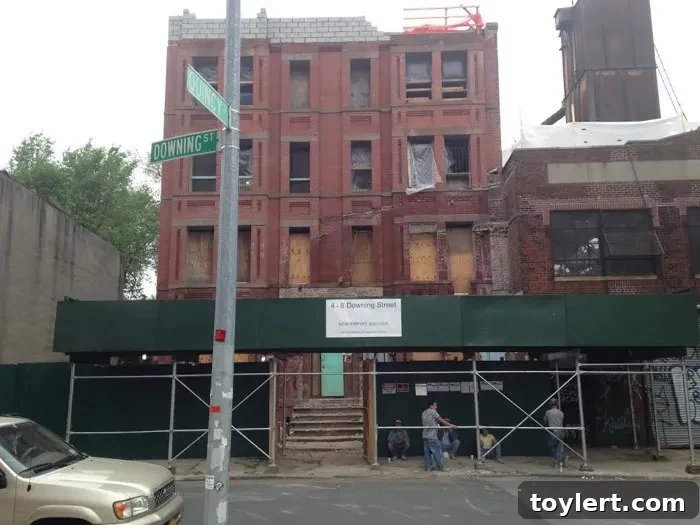
The distinctive silhouette of the Broken Angel Building at 4 Downing Street in Brooklyn’s historic Clinton Hill neighborhood has long captivated observers, standing as a testament to visionary art, urban defiance, and persistent controversy. For decades, this structure was an otherworldly spectacle, a sprawling, hand-built marvel born from the creative genius of artist Arthur Wood. Now, a profound transformation is underway. The fantastical extensions that once adorned its entrance and rooftop, hallmarks of Wood’s unique architectural expression, have been meticulously removed. In their place, a new addition is steadily ascending, marking a pivotal moment in the building’s tumultuous history and heralding a new era for this Brooklyn landmark.
This ongoing vertical enlargement, while significant in scope, adheres strictly to specific architectural and zoning regulations. As detailed in the official Alt-1 permit issued by the New York City Department of Buildings, the project is designed for a vertical expansion without introducing any additional stories. Crucially, upon its completion, the building’s overall height will be precisely the same as it was before the extensive demolition and current reconstruction commenced. This commitment to maintaining the established height profile reflects a careful balance between modern redevelopment and the preservation of the neighborhood’s existing architectural scale, a vital consideration for the historic Clinton Hill community.
Arthur Wood’s Vision: Crafting the Iconic Broken Angel
For nearly thirty years, the Broken Angel Building was inextricably linked with its creator, Arthur Wood. A self-taught artist, architect, and dreamer, Wood embarked on his ambitious project in the late 1970s, transforming what began as a conventional 19th-century brick tenement into an avant-garde masterpiece. His vision epitomized improvisational architecture, utilizing a myriad of reclaimed materials—from salvaged glass and metal to discarded wood—to construct a series of fantastical spires, turrets, and intricate, cantilevered extensions. These additions, often built with the dedicated assistance of his son, Christopher, transcended mere decoration; they were an organic extension of Wood’s profound artistic philosophy, blurring the boundaries between living space, sculpture, and an immersive urban art installation.
Wood’s relentless work at 4 Downing Street mesmerized both local residents and international art enthusiasts. The building evolved into a living, breathing canvas, a defiant and colorful statement against the monotonous uniformity of conventional urban aesthetics. Its seemingly chaotic yet deeply intentional design earned it affectionate monikers such as “Brooklyn’s Own Gaudi” and swiftly established it as one of the most distinctive and widely photographed structures in New York City. The Broken Angel was far more than just a home; it represented a powerful symbol of artistic freedom, ingenious resourcefulness, and a truly unique form of architectural expression that stood out vibrantly in Brooklyn’s rapidly gentrifying landscape, leaving an indelible mark on the urban art scene.
From Humble Tenement to Urban Legend: The Building’s Evolution
The rich history of 4 Downing Street predates Arthur Wood’s artistic interventions by many decades. Originally erected as a tenement building in the 19th century, it served as essential housing for countless Brooklyn families during periods of significant urban expansion. These early structures were characterized by their functional designs, often featuring decorative cornices—ornate architectural elements that were commonplace during that era. Interestingly, the new cement block currently being installed on the roof now occupies the exact location where the building’s original cornice once stood. This precise detail offers a tangible link to its distant past, allowing us to envision the building’s original appearance, perhaps even around the time the Wood family first acquired it and embarked on their remarkable transformative journey.
To fully grasp the extent of this architectural metamorphosis, one must endeavor to imagine the building in its initial, unadorned state: a stoic, unassuming brick structure, devoid of the whimsical additions, reflecting the pragmatic design of a typical Brooklyn tenement. The stark contrast between this historical imagery and the subsequent decades of Arthur Wood’s creative, unrestrained work vividly underscores the dramatic evolution of 4 Downing Street. It transformed from a utilitarian dwelling into a celebrated, albeit controversial, architectural landmark. The building’s multifaceted journey encapsulates a significant segment of Brooklyn’s diverse architectural heritage and its remarkable capacity for radical reinvention, mirroring the dynamic spirit of the borough itself.
Years of Controversy and the Demise of a Dream
Despite its widespread artistic acclaim and its status as a beloved local icon, the Broken Angel Building was perpetually embroiled in legal and structural controversies. For many years, Arthur Wood faced an arduous and ongoing battle with the New York City Department of Buildings (DOB). The city frequently cited numerous safety violations, raised serious concerns over the structural integrity of the unauthorized additions, and highlighted the absence of proper permits for the extensive modifications. These disputes escalated into a protracted and emotionally charged struggle, with Wood passionately defending his home and artistic creation against the rigid bureaucratic mandates of urban development and essential safety regulations.
The cumulative pressures mounted steadily, culminating in a series of legal actions that threatened the building’s very existence. Despite widespread public support, numerous petitions, and even concerted efforts by preservationists and artists to save the unique structure, the exorbitant cost of bringing the building up to modern code proved to be an insurmountable obstacle for Wood. The overwhelming financial strain, compounded by the relentless legal challenges, ultimately led to the difficult and heartbreaking decision to sell the property. This sale, initially intended to resolve the outstanding issues and secure the building’s long-term future, paradoxically set the stage for the inevitable demolition of Wood’s iconic structures, signaling the definitive end of an era for the Broken Angel as it was known and admired.
A New Dawn: Redevelopment and Architectural Renewal at Downing Street
The poignant removal of Arthur Wood’s unique rooftop and entrance structures marked a somber moment for the many individuals who cherished the Broken Angel’s artistic legacy. However, it simultaneously paved the way for an entirely new chapter in the enduring life of 4 Downing Street. The current construction project forms part of a broader redevelopment plan, meticulously designed to transform the property into a modern, compliant residential space while rigorously adhering to contemporary building codes and design principles. The new addition, constructed with durable cement blocks, represents a fundamental and deliberate shift from Wood’s organic, reclaimed aesthetic to a more conventional, yet equally robust and structurally sound, construction methodology.
The developers are working diligently and thoughtfully to integrate the new structure seamlessly into the existing historic fabric of the building, ensuring both its long-term stability and aesthetic harmony. This meticulous approach is clearly evident in the precise adherence to the Alt-1 permit, which dictates not only the vertical enlargement but also specifies the overall footprint and critical structural details. The overarching goal is to create a highly functional, safe, and aesthetically pleasing residence that respectfully acknowledges the building’s original proportions and contributes positively to the architectural landscape of Clinton Hill, even as it decisively moves beyond its idiosyncratic artistic past. The new construction stands as a compelling testament to adaptive reuse, reimagining a once controversial and singular site for contemporary urban living.
Preserving History While Embracing the Future in Clinton Hill
The profound transformation unfolding at 4 Downing Street serves as a powerful microcosm of Brooklyn’s ongoing and dynamic evolution, particularly within historically rich neighborhoods like Clinton Hill, which constantly navigate the delicate balance between a storied past and vibrant urban development. The strategic placement of the new cement block where the building’s original cornice once proudly stood is more than just a structural detail; it is a profound symbolic bridge connecting distinct architectural eras. It eloquently signifies the building’s extraordinary journey from a modest tenement, through its flamboyant and celebrated artistic phase under Arthur Wood, to its current iteration as a redeveloped, modern residential property.
This ambitious project vividly highlights the complex challenges and promising opportunities inherent in urban renewal: the crucial endeavor of how to modernize without irrevocably erasing precious historical context, how to thoughtfully adapt existing structures for entirely new uses while profoundly respecting their origins, and how to navigate the often-conflicting demands of individual artistic expression, cherished community character, and stringent regulatory compliance. While the fantastical, whimsical elements of the original Broken Angel may be gone forever, the indomitable spirit of transformation undeniably endures at 4 Downing Street, embodying Brooklyn’s continuous narrative of resilience, reinvention, and dynamic change. The building, in its newly conceived form, will undoubtedly continue to be a significant talking point, reflecting the vibrant and ever-evolving tapestry of its surroundings and its place within Brooklyn’s rich urban fabric.
Exploring the Building’s Past: A Glimpse into its Tenement Era
To further contextualize the monumental changes at 4 Downing Street, it is invaluable to revisit its foundational origins. The building’s initial design as a tenement speaks directly to a crucial period in New York City’s exponential growth, when such multi-family dwellings provided indispensable housing for a rapidly expanding, diverse population. These buildings, while often perceived as rudimentary and lacking in amenities by contemporary standards, formed the essential backbone of many burgeoning Brooklyn neighborhoods. The Wood family’s acquisition of this property marked a dramatic and unequivocal shift from this utilitarian past, transforming it into something truly extraordinary, unprecedented, and profoundly personal within its immediate neighborhood. Understanding this foundational history allows for a much deeper and more nuanced appreciation of the radical artistic intervention that followed, and the subsequent thoughtful architectural renewal now taking place.
One can only begin to imagine the profound conversations and varied reactions of the neighbors when Arthur Wood first commenced adding his idiosyncratic, unconventional structures. The building, once an anonymous component of the streetscape, began to assert a unique and undeniable identity, growing organically upward and outward with a raw, almost untamed energy. The current development respectfully acknowledges these rich layers of history, aiming to create a structure that is both distinctly contemporary and deeply mindful of its storied past. Indeed, the new cement block going in now is where the old cornice was originally, back in the days when the building was a tenement. Click through to the jump to see an old photo of the building as it might have looked when the Woods acquired it.